Under the rubbished concrete floor with cracks, the pulsating rhythm through which familiar melodies pass, changing each other, whether imaginary insects, or the living fantasies of Russian avant-garde artists…


Photo: Moscow Fashion Week
The display students at the NIMU Design School in Moscow Fashion Week were not so much an expression of escapism (as stated in the anon) as a demonstration of how this escapism can be constructed today — through the volume, fragmentation and tension between the body and the structures.


Photo: Moscow Fashion Week
The theme «Endemic Beauty» posed a rather risky frame: «A imagined paradise» could easily fall into decorativeity. However, the students managed to avoid this trap by shifting the focus from beauty to the fragility and even fragility of the worlds they created. This was especially true of the silhouettes with the broken center of gravity: the puffy, almost floating skirts with a rigid design, the details that refer to the figs of the historical costume — but they are naked, as if they were removed from the body and existing autonomously.


Photo: Moscow Fashion Week
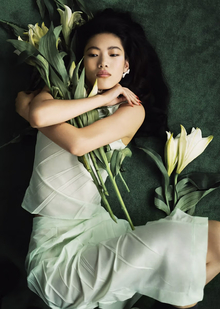
Light tissue is contained in controlled wire volumes, not in clothing, but in a shell in which the body is only a temporary carrier.


Photo: Moscow Fashion Week
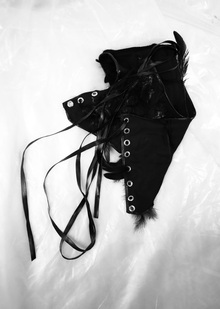
Facture becomes another key collection language. Rusty, flowery collars that resemble colonies of some kind, or multilayered textiles, similar to semi-translucent wings, on ravenous leaves, shiny plastering, large rations, plastic applications, like sending to nature-friendly activities, all create a sense of ecosystem rather than clothing.


Photo: Moscow Fashion Week
In this sense, the images of textiles acting like living matter are particularly accurate — growing, fattening, seizing the body, shifting the center of gravity.


Photo: Moscow Fashion Week
It’s interesting to see the accent shifting from organic to artificial. We are not faced with magical creatures, but with hybrids of interaction between human and inhuman agents: against the background of images that refer to flora and fauna, there are parts of plastic bottles, wool blankets, logos on T-shirts, and two face-to-face rigid images with uniform elements that look like an invasion of reality in this fragile biotope.


Photo: Moscow Fashion Week
The final exit of all students works as an example of collective authorship when it becomes obvious that Utopia is not one, it is always contradictory and fragmented.
The display of the School of Design in Moscow Fashion Week is not interesting as a whole statement, but as a field of samples — sometimes uneven, but at better moments accurately capture the state of modern man: the desire to hide and the simultaneous impossibility of this impulse.
Cover: collage fragment. Designer: Xenia Tertyshnikova, model: Alena Nizova V Project Models, collage author: Nina Gabaraeva