Amnesia in contemporary art
Introduction
From a medical perspective, amnesia is a condition characterized by partial or complete loss of memory. However, when used in the context of art, the term can be seen as a metaphor for cultural and personal processes of identity loss and displacement. Artists explore amnesia as a phenomenon of modern society that involves severing ties with the past, traumatic experiences, and distortion of collective memory, rather than viewing it as a medical condition. Unlike forgetting, which can be a conscious or symbolic act, amnesia involves a traumatic and often involuntary memory loss for individuals or groups.
This essay examines the approaches of contemporary artists to combating amnesia. Amnesia is perceived as a negative factor in modern society that needs «treatment». But amnesia also generates special forms of perception of the past, distorted history, and people’s attempts to refute the official version. It affects the spheres of culture, society and individuals. The works of Paulo Nazareth, Francesc Torres, Vitaly Severov, Christian Boltanski and Anne et Patrick Poirier are considered.
Amnesia and memory of the genus
Paulo Nazareth’s performance was filmed in Ouidah, which was once one of the largest ports of the African slave trade. The artist walks around the tree 437 times, around which in the past people were forced to walk in a circle, which erased their memories of their past and the past of the family. The artist’s gesture is an attempt to turn the story around. Walking around the tree in the opposite direction, he gives people back their memory of the past. The artist struggles with painful amnesia, which arose under duress and gave rise to the traumatic experience of the victims of the ritual.
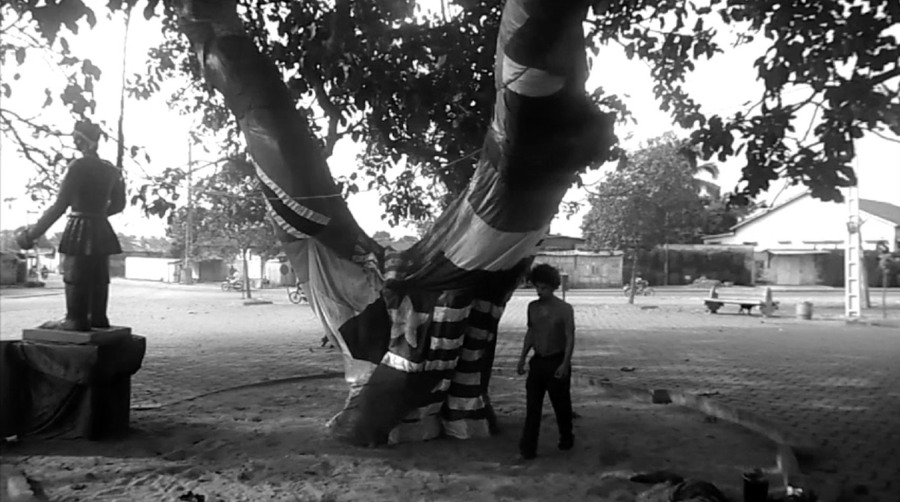
Paulo Nazareth / L’Arbre D’Oublier / 2013
Personal amnesia
Christian Boltanski’s installation touches on the concept of identity loss. The mass of clothes in the general pile reflects the process of amnesia of personal history. Also, after the exhibition, all the clothes of specific people with a special history were recycled. Such an act indicates the impossibility of absolute preservation of memory. Amnesia is inevitable in the process of forming a society. This reflects the postmodern idea of the impossibility of a holistic historical narrative.
Christian Boltanski / Personnes / 2010
Collective amnesia
Francesc Torres' installation «Amnesia/Memòria» addresses the fate of thirteen members of the Maquis movement, figures of the Catalan resistance who fought against the Franco regime. Ousted from the official historical memory, these characters themselves turned into a legend, becoming like the outcast folk heroes of Catalonia of the XVI–XVII centuries. The work is built around two central themes for the artist — collective memory and its socio-political dimension. By appealing to historical consciousness, Torres not only restores forgotten names, but also criticizes collective amnesia.
The artist explores how the political regime makes people forget about the historical past that is unfavorable for it. He restores repressed narratives through archival material. An important aspect of dealing with amnesia is memory fragmentation. Any documented fragments of history that help reconstruct events are important.
Francesc Torres / Amnèsia/Memòria / 1991
Cultural amnesia
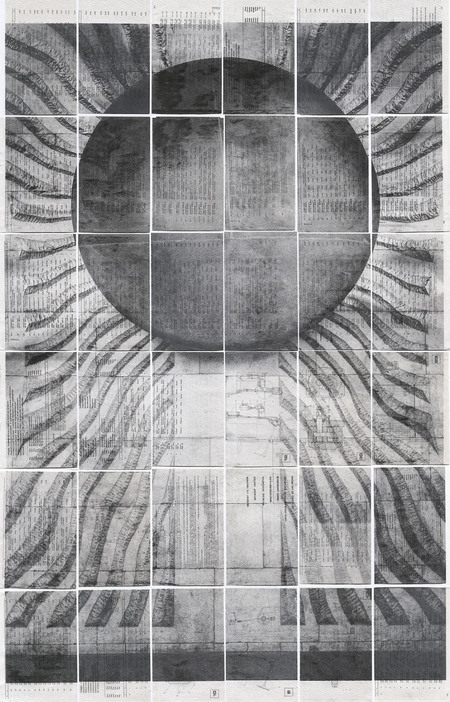
In his work, Vitaly Severov also explores the fragmentation of memory and what will remain of our culture after several generations. He creates metaphors for the memory of places and ruins of monuments of the past. Fragmented memories are characteristic of amnesia, and the struggle against it is the collection of cultural fragments. The artist collects forgotten documents for archiving and re-presentation of the past.
Vitaly Severov / Memories of Future / 2019
Amnesia and location
Amnesia also applies to particularly memorable places, artists are trying to restore a once-living place from fragments. Anne et Patrick Poirier’s installation represents the ruins of the Cabu Hotel in France, which was destroyed during the bombing in 1940. The destroyed place is filled with the irrevocability of memories of the past, which is associated with the traumatic experiences of local people. Amnesia often affects negative memories, nevertheless, artists consider it important to restore them in order to preserve a reliable picture of society.
Anne et Patrick Poirier / AMNESIA / 2023
Conclusion
Through the image of amnesia, artists explore fragmented or lost memory through themes of trauma, identity, and silence, using a variety of means to reconstruct or challenge official stories and personal narratives, often by confronting what is forgotten or intentionally erased. Amnesia is often accompanied by traumatic experiences and requires reflection. For many artists, amnesia acts as a factor that needs to be «identified» and put together from the remaining fragments or documents a complete picture of the world.