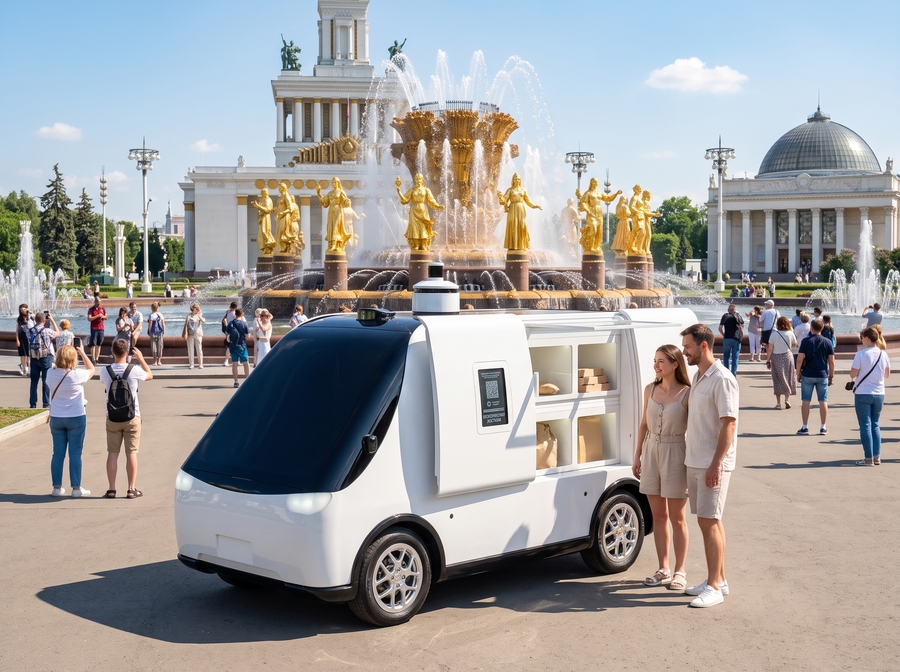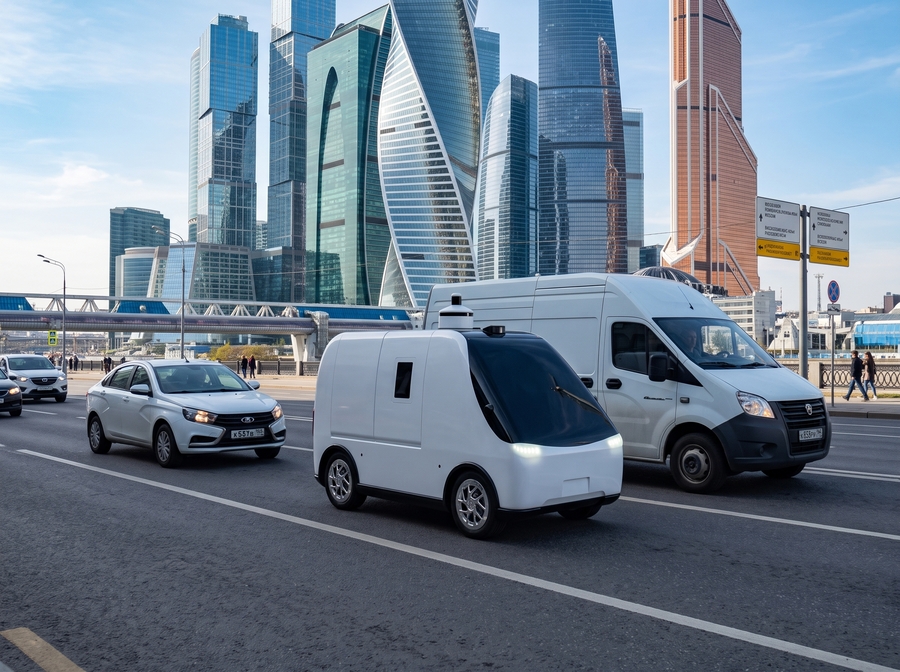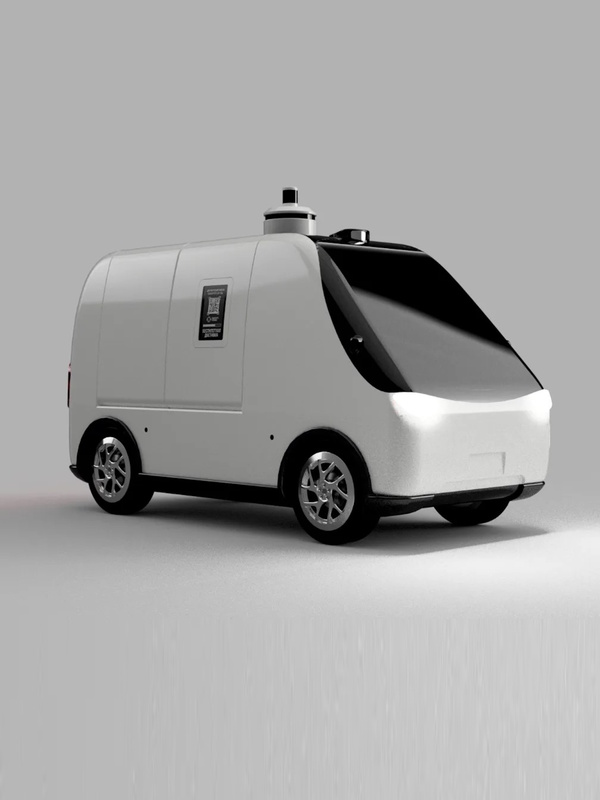
The «ECOBIT» project is the concept for an unmanned electric vehicle that functions as a mobile, automated pickup point for food and small orders. This development addresses the problem of congestion in urban logistics by allowing multiple orders to be delivered in a single trip—ecologically, autonomously, and contactless.
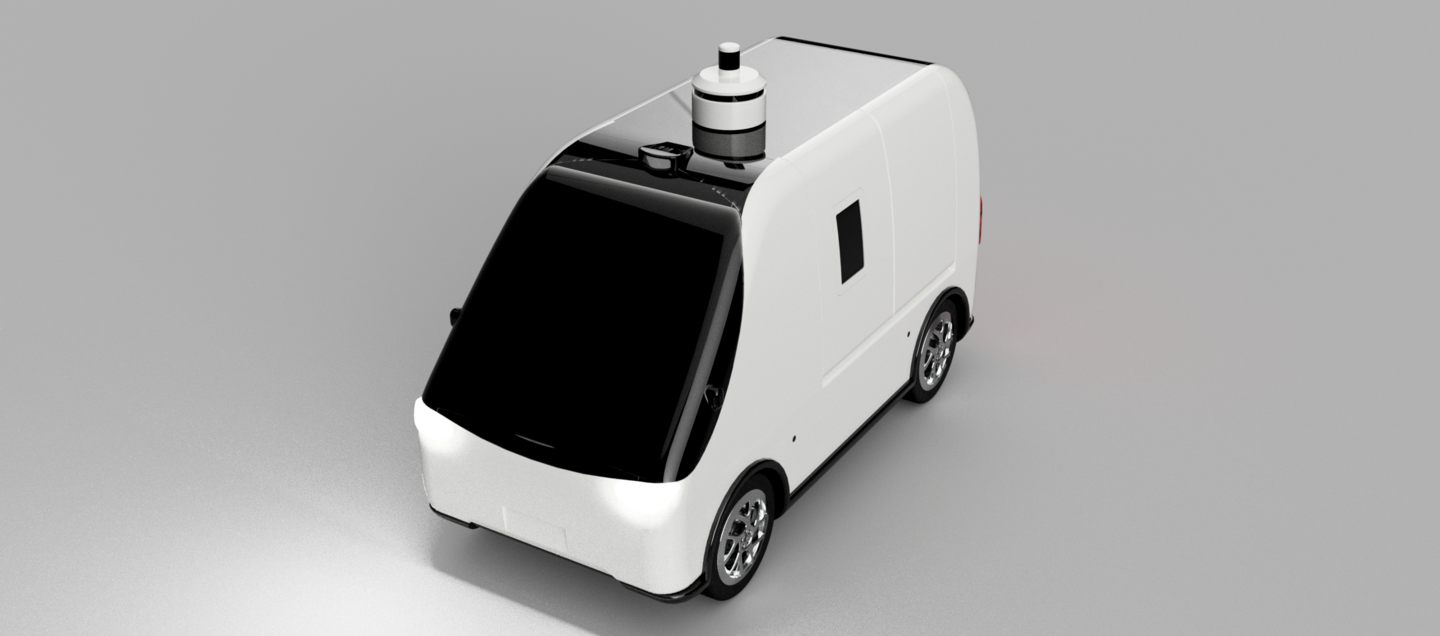
Created in Autodesk Fusion 360
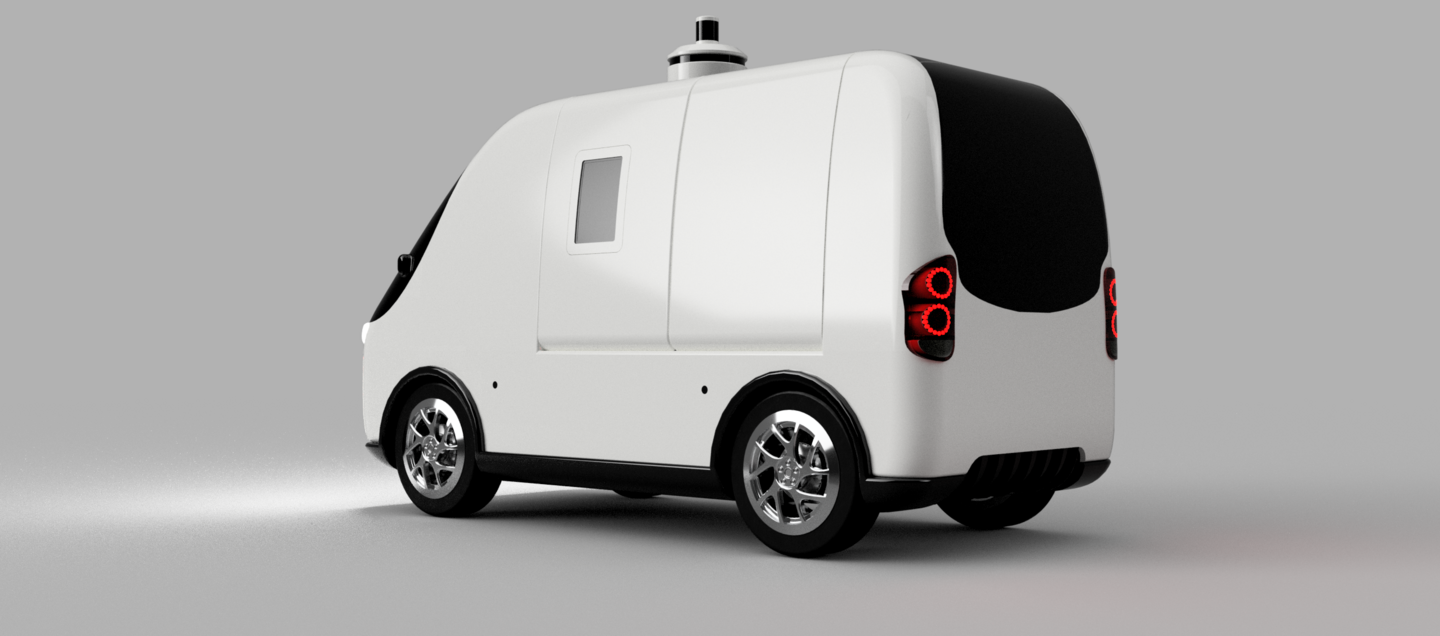
Focus Areas: robotics, transportation technologies, industrial design, and 3D modeling.
Slogan: «The Delivery of the Future—Right Beside You.» As e-commerce grows, traditional logistics—which requires a courier for every single order—is becoming less efficient. «ECOBIT» (Eco + Bit) proposes a concept for a compact, autonomous electric vehicle that merges the functions of an eco-friendly transport unit with a mobile automated pickup point. The vehicle is designed to deliver ready-made meals and small shipments to residential buildings, campuses, and offices. Key Principles and Uniqueness
Autonomy and Safety: Transportation follows a predefined route using navigation, lidar, and cameras, and access to food is granted only after identity confirmation.
Modular Storage: Six individual compartments are located on the side of the chassis, allowing for the delivery of multiple orders in a single trip.
Environmental Friendliness and Compactness: The electric motor eliminates local emissions and reduces noise levels, while the compact size allows it to navigate narrow streets and restricted areas.
Structure and Materials
The project requires in-depth engineering development:Core Components: A load-bearing aluminum or steel frame, an aerodynamic body, an electric powertrain, a traction battery, and a computing module.
Real Prototype Materials: Impact-resistant thermoplastic for panels, polycarbonate for panoramic glazing, and foamed polymer for cell thermal insulation.
3D Model Materials: PLA is used for 3D printing (decorative parts and body shell), PETG is used for functional components and doors, and TPU is used to simulate seals.
Operating Principle
Order: Placement through the application with selection of drone delivery.
Loading: Placing the order into a locker followed by locking.
Travel: Autonomous movement with obstacle detection.
Pickup: The client unlocks the locker using a one-time code.
Continuation: Proceeding to the next client or to a charging station.
Expected Outcomes and Perspectives The result of the current stage is a conceptual 3D model of an electric vehicle, including perspective views, cross-sections of components, and detailing of the delivery system. The project demonstrates the application of digital design to solve urban logistics challenges. In the future, plans include creating a remote-controlled model and developing an application for tracking and calculating range.