Navigation
Introduction1. Concept and Problem StatementContent:— Maleficent (2014) — Pirates of the Caribbean: Dead Man’s Chest (2006) — Avatar: The Way of Water (2022)Conclusion Bibliography
Introduction
Research Concept
In many films, we often encounter diverse characters and creatures whose appearance is so believable and realistic that it seems as if they were filmed with a real camera. Creating a photorealistic and maximally plausible digital human is one of the key objectives of computer graphics. The technology continues to improve, and many digital characters are becoming increasingly similar to real people; however, this hasn’t always been the case, and sometimes there are still certain nuances in their appearance.Sometimes, when watching a character in a scene, a feeling of unnaturalness or lack of vitality arises—as if you are looking at a doll or a robot. At the same time, it is often difficult for the viewer to pinpoint the specific detail that causes this impression.This perception is linked to the phenomenon of the «uncanny valley»: humanoid figures that are virtually indistinguishable from real people but still possess noticeable imperfections can induce feelings of discomfort and repulsion in the viewer. This often occurs when creators attempt to depict a being as human-like as possible, such as in the 2019 musical Cats. Looking at cats with human faces and bodies evokes a strange sense of foreignness—a mismatch between the face and the character’s overall appearance.
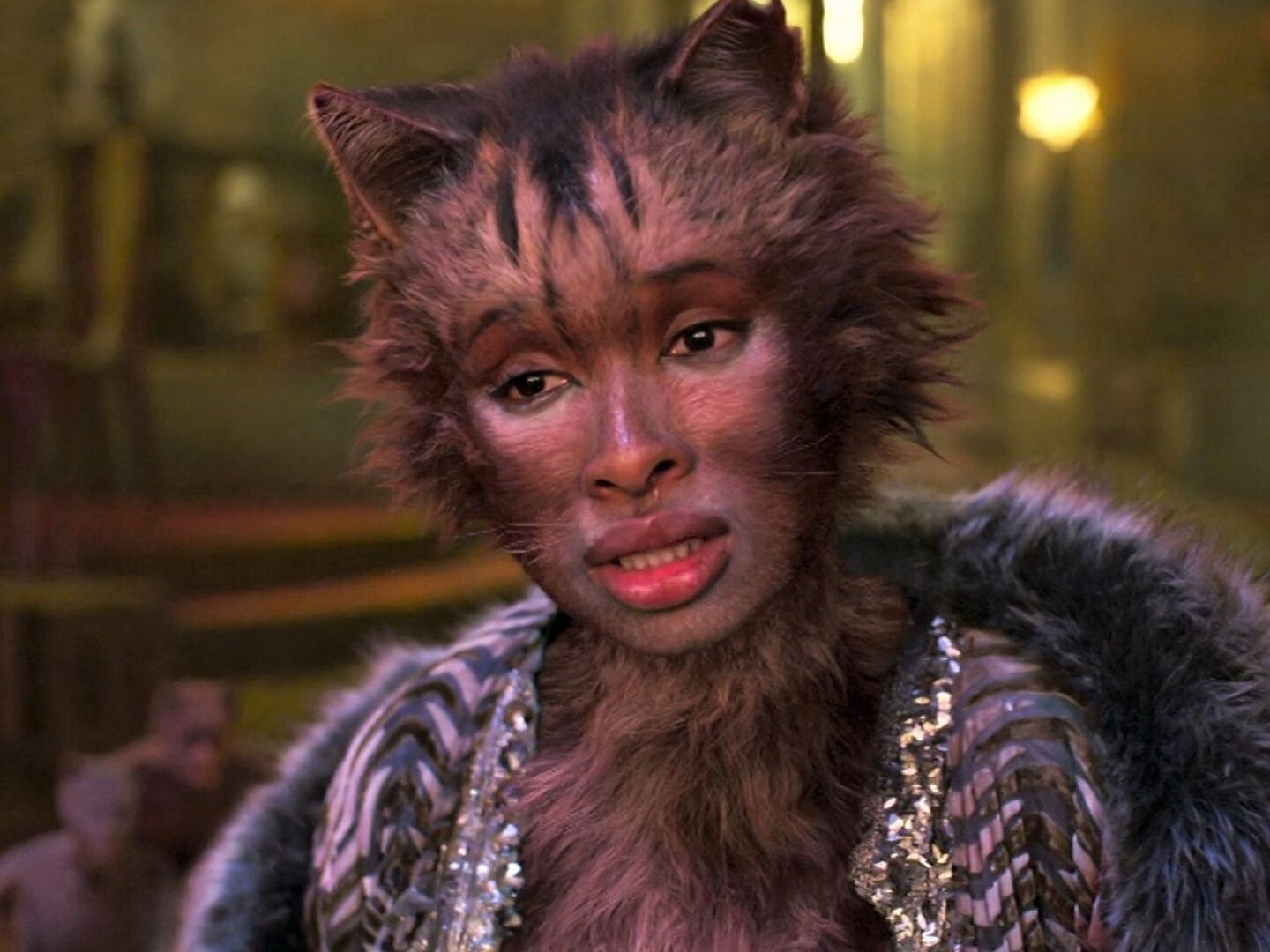
Example of the uncanny valley from the 2019 musical «Cats»
Characters—such as anthropomorphic animals, fairies, or even entirely alien species—can deviate from conventional human proportions, but they cannot deviate from behavior and skin function. The difference between skin and a standard texture is that it responds to what is happening: it stretches, flushes, gets wet, becomes translucent under backlighting, and also reacts to temperature. Therefore, digital skin is not an image; it is a material model that moves along with the face.
From a biological standpoint, skin is a multi-layered material. The epidermis is the thin surface layer that carries pigments and possesses micro-reliefs, wrinkles, and pores. The dermis contains blood vessels and collagen. This layer provides the reddish hue and softly scatters light. The hypodermis, composed of fatty tissue, establishes the volume of the face and creates deep shadows beneath the surface. To allow digital skin to model all these parameters, several different technologies are utilized to replicate all of the skin’s characteristics.
To achieve all these parameters and attain a sense of naturalism, several distinct technologies are employed. For instance, Subsurface Scattering (SSS) is a crucial technology. This technique allows light to penetrate the upper layers of the skin, scatter within them, and exit, giving the skin a lifelike tint instead of a plastic appearance.

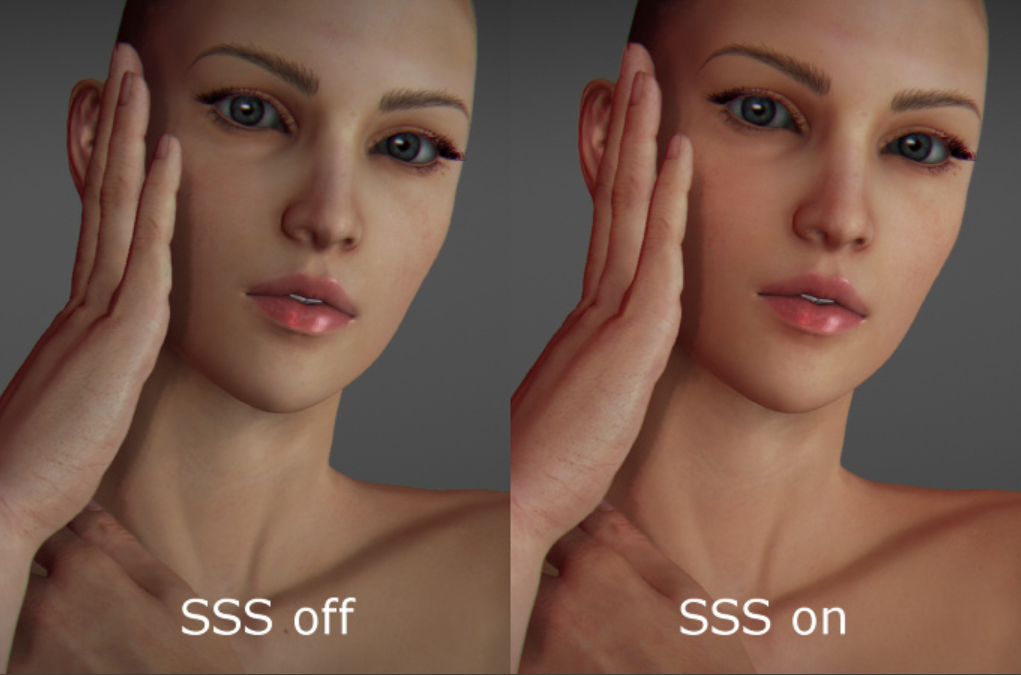
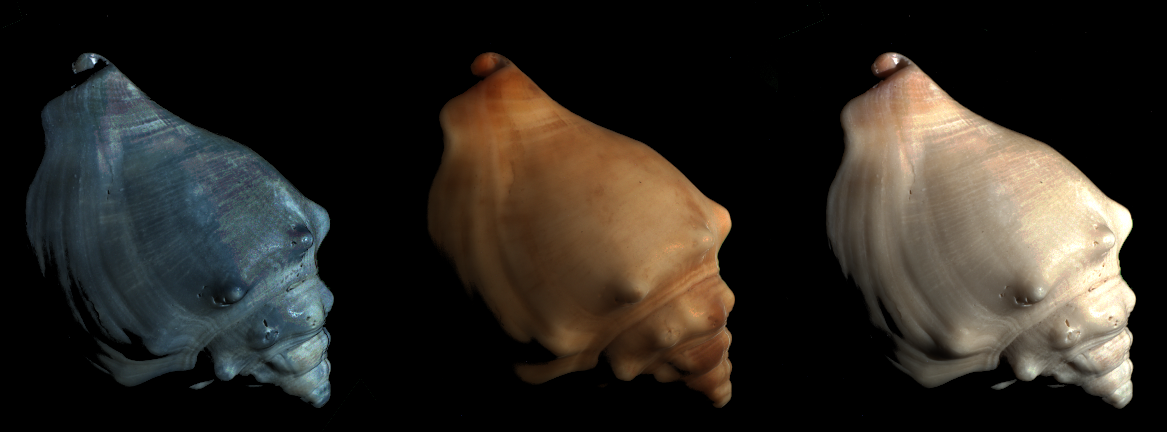
Examples of subsurface light scattering on various objects and textures
Based on the theme, the objective of this visual study is to examine the technologies and methods used to create skin for various creatures. To achieve this, I selected several films featuring different humanoid beings, and I decided to analyze how the creators handled this in each respective work.
Contents
Pirates of the Caribbean: Dead Man’s Chest (2006)
Director Gore Verbinski’s film Pirates of the Caribbean: Dead Man’s Chest, released in 2006, featured visual effects created by Industrial Light & Magic (ILM). The primary subject of study is Davy Jones, the captain of the Black Pearl. His appearance is a complex combination of a human face, octopus tentacles, and octopus skin, complete with numerous growths and suckers. John Nolan and Roger Guyett of ILM supervised the design of Davy Jones; Hal Hicken led the animation, Aaron McBride served as the effects art director, and Bill Nighy played the role. Although the character is entirely digital, audiences and parts of the professional community accepted him as an actor wearing makeup. There were several objectives: Verbinski wanted to transform the pirates into human figures whose appearance was cursed and resembled sea monsters, yet still maintained a human likeness. Therefore, it was necessary to preserve Bill Nighy’s human expressions while simultaneously displaying a non-human body—tentacles in place of a beard, growths, and other features characteristic of marine life. To ensure the effect did not overshadow the actor’s performance, ILM designed a new suit for motion capture. The technological foundation was the iMocap system, which ILM specifically developed for this film. Nighy performed on set wearing a gray suit with markers, and the system could be used both in the studio and on location. The key advantage of this approach is that the actors interact with each other in real space rather than separately in an empty capture studio. Body movements were mapped onto the digital Jones, while ILM artists worked on the face. The iMocap suits were worn by other actors in the Black Pearl ensemble.
Bill Nye and the Visualization of Davy Jones
The «Flying Dutchman» team and actors in iMocap costumes
One of the important technological solutions used in creating Davy Jones was the application of «Subsurface Scattering.» By 2006, subsurface scattering technology was already in use in computer graphics, but its application to such a highly detailed fictional character was a significant technical achievement. Thanks to SSS, light could penetrate beneath the surface of the tentacles and other skin areas, scatter within the material, and exit. This allowed for the effect of living tissue rather than a typical opaque computer surface.
Creating convincing facial expressions became an equally vital challenge. David Jones needed to remain an emotionally expressive character, even though he resembled a monstrous figure. Animators studied acting techniques using video references and hand-drawn animation. Over 700 blend shapes—pre-prepared variations for facial deformation—were employed for facial animation. This allowed for sharper movements in the eyebrows, eyes, mouth, and other facial areas.
It is particularly interesting how they structured the interaction between the facial expressions and the tentacles. They did not simply move independently; rather, they reinforced the character’s emotional state. For instance, mouth movements could trigger secondary movements in the adjacent tentacles. Physical simulations and specialized control systems were used for secondary animation to ensure the natural movement of the individual tentacle parts.
Davy Jones from Pirates of the Caribbean: Dead Man’s Chest was one of the first experiments that proved highly successful and established the benchmark for how to create creatures and how to work on their skin textures.
Melefisenta (2014)
Maleficent. 2014. Director — Robert Stromberg.
One of the most significant technologies used in creating digital characters was the Light Stage system, developed by researchers at the University of Southern California Institute for Creative Technologies (USC ICT) under the guidance of Paul Debevic. Light Stage is a specialized spherical apparatus equipped with thousands of controllable LEDs and multiple cameras. It allows for the capture of detailed information regarding human appearance and how the face interacts with light. Actors were placed inside the installation, where the unique characteristics of facial lighting were recorded by sequentially illuminating the LEDs from various angles. The system provided data on:
- skin micro-topography;
- pores and wrinkles;
- freckles and minor imperfections;
- color transitions;
- skin response to illumination;
- changes in facial color during expressions and muscle tension.
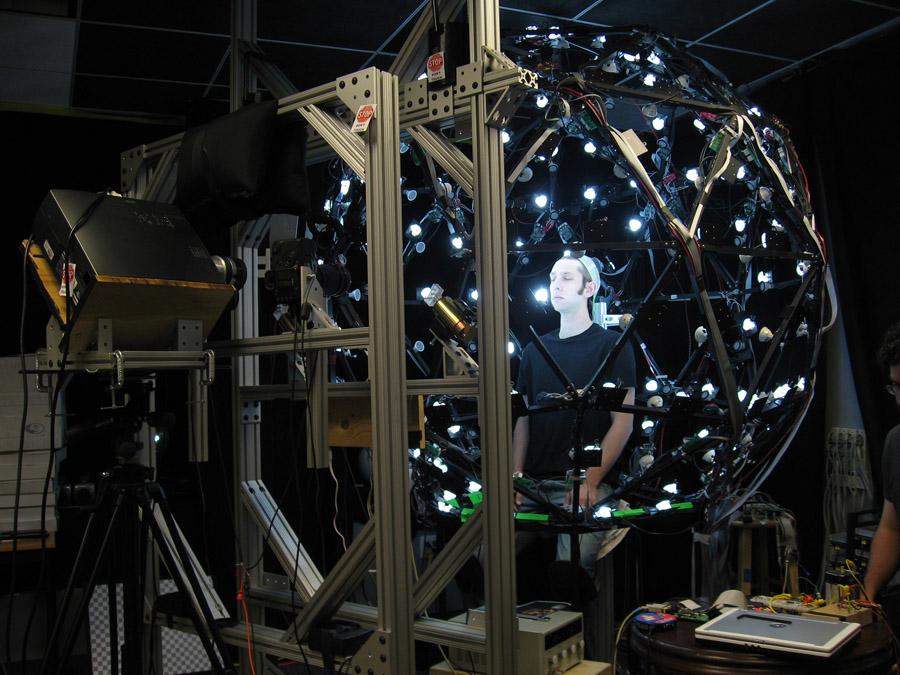
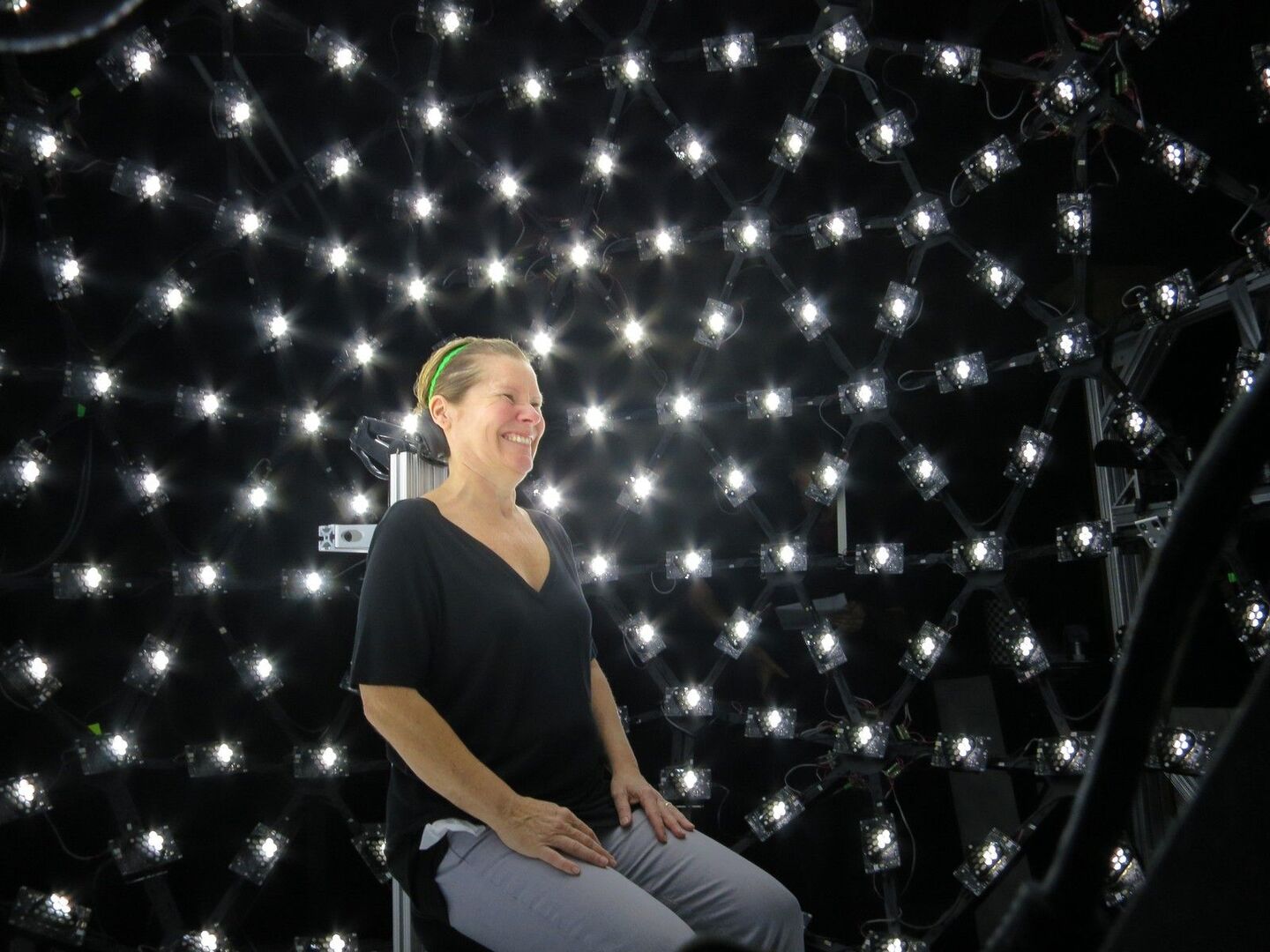
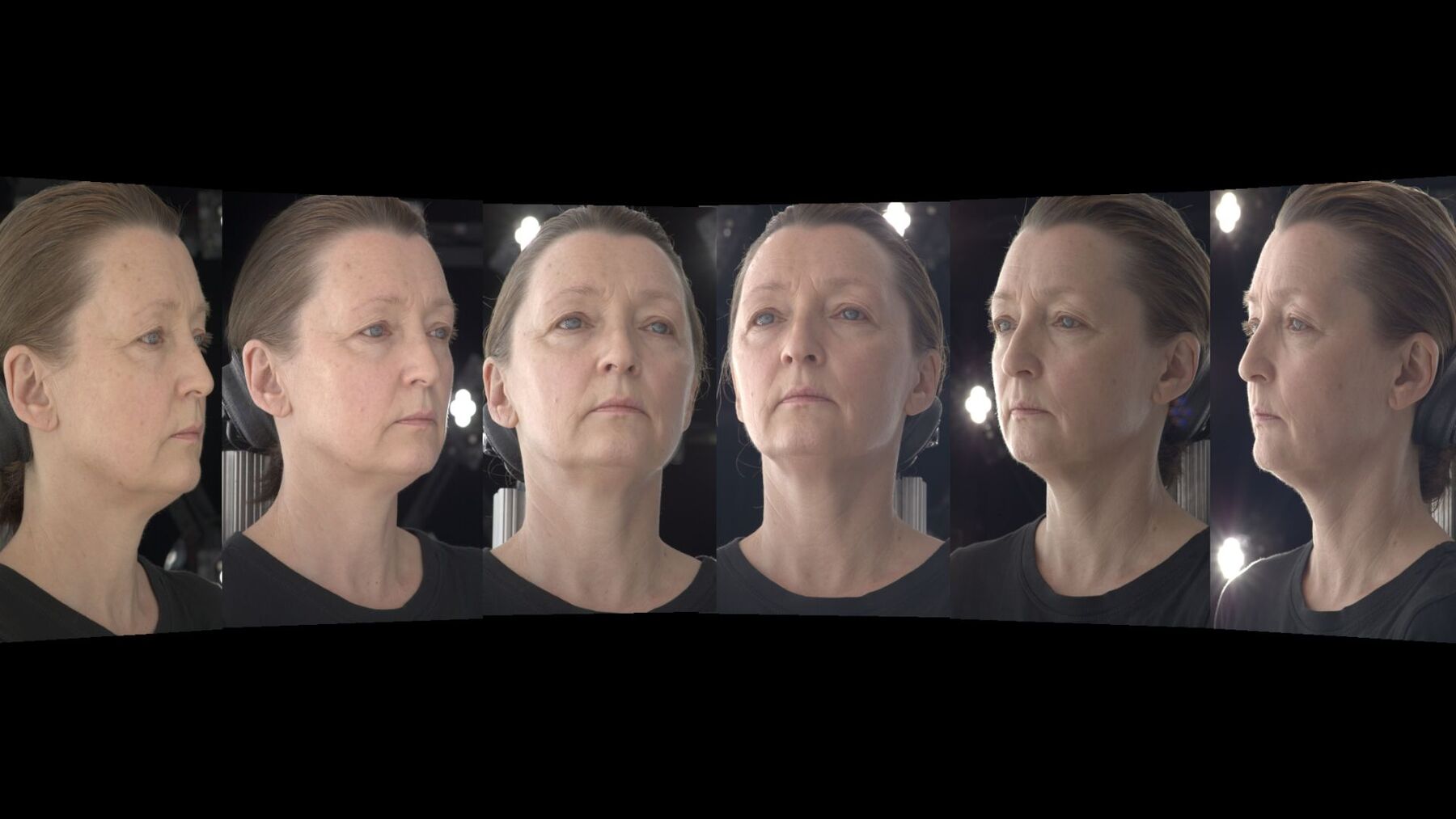
Imelda Stanton and Leslie Manville within the LightStage system at USC ICT
A particularly interesting solution was obtaining data on subsurface blood flow. The actresses were asked to hold various facial expressions, such as squinting tightly or wrinkling their nose. This allowed specialists to record changes in skin tone resulting from the redistribution of blood in the tissues.
Imelda Thornton and Emotions in Fairy Visualization. Maleficent. 2014.
After scanning, the acquired data was used to create digital facial models. One of the most complex tasks was reproducing realistic skin that retained the actresses' individuality. Digital Domain specialists created highly detailed digital faces, paying close attention to the skin structure and its interaction with light. For this, specialized Skin Shaders—shaders responsible for the visual properties of skin during rendering—were developed. These allowed for the reproduction of parameters such as natural skin tones, micro-relief, pores, reflections, and highlights. It was particularly important that the team first created the most photorealistic digital versions of the actresses before any stylization was applied. Only after achieving a high degree of resemblance to the real faces did the specialists begin modifying the characters' proportions—enlarging eyes, reducing chins, and altering cheek shape. This approach allowed the actresses' individual features to be preserved even after intense stylization.
June Temple, character visualization, visualization stages. Maleficent. 2014.
Imelda Stanton and the visualization of the fairy. Maleficent. 2014.
The key to creating the pixies was to first generate photorealistic CG versions of the actors, and then transform these digital actors into pixies. This guaranteed that our pixies always retained an exact resemblance to the actors—every one of their thousands of facial expressions, and the way their skin moved and looked.