Concept
Chance governs many modern video games, but the visual language developers use to depict the power of fate predates computers. Today, the roguelike genre is flourishing in the industry—from card strategy games to grim survival simulators where any mistake resets progress. The imagery that represents the invisible random number generator in these games is familiar to people since the Middle Ages: the spinning wheel, the spiral, dice, and the oracle card.
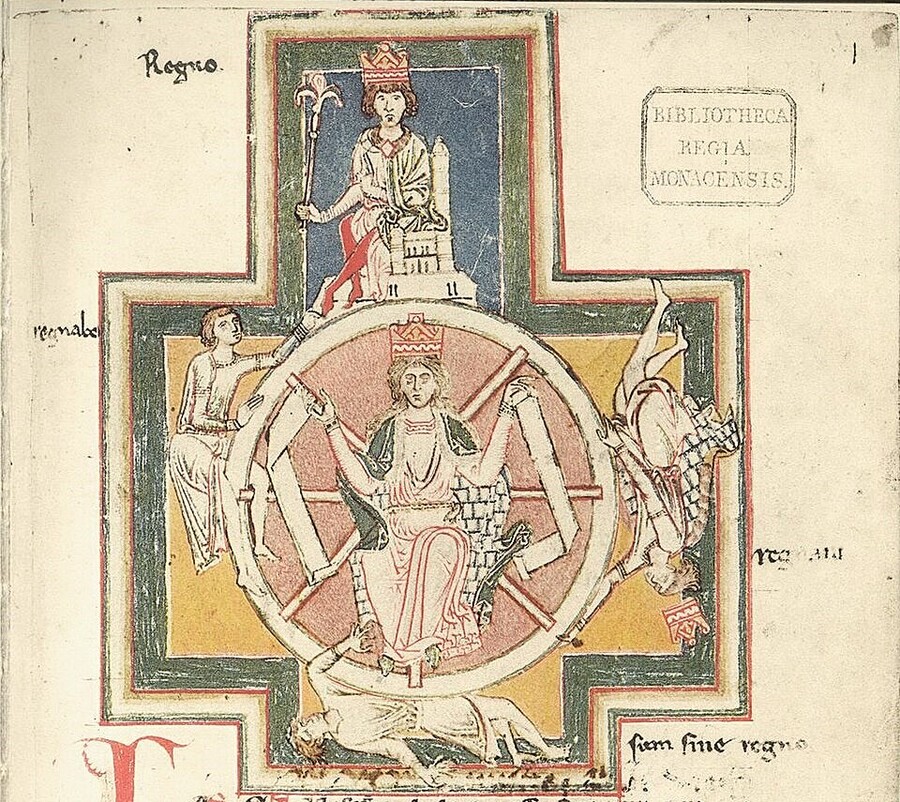
Wheel of Fortune (Rota Fortunae). Miniature from the Carmina Burana manuscript, c. 1230. Bavarian State Library, Munich.
Most research on «bagpipes» examines mathematical balance or code, but it rarely touches upon the history of the symbols players use to read the presence of rock. I want to trace the direct visual connection between medieval dice games, early modern printed board games, and contemporary indie aesthetics. From a practical standpoint, analyzing these imagery systems will help game designers and artists more accurately build an atmosphere of risk and doom by drawing upon cultural codes tested over centuries.
To understand how a game scenario functions, I draw upon the classification developed by the French sociologist Jean Caillois. In his book, Games and Men, he divided all games into four elements: agon (competition), alea (chance), mimicry, and ilinx (spinning/vertigo). Caillois termed games falling under alea—a Latin term meaning «dice”—as games where victory depends not on human skill or intellect, but on fate. The player here does not control the situation; they merely wait to see which side the dice fall on or where the roulette wheel will stop. The Dutch cultural historian Johan Huizinga, in his treatise Homo ludens, also noted that in ancient times, casting lots and playing dice were closely linked to divination and attempts to discern the will of higher powers.
The game board as a space of blind chance (alea). A frame from the video game Buckshot Roulette (developer Mike Klubnika, 2023).
Research Question: How did the abstract philosophical idea of chance (alea) acquire concrete graphic form within European gaming culture, and how did these visual codes transfer to modern digital roguelike games?
Hypothesis: Contemporary game design does not invent the iconography of randomness from scratch. Instead, it inherits and reinterprets the archetypes of medieval and early modern board games—the circle, the spiral, the dice, and the map—to make the unseen function of a programmed algorithm emotionally tangible for the player.
In my work, I will first address medieval gaming culture, examining how the symbol of the Wheel of Fortune and dice established the visual canon of fate. Then, I will move on to modern printed board games—primarily «Game of Goose» and antique card decks—to see how religious fate evolved into secular gambling. In the final section, I will compare these historical findings with the interfaces and material world of contemporary roguelikes.
Sections: • Concept • Archetypes of Fate: The Wheel of Fortune, Dice, and Bones in Medieval Gaming Culture • From Morality Tales to Salon Risk: The Spiral of Destiny in «Goose Game» and Early Printed Games • Digital Reincarnation of Chance: Visual Codes of Alea in Modern Roguelike Games • Conclusion
Archetypes of Fate: The Wheel of Fortune, Dice, and Bones in Medieval Gaming Culture
From Sacred Lots to Gaming BonesIn ancient cultures, casting bones was never seen as a waste of time. To ascertain the will of the gods or to settle a dispute, people threw astragali—processed tarsal bones from animals. Johan Huizinga noted in his book that in archaic society, divination by lots and gambling remained two sides of the same ritual. Humanity consciously relinquished its own calculations and surrendered the decision to a higher power.
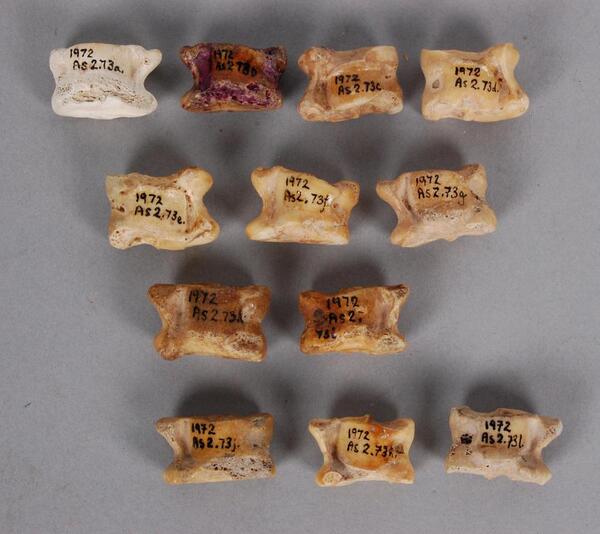
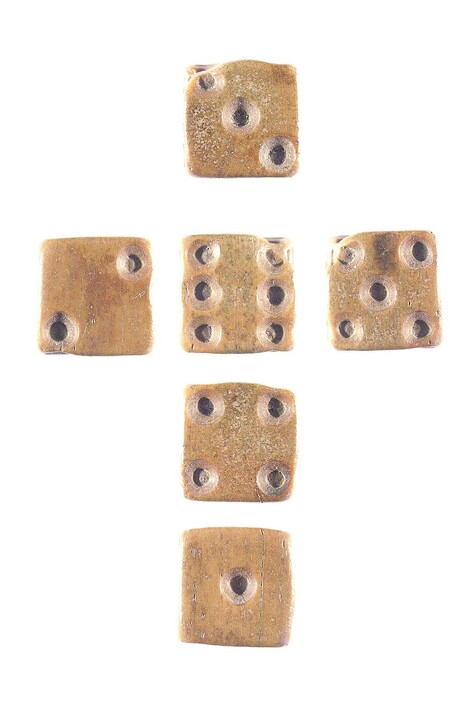
Ancient gaming dice (astragali), 4th–1st centuries BCE. British Museum, London Pattern of a medieval gaming die, 13th–14th centuries.
In games of the alea category, the participant is completely passive—they don’t train agility or plot clever strategies; they merely await the verdict of fate.
In medieval Europe, gambling transitioned from temples to taverns and palaces, yet it retained a dark, fatalistic undertone.This is best illustrated in the miniatures from the «Book of Games» (Libro de los juegos), compiled in 1283 for the Castilian King Alfonso X the Wise. Its third section features games where the outcome is entirely dictated by blind chance.
Dice Players. Miniature from the treatise «Book of Games» (Libro de los juegos), 1283. Escorial Library, Madrid.
If one closely examines the composition of these miniatures, one detail immediately stands out: the bones are always positioned dead center on a contrasting cloth, and the players' gazes and gestures are fixed only upon them. The artists intentionally depict the characters with hands raised in prayer or despair, emphasizing humanity’s powerlessness in the face of the revealed dice.
The Wheel of Fortune as the Primary Scheme of Destiny
If the dice symbolized the instantaneous blow of chance, the primary visual metaphor for cyclical destiny became the Wheel of Fortune (Rota Fortunae). This symbol originated in Boethius’s treatise, «Consolation of Philosophy,» and was transformed into a rigid graphic formula: a goddess spins the wheel’s handle, elevating some people toward a crown and riches at the top while casting others downward. In medieval manuscripts, this trajectory was often labeled with four stages—"I shall reign,» «I reign,» «I have reigned,» and «I have no kingdom"—but in the miniature from the «Garden of Delights, ” the cycle is readable even without words.
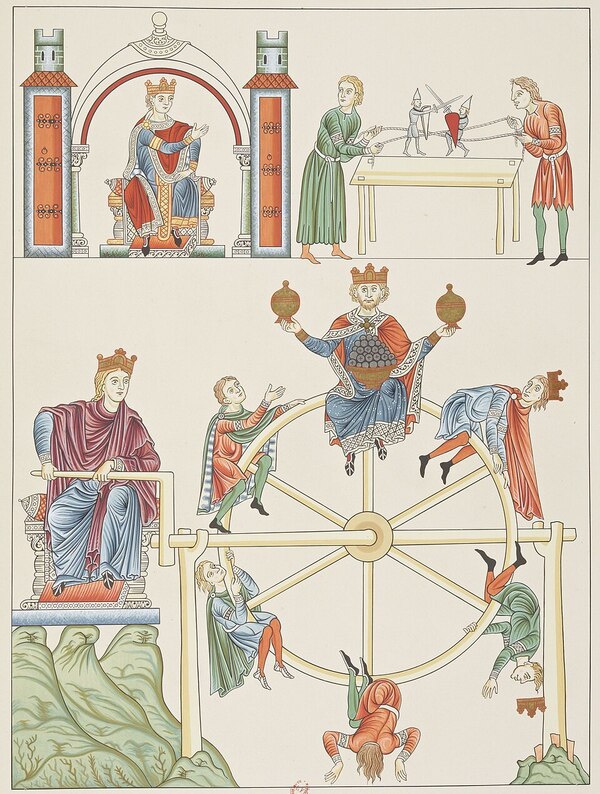
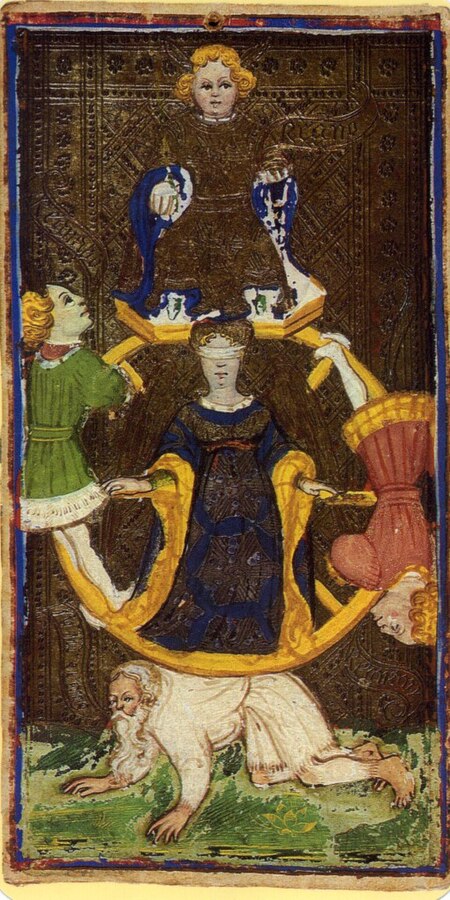
Wheel of Fortune. Miniature from the encyclopedia «Hortus Deliciarum,» c. 1180. 19th-century reconstruction. Major Arcana «Wheel of Fortune» from the Visconti–Sforza Tarot deck, c. 1450. Pierpont Morgan Library, New York.
How the Church Turned Chance into a Moral LessonFor a long time, the Church forbade dice games as a sinful vice, but in the 10th–12th centuries, clergy themselves utilized the mechanism of chance to instruct monks. Bishop Vibolde of Cambrai invented the «Clerical Game» (Ludus Clericalis), in which the roll of three dice determined which of the 56 Christian virtues the participant must practice.The random number ceased to be blind chaos here and transformed into a conduit for divine providence, which guides humanity toward salvation.
By the end of the Middle Ages, two enduring visual codes of fate solidified within European culture: the playing die as a sign of instant judgment and the spinning wheel as a symbol of the inevitable cycle of rise and fall. During the Renaissance, these images moved beyond illuminated manuscripts and formed the basis of the first mass-produced board games.
From Moralizing to Salon Excitement: The Spiral of Fate in «Game of Goose» and Early Printed Games
Spiral instead of the wheel: the birth of «Goose Games»
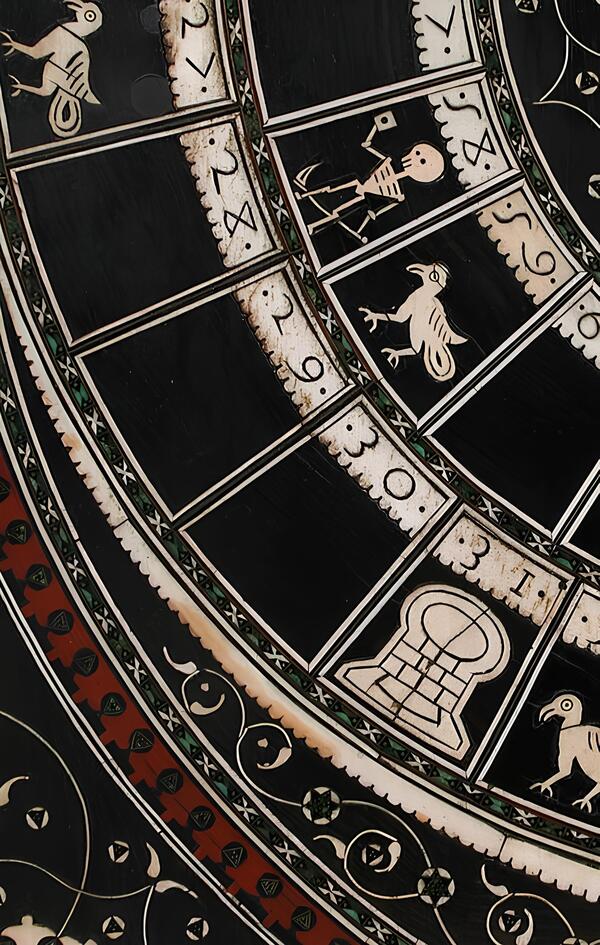
In the late 16th century, the image of the closed Wheel of Fortune underwent a new spatial evolution—it transformed into a spiral. Around 1580, the Tuscan Duke Francesco I de' Medici sent a new board game, Gioco dell’Oca («Game of the Goose»), as a gift to the Spanish King Philip II. Unlike the medieval wheel, which endlessly spun people around a single rim, the spiral board of 63 cells set a path from the outer edge toward the coveted center.
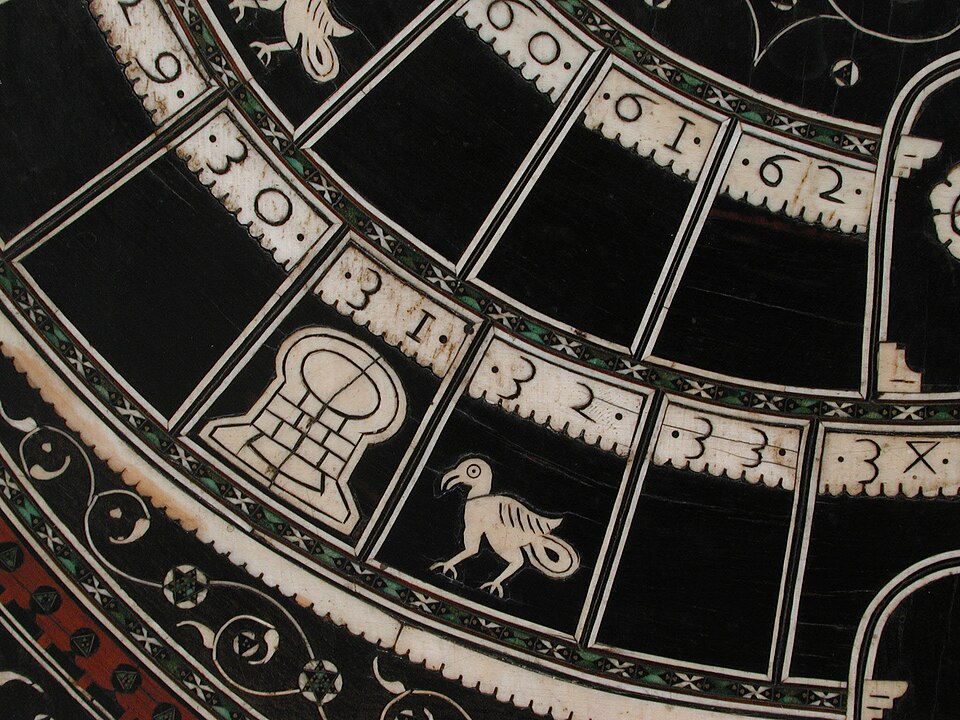
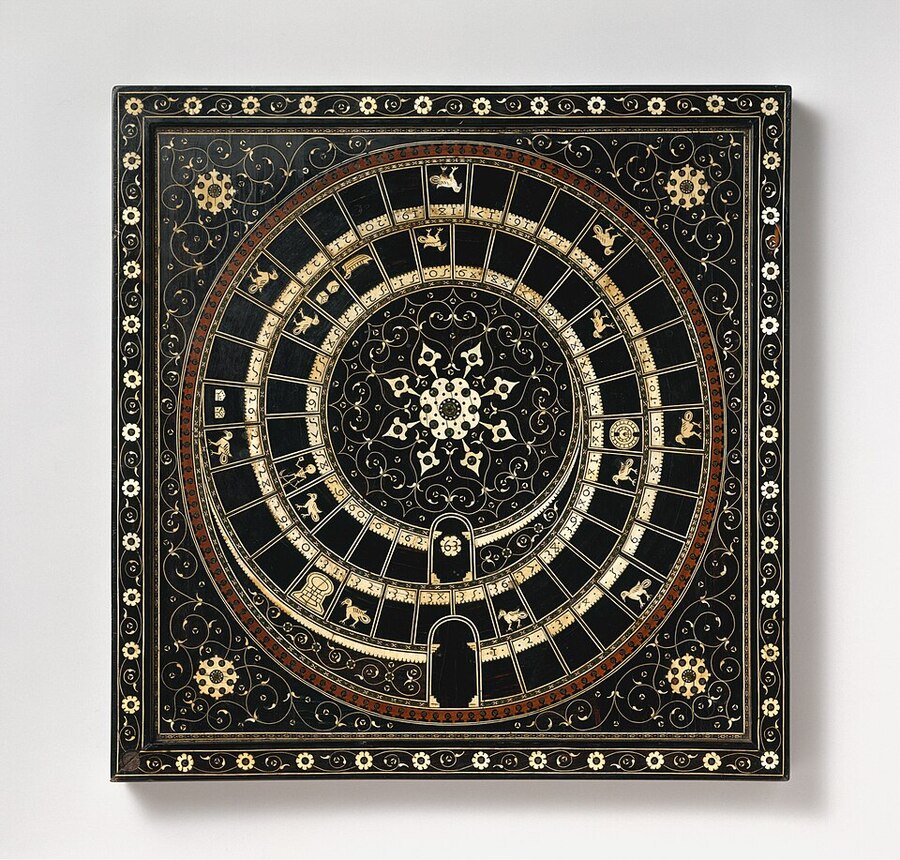
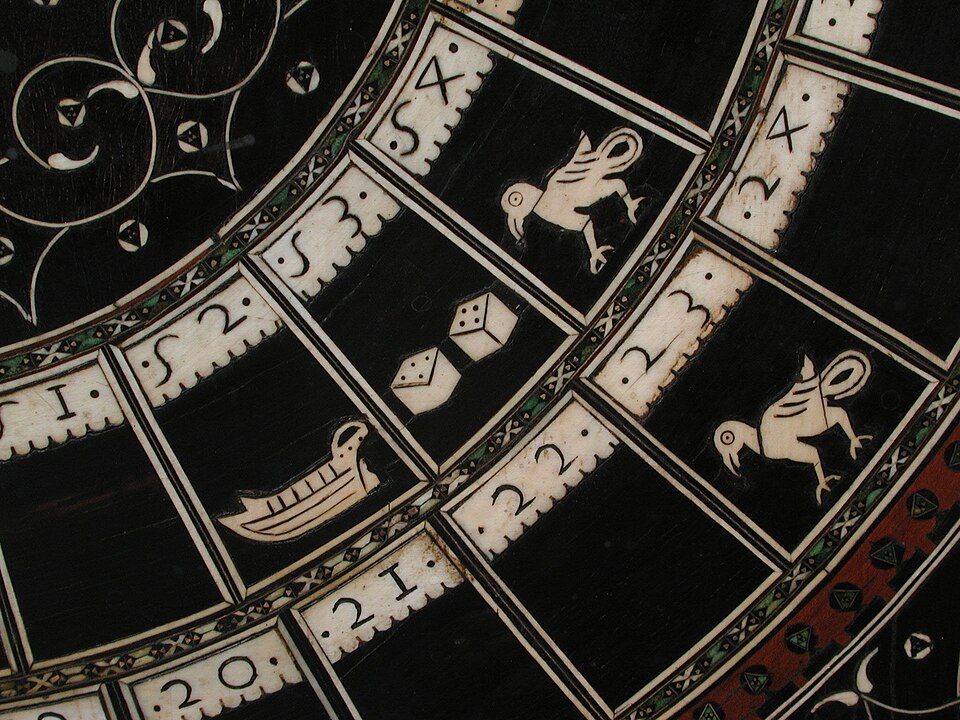
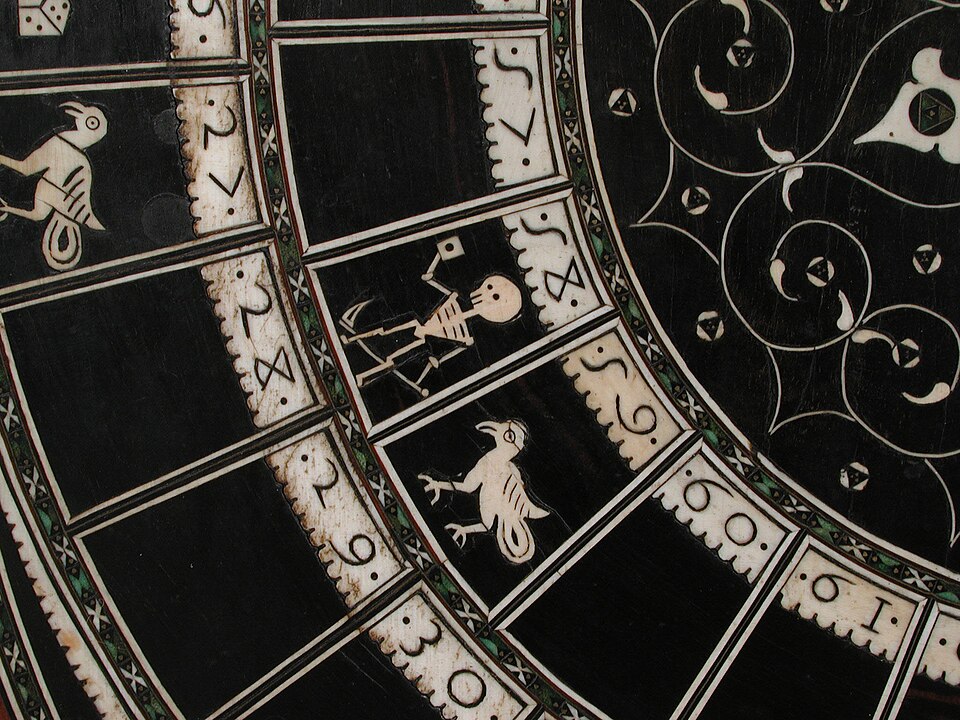
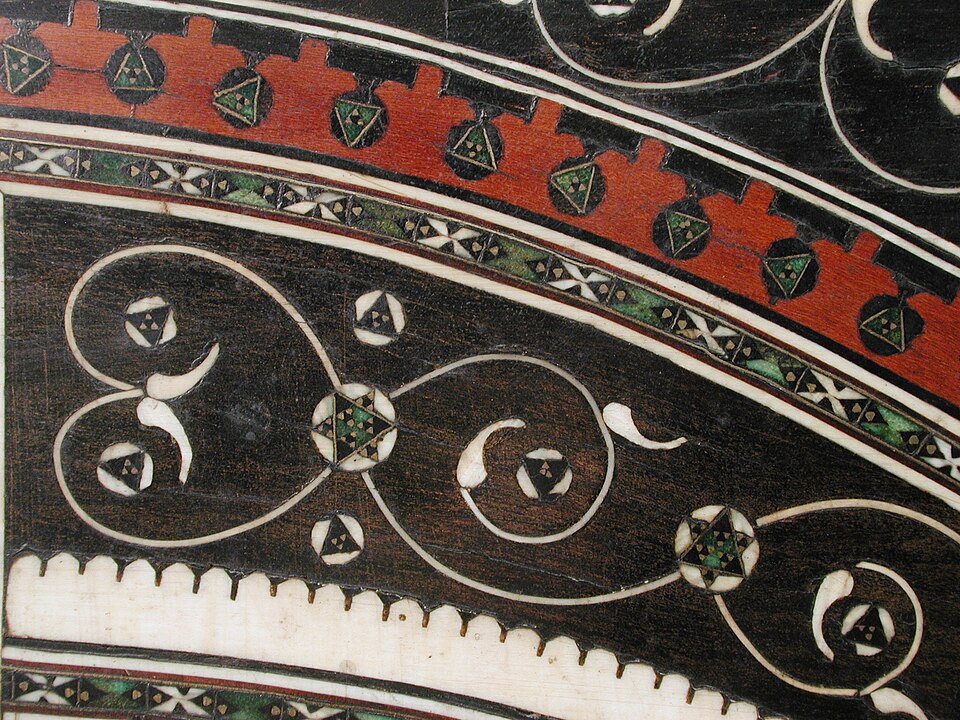
Board for «Game of Goose» (reverse side of a chessboard). Late 16th century (Gujarat, India, Italian design; ebony, ivory, horn, gold wire). The Metropolitan Museum of Art, New York.
However, the freedom of choice here remained an illusion. The player did not control the direction of movement; rather, they simply recalculated the squares based on the points rolled on two dice. I see in this spiral a direct visual metaphor for the path of life: the token inexorably moves toward the end, yet on every turn, it is confronted by the same traps of chance.
In alea, a person does not try to outwit an opponent—they engage in a direct confrontation with fate, wagering everything for the instant favor of chance.
In the seventeenth and eighteenth centuries, the «Game of Goose» completely shed its connection to religious moralizing and transformed into a gambling parlor pastime. Simultaneously, another visual medium—the gambling card—became established in Europe to represent faetum. Unlike an open spiral or dice thrown onto a table, where all possibilities are immediately visible, the card introduced an element of concealed threat into the aesthetic of alea: the player sees only the uniform back, behind which lies either salvation or defeat.
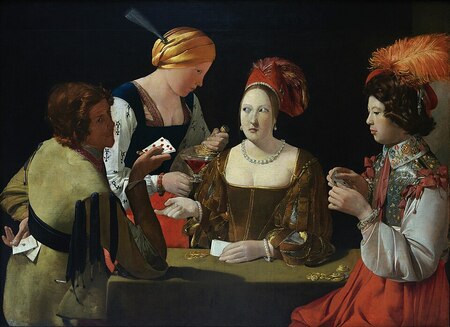
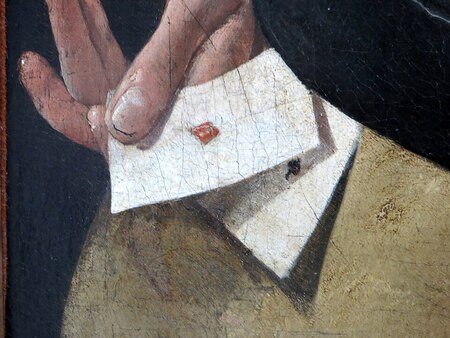
Georges de La Tour. «Shuler with a Bullhead Ace,» circa 1635. Louvre, Paris.
By the 19th century, a whole set of graphic tools of fate had become embedded in the arsenal of European games: a spiral with a trap for a complete reset at the finish, dice, and a closed card with an unpredictable value. It was this visual vocabulary that the creators of digital roguelike games picked up two centuries later.