Categories
Concept1. The Real Beast and the Digital 2. Geometry: Fur and Skin 3. Light in Hair 4. Color and Fur Pattern 5. Movement 6. What is Visible on ScreenConclusionBibliographyImage Sources
Concept
The visual study investigates how the technologies for creating photorealistic fur and skin on digital animals evolved between 2012 and 2019. Using three films as examples, it traces the decisions made by the studios and how those decisions manifested on screen.The three films—"Life of Pi» (2012), «The Jungle Book» (2016), and «The Lion King» (2019)—share one production challenge: rendering large beasts so that the boundary between live-action footage and digital imagery is invisible to the viewer. In all three instances, this boundary lies within the fur. Fur is composed of millions of fine elements, each of which transmits light, settles under its own weight, clumps together, and moves in response to the wind. Until rendered correctly, the animal reads like a statue with a pasted surface.
Justification for Theme Selection
Hair is present in every frame, yet it hardly has a recognizable form. It cannot be «made to look like» anything specific; it is either calculated correctly or it is not. Three films present three states of the same technology over seven years, addressing the same task. In Life of Pi, this is Richard Parker, on whom VFX Supervisor Bill Westenhofer (Rhythm & Hues Studios) worked. In The Jungle Book, these are Shere Khan, Baloo, and Bagheera; the project’s VFX Supervisor was Robert Legato, and MPC created the characters under the guidance of VFX Supervisor Adam Valdez. In The Lion King, the animals of the savanna are featured; Legato was again the project’s VFX Supervisor, and Adam Valdez and Elliot Newman executed the work at MPC. The comparison is not between species, but between solutions to a single problem: how the hair is constructed, how light is distributed within it, how color is defined, and how all of it moves.The work is based on materials in which the developers themselves describe their solutions.
Material Selection Principle
The selection process followed two tracks.The first track involved production documentation: material on «Life of Pi» from Cinefex Issue 132 (January 2013), Joe Fordham’s article «Law of the Jungle» from Cinefex Issue 147 (2016), the presentation by Ivan Newlander, Toshi Kato, and Kevin Bison «Rendering Fur in ‘Life of Pi’» at ACM SIGGRAPH 2013, materials from fxguide, The Art of VFX, and before-and-after shots, and the technical description of MPC for «The Lion King» prepared by Kai Wolter.The second track involved visuals: a final frame paired with production material.
1. The real beast and the digital one
In Life of Pi, Richard Parker exists in two types of shots. Twenty-three shots were filmed with a live animal, while the remaining 148 were created in Rhythm & Hues under the direction of VFX Supervisor Bill Westenhofer. To have material to work with, four tigers were brought to Taiwan; five weeks were spent on training and rehearsals before filming began.
Comparison of the real tiger (left) and the digital tiger (right) in the scene. A frame from video material detailing the visual effects creation for the film «Life of Pi» (2012, dir. Ang Lee).
Richard Parker in the dinghy, plan breakdown: final image of the tiger, the oar is shown as a grid. A frame from the film «Life of Pi» (2012). VFX Supervisor — Bill Westenhofer, Rhythm & Hues Studios
Tiger on a raft. A shot from video footage about the creation of visual effects for the film Life of Pi (2012, directed by Ang Lee). VFX Supervisor — Bill Westenhofer, Rhythm & Hues Studios
These photos explain what initially seems illogical: why keep a live animal when a digital alternative is safer.
Twenty-three plans featuring a real tiger cost more than twenty-three digital ones, and five weeks of preparation also cost something. Westenhofer describes the tiger as: a solid mass of muscle encased in a loose hide draped over it like fabric. He specifically notes the ripple along the shoulder as the animal shifts its weight—something you cannot pull from an anatomical atlas; it can only be seen and replicated. All other plans were made with reference to the footage captured.
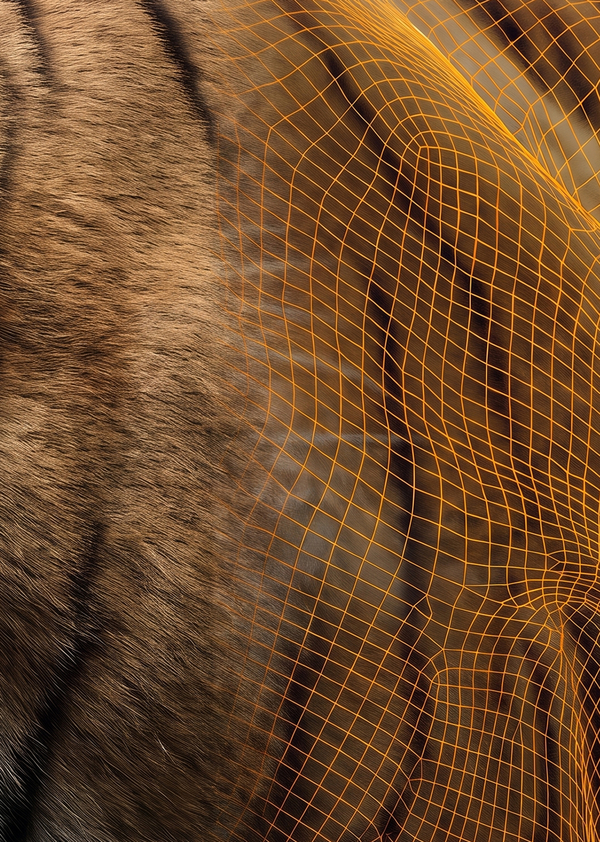
Richard Parker in the dinghy: superimposed over the image of the tiger and the boat are their polygonal meshes
The second takeaway from these numbers is why fur became a bottleneck. According to Westenhof, forty percent of the studio’s work was dedicated to new developments, and these specifically concerned hair, its lighting, and the system of muscles and skin. Parker primarily used ray tracing within its own renderer, Rhythm & Hues Wren, and reflected the environment in a fully diffuse manner; for all the furry characters in the film, the studio also introduced area light sources. Jason Bayer, digital effects supervisor at Rhythm & Hues, describes the result as follows: when the tiger approached the canvas, a bright highlight from the canvas appeared on its chin, and near the orange seats, the fur took on an orange reflection (Fig. 1.1). The fur stopped being «painted» and began to adopt the color of its surroundings.
In «The Jungle Book» and «The Lion King,» no actual animals were filmed: the only human on set was Neel Sethi; everything else was built. There is no actual prototype to match the fur against, so the reference relies on recordings from nature reserves and the internet. The criteria shift—it is no longer about whether something «looks like that specific tiger that was on the set,» but whether it «looks like how the fur behaves.» For a comparison of technologies, this is even more convenient because it removes the need to account for a specific animal.
Stages of Creating Shere Khan in «The Jungle Book» (2016)
The Academy Award for Best Visual Effects went to: for «Life of Pi"—Bill Westenhofer, Guillaume Rousharon, Eric-Jan de Boer, and Donald R. Elliott; for «The Jungle Book"—Robert Legato, Adam Valdez, Andrew R. Jones, and Dan Lennon. «The Lion King» was nominated in this category.
2. Geometry: Wool and Leather
The geometry of fur and skin is the first stage of the technological chain: before light hits the hair, it must be constructed and placed. This section explores how the shape and position of the hair were defined and how the skin behaved underneath it.In «The Lion King,» the hair is not modeled strand by strand. The work begins with guide curves: the groom artist defines the overall flow and direction, and then adds clumps. The work is done in the proprietary MPC Furtility tool, a Maya plugin; the final render is processed in RenderMan. The guide curves establish the artist’s concept, not the final hair geometry.
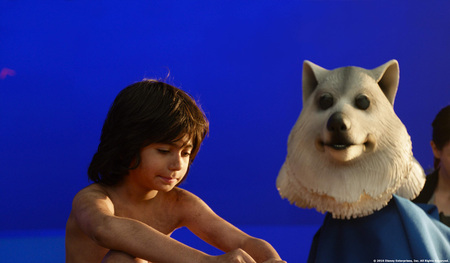
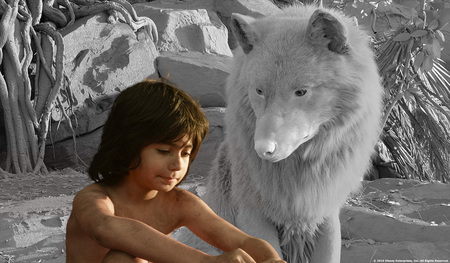
Frame from video material about creating visual effects for the film «The Jungle Book» (2016, dir. Jon Favreau), specifically the simulation of fur in Houdini based on Adam Valdez’s story. VFX Supervisor at MPC — Adam Valdez
Timon and Pumbaa. A still from the film «The Lion King» (2019, directed by Jon Favreau). VFX Supervisors at MPC: Adam Valdez and Elliot Newman; Lead Groom TD: Gabriel Arnold.
The renderer completes the hair strands where no one drew them. Therefore, the question, «how many hairs are in the frame, ” yields almost no information when discussing photorealism. What matters is the density per square centimeter in a specific area, and the density on the face is entirely different from the density on the back.
The second layer is the skin. Westerhof describes the tiger as «a fleshy body surrounded by a loose skin sac.» In «Life of Pi, ” this was solved with a two-pass scheme. The first pass: the muscles pull the skin, and it shifts along with them. The second pass: the dynamic simulation rests on the already shifted skin, allowing it to slide across the surface and gather into folds. These folds are not drawn; they emerge dynamically as the skin slides over the body beneath it, which has already moved.
Parker Musculoskeletal and Skin Test. Rhythm & Hues Studios Production Materials
Richard Parker’s muscle system and dual-layer skin, production material by Rhythm & Hues Studios. The film «Life of Pi» (2012)
In «The Jungle Book, ” the same problem was solved differently. Valdez describes Baloo directly: the facial expressions were hard to read, so the team tracked the shape using masks to enhance the wrinkles on the skin over the already finished fur layer in compositing. This difference is visible on screen if you know where to look. With Parker, the wrinkles behave unpredictably: they appear where the animal bends and disappear when it straightens out. With Baloo, the wrinkles act like a final touch-up—always in the right place, always with the right intensity, regardless of what the rest of the body is doing. It’s simpler to control like that. If the artist decided to enhance the expression, it was enhanced immediately in both the skin and the fur, whereas in real life, these things separate.
Balu in Motion: Facial Expressions and Fur. A short video showing the creation of visual effects for the film «The Jungle Book» (2016).
The third detail shows where the 2016 border ran, while also demonstrating that the practical techniques from «The Jungle Book» remain relevant. On set, puppets were used, fitted to digital character models: furry, matching the color of the real animals. These were filmed alongside Neal Sethi, and later tracked and replaced with a digital model. However, the embrace scene between Mowgli and the wolf Raksha lacked substitution—the boy’s arm on the camera side was digital, otherwise the fingers and fur would not have blended together.







