Navigation
- Concept
- 2b2t: Large-scale destruction, exploits, and a reshaped landscape
- 9b9t: Duplication, spam, and broken graphics
- Then and Now
- Conclusion
Concept
Griefing and cheats on anarchic Minecraft servers are usually perceived only as game interference and a violation of rules. However, on servers without wipes or restrictions, the destruction of builds, lava walls, craters, and cheat client interfaces create a distinct visual aesthetic that can be viewed as a form of radical digital art.
This contrast constitutes the core research value of the work: exploring precisely how destructive actions, broken mechanics, and cheating within multiplayer environments transform into a conscious artistic gesture and forge their own visual language.
I decided to study the phenomenon of griefing and cheating as radical art using the examples of two anarchic Minecraft servers (2b2t and 9b9t) to understand the techniques players use to dismantle the virtual environment and why this visual is comparable to contemporary artistic practices.
The central research question
How do griefing and cheating transform from violations of game rules into a form of radical art in multiplayer settings, and what visual codes, deconstruction techniques, and artistic forms do they generate, using servers 2b2t and 9b9t as examples?
Research Hypothesis
I posit that griefing and cheating function as radical art through several key techniques that manifest differently on the 2b2t and 9b9t servers. First, on 2b2t, players completely erase the natural generation using lava caves, obsidian netting, and craters, thereby creating their own unique world pattern and map. Griefers leave ruins, signs, and lava atop elaborate, beautiful builds—yes, they destroy the creations of other players. But aren’t their actions also a unique creation that cannot be perfectly replicated? On 9b9t, due to duping, item spam, lag machines, chunk bugs, and the rendering of cheat clients (X-Ray, tracers, NoCom), the game’s visuals themselves break down, turning the screen into an abstract diagram or visual noise.
How do we test and prove a hypothesis?
Compile a visual set based on the 2b2t and 9b9t servers: renders of spawns, before-and-after raid construction photos, screenshots with cheat clients enabled, and visualizations of chunk exploits and bugs. For each example, analyze precisely how players violate the rules and the visual environment of the game, and map these tactics to the practices of radical art (land art, glitch art, and actionism).
Research Interest
I am conducting this visual investigation to move beyond a «good or bad cheater» evaluation and simply deconstruct the visual aspects of anarchist servers. I am interested not just in presenting screenshots of blown-up houses, but in explaining how the visual language of griefing functions through specific examples from 2b2t, Constantiam, and 9b9t.
I would also be interested in tracking how different server entry rules (the queue on 2b2t versus free entry on 9b9t) affect how the map evolves over time.
2b2t: Massive destruction, exploits, and the reshaped landscape
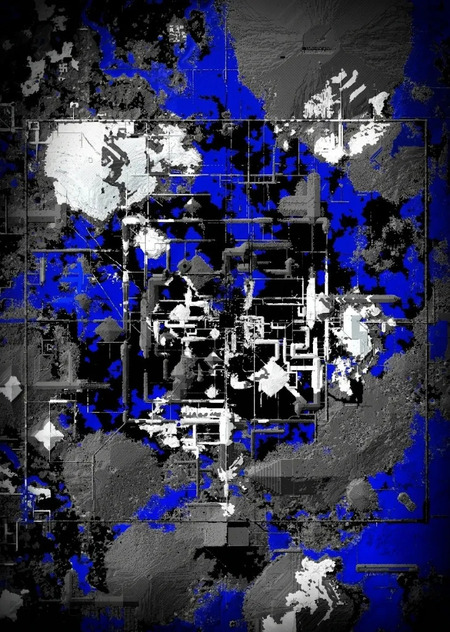
Because the server has existed since 2010 without a single wipe, players have literally rewritten the landscape around the spawn from scratch. They flood vast territories with water and lava, which results in giant gray cobblestone pyramids—lavacasts—growing up. If you look at the spawn map from above, instead of forests, rivers, and mountains, you see a solid man-made pattern of craters, pyramids, and obsidian walls. Players use the game mechanics not to survive, but to completely erase the developers' original design and draw their own chaotic pattern over it.
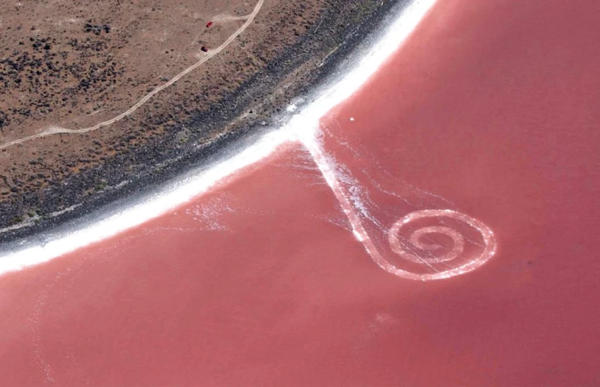
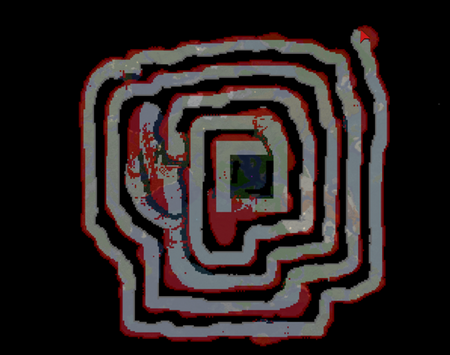
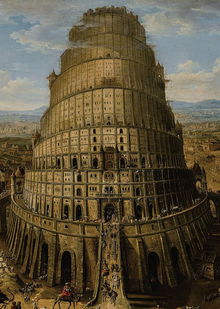
Robert Smithson. «Spiral Dam» and the Spiral Pattern for Chunk Loading on 2b2t
And it looks beautiful! Furthermore, these structures can be compared to the land art of the 1960s–1970s (like the works of Robert Smithson or Michael Heizer), but instead of bulldozers in the desert, the game uses fluid physics, and instead of earth, it creates a digital wasteland where the scale of the intervention in nature holds value.
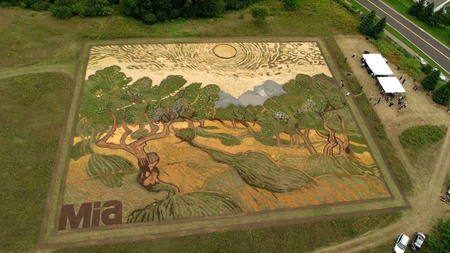
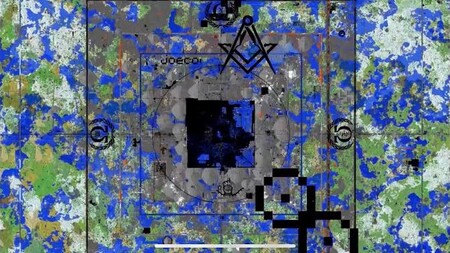
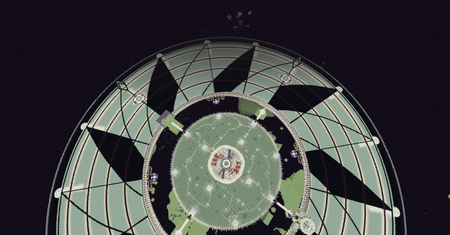
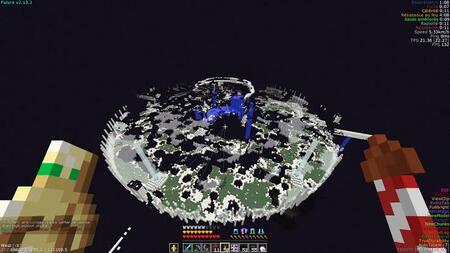
Land art for the Minneapolis Institute of Art and a Render spawn for 2b2t with obsidian symbols
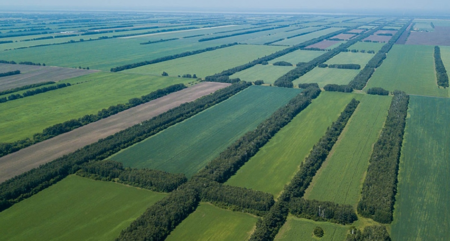
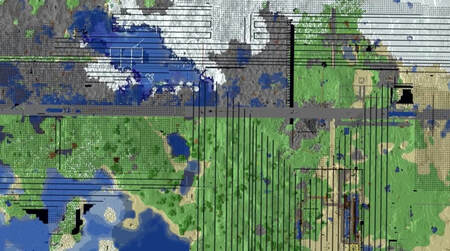
Protective tree belts and agricultural fields from the air and Map of obsidian structures and lines in the sky over 2b2t
Grievers love creating giant obsidian roofs and grids that stretch high into the sky above the zero coordinates. They eclipse the sun for thousands of blocks around, turning the world’s center into an open-air dungeon. From below, these intersecting black lines against the backdrop of burning lava resemble a graphic grid or the scaffolding of some unfinished megacity.
The black «drawing» is all obsidian blocks!
This is very similar to contemporary site-specific installations, where an object is created strictly for a particular location, thereby altering its perception. Thousands of strangers build a single, somber sculpture over the years—without any practical utility—simply to impose a new geometry and atmosphere onto the space.
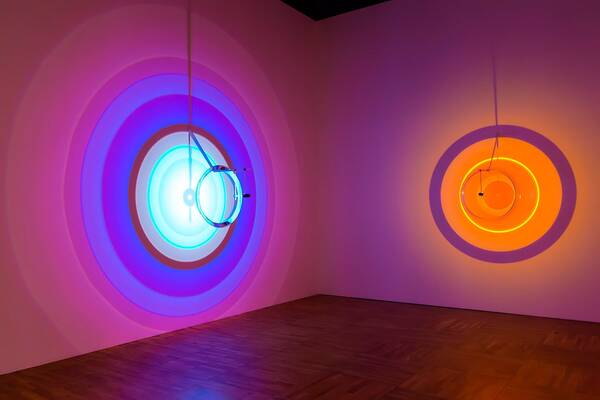
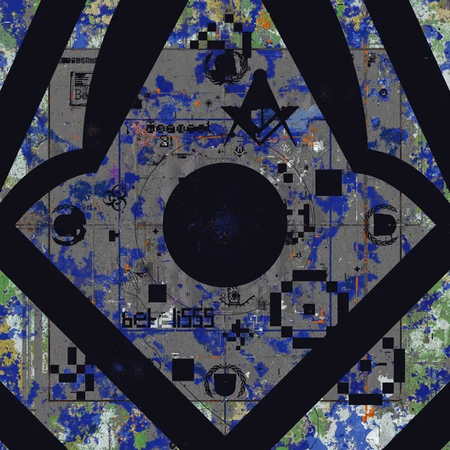
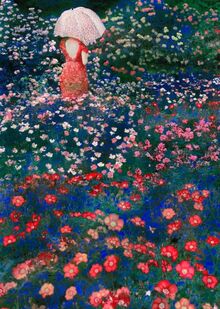
Olafur Eliasson. «Space Resonates with Our Presence» and the 2b2t Spawn Map (04/13/2020, IronException)
What’s happening to the large bases on 2b2t? Players travel millions of blocks away from spawn and spend months building incredible projects like Space Valkyria or Boedecken, all while knowing that griefers will eventually come for them. When raiders find a base and blow it up with dynamite and visers, what remains of the palace is a massive crater down to bedrock and a few floating pieces of wall.
Space Valkyria: From Grinding to Mastery
This resembles autodestructive art (such as Jean Tinguely’s self-destructing machines) and performance art with an open ending: the structure is not initially conceived as an eternal monument, but rather for the process of its eventual destruction, where the ruin becomes the final point of the work.
Then/Now