Don’t be afraid to take risks in art.
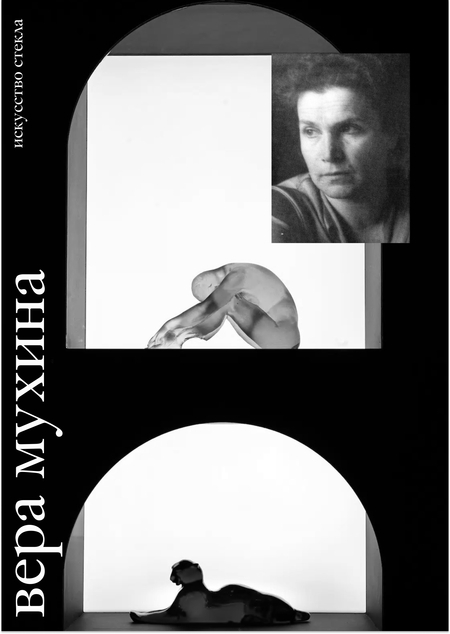
Vera Ignatyevna Mukhina is best known as the creator of the monument «Worker and Kolkhoz Woman.» However, her contribution to art glass is comparable in scope to her sculptural works. It is through her that the revival of Russian art glass took place in the late 1930s and early 1940s. Mukhina approached glass as a sculptor searching for a new plastic language—and this defined her method: not to decorate the glass, but to think in glass.This visual exploration is structured as a sequence of chapters, each revealing one aspect of her contribution: from the material’s changing status to contemporary dialogue. The hypothesis we test through this visual series is stated at the end of the introduction.
HypothesisVera Mukhina brought not only individual works but also a new methodology to Soviet art glass: she transitioned glass from a decorative and applied craft material into a sculptural one, merged artistic form with technological experimentation (hollow sculpture, molding, working with air bubbles), and thereby laid the foundation for the Soviet school of art glass.It was this method—rather than isolated stylistic techniques—that ensured Mukhina’s lasting influence: contemporary glass artists inherit her approach to the material as a living plastic medium rather than merely copying her pieces.
I/
Change Material Status
Mukhina’s key shift was that she approached glass not from applied arts, but from sculpture—and brought sculptural thinking with her. Her works initiated the development of plastic line in glass art, and her plastic expressiveness was directed toward the object form. For Mukhina, glass ceased to be a «surface for decoration» and became «a volume in which form lives.»
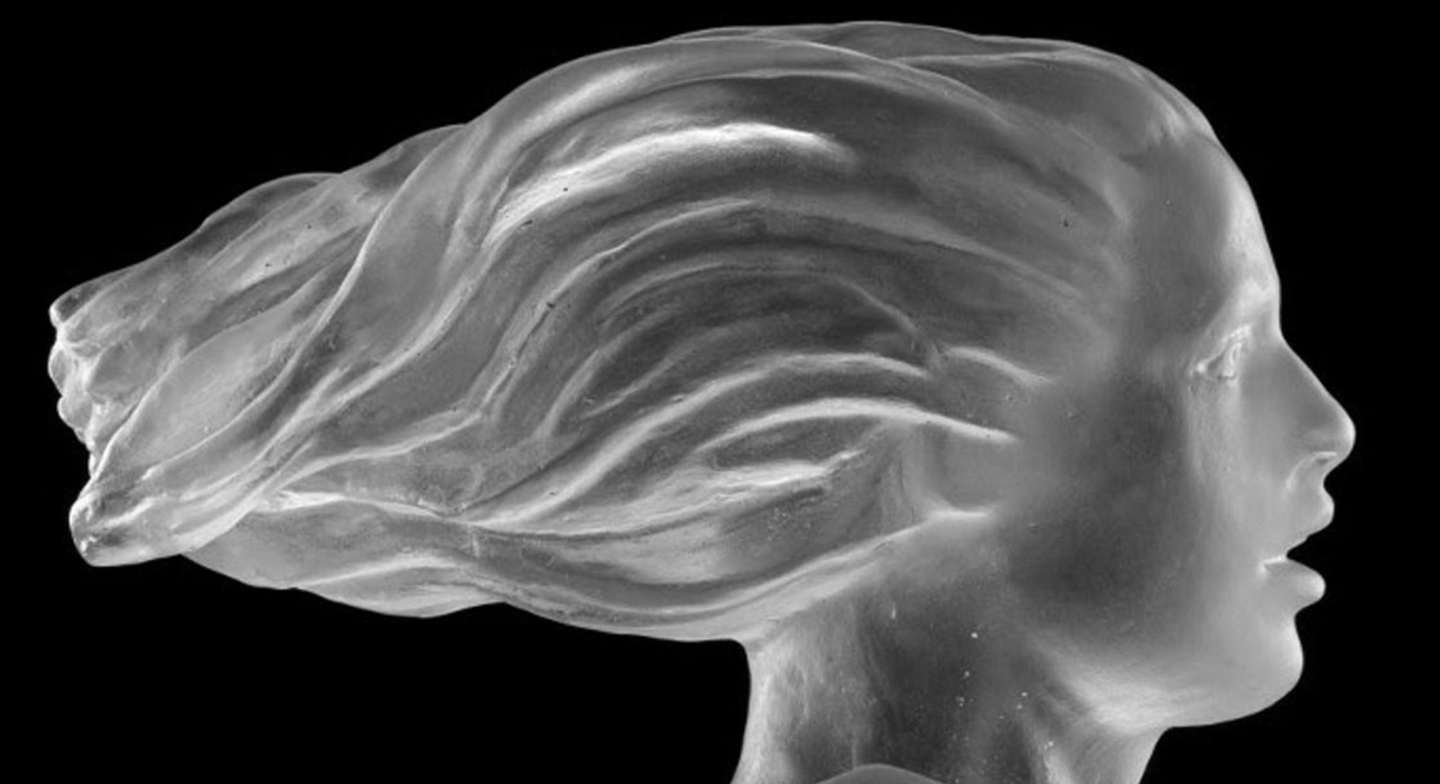
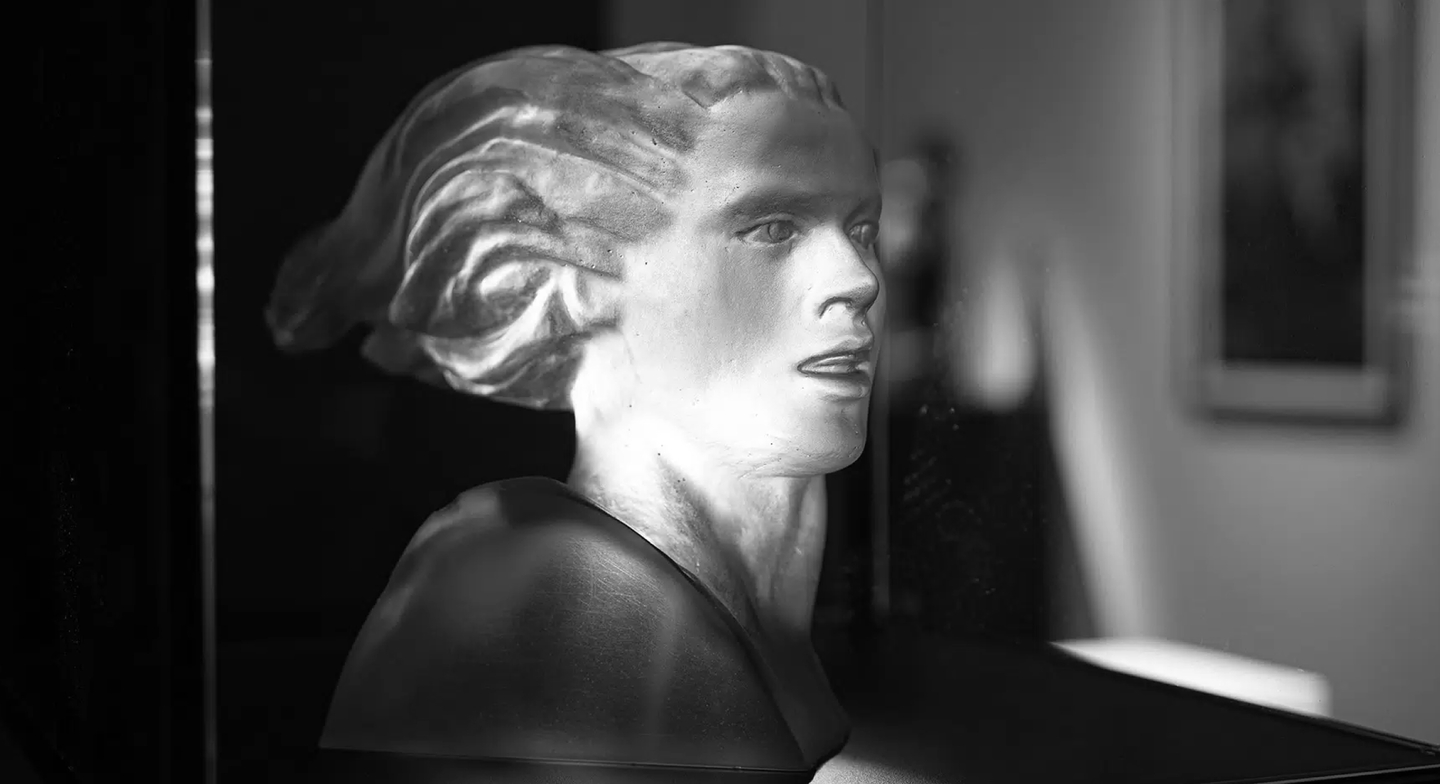
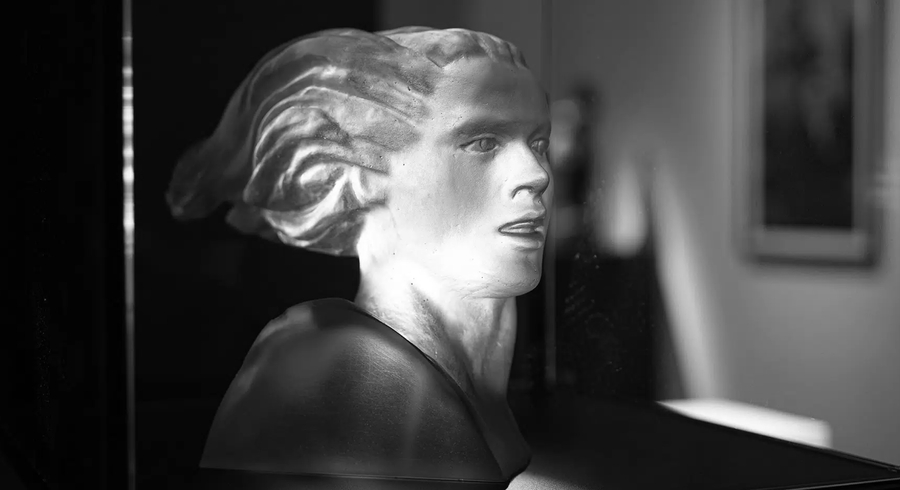
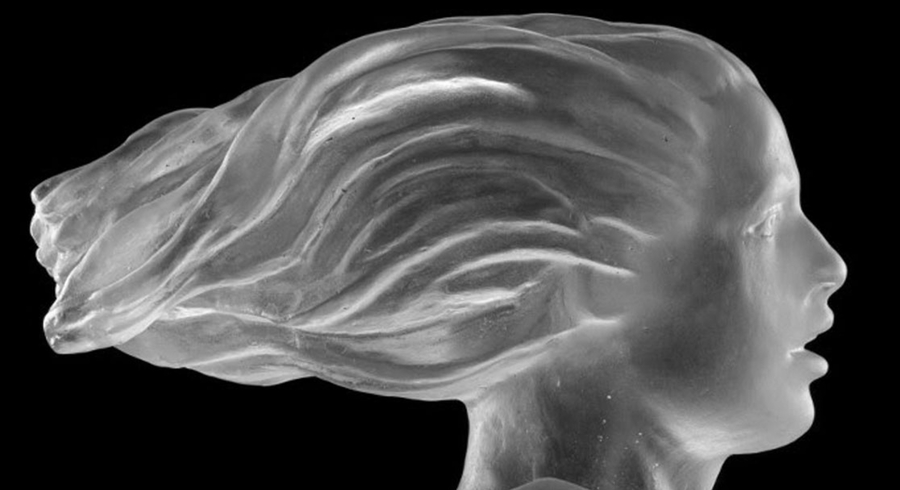
V.I. Mukhin. «Girl’s Head» («Wind»). 1957. Glass; molding.
II/
Experimental Laboratory in Leningrad
III/
Technological Revolution
IV/
Glass in Architecture
/Modern World
Conclusion
Mukhina’s contribution during the Soviet era was twofold: she created a body of glass sculptural works while simultaneously establishing the institutional and technological foundation—an experimental laboratory, collaboration with technologists, and the mastery of hollow form and molding. Thanks to this, glass in the USSR came to be understood not as a material for tableware and decoration, but as an independent sculptural and architectural medium. In the contemporary world, Mukhina’s influence manifests not in direct quotation of her imagery, but in the continuation of her method: glass artists work with transparency, volume, light, and technology in the same way she did—transforming glass into a means of plastic expression. Thus, visual research shows that Vera Mukhina’s glass art is not a «decorative facet» of her work, but an autonomous trajectory where sculptural thinking merged with technological experimentation. Her method—working with glass as a living, resistant, and fluid material—proved more enduring than any stylistic preference. This is why Mukhina’s legacy continues not in museum display cases, but in the new works of contemporary artists for whom glass has become the primary material.