Concept
The research centers on the problem of how communication transforms among the creator, the client, and the audience under the influence of serial format. Although seriality as a device has been known since the era preceding the 18th century—manifesting in religious frescoes, court projects, book miniatures, and engravings—its early iterations were tightly bound to specific patrons or structures: the church, the monarch, aristocracy, guilds, or publishers. In these contexts, the series served as a tool for praise, instruction, memorialization, or the demonstration of dominance, fixing a specific meaning and guiding the viewer’s perception along a predetermined narrative.
The relevance of this topic is dictated by the evolution of the very concept of the artistic commission. While initiative previously belonged predominantly to patrons, by the 18th century, the general public—viewers, subscribers, and buyers—began to take center stage. The series became not only an artistic form but also a commercial product intended for mass distribution and public discourse. This opens up new avenues for the artist: they can create works guided by market trends and anticipating the demands of the urban audience, rather than merely fulfilling direct commissions.
The research focus is shifted to the work of William Hogarth. It is important to emphasize that he was not the originator of serial art: monumental cycles and engraved series existed before him. Nevertheless, Hogarth imparted a new social significance to this format. His works present sequential narratives about contemporary life, addressing themes such as finance, marriage, prostitution, idleness, career advancement, moral decay, hypocrisy, and the urban environment. The viewer perceives the series not as a collection of isolated paintings, but as a visual story, «reading» meaning through the transition from one episode to the next—analyzing the details, facial expressions, setting, costumes, and behavior of the characters.Research materials are selected by comparing different models of seriality. Initially, cycles created before the 18th century are analyzed, where the series was dictated by a specific commission, a religious or political context, or the glorification of a patron. Next, a group of engravings preceding Hogarth’s work is isolated to demonstrate that while a print series existed previously, its narratives and functions differed. The study then shifts its focus to the 18th century, noting the transformation of the viewing environment: an audience of subscribers and purchasers emerges, the print market is established, and a new urban public forms. Only after this are Hogarth’s series considered a turning point, when the public effectively assumes the role of the patron.
The series becomes a form of social critique when its audience and actual patron are not a single client, but the viewing public.
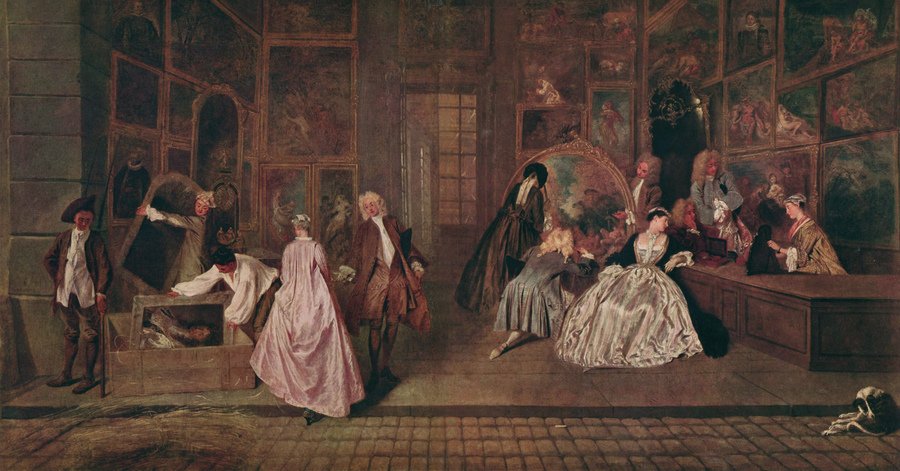
Antoine Watteau. The Shop Sign of Gersaint. 1720–1721 Art as commodity and the viewer as consumer
The visual structure is built not around isolated aesthetically pleasing images, but around sequences. The key lies in analyzing the work as a whole series: how the format is reproduced, how the character’s image is transformed, how the space is imbued with meaning, and how details connect individual sheets. In early cycles, the focus is on the prescribed program and the client’s role; in engravings, it is on print run and sequence; in Hogarth’s work, it is on transforming the series into a social «serial»; and after the 18th century, it is on the series' evolution as a tool for social critique.
The central research question is how the viewer became a patron and why the series proved to be an effective form for social criticism. The hypothesis put forth is that the series only transforms into a public social statement when its primary audience and real client is not an individual patron, but the viewing public. Through purchase, subscription, distribution, and discussion, the viewer begins to influence the existence of the work. Thus, the series gradually evolves from a form of glorifying the commission to a form of critical dialogue with society and with society itself.
William Hogarth. The Laughing Audience. 1733
Navigation
- Concept
- Introduction: The Series as a Mode of Narrative
- Before the 18th Century: Commissioned Cycles and Early Print Series
- The 18th Century: The Viewer, the Market, and the New Patron
- 19th–20th Century: The Series as Public Critique and Mass Image
- Comparison: What Changed in the Role of the Patron?
- Conclusion
- Bibliography
Introduction. The series as a mode of narrative
An artistic series is more than just a set of images on a single motif. Its depth reveals itself through sequential perception: the viewer moves from one frame to the next, compares episodes, captures recurring elements, and forms a cohesive picture. If a single work captures only a moment, a series introduces a temporal dimension, demonstrating a beginning, a transformation, and an outcome. Because of this, the format is ideally suited for narratives about the destinies of characters, ethical dilemmas, historical shifts, or social contradictions. Within the scope of this study, the series is treated not only as a genre unit but also as a mechanism of interaction between the creator, the patron, and the audience. In early cycles, the dominant role in shaping meaning belonged to the patron—the church, monarchy, aristocracy, or state structures. However, with the growth of the print market, the buyer, who acts as the viewer, began to exert increasing influence.
Pietro Antonio Martini, after Johann Heinrich Ramberg. The Exhibition of the Royal Academy, 1787. 1787 The Public as a New Participant in Art
Prior to the 18th Century: The series as commission and glorification
Before the eighteenth century, artistic cycles were primarily commissioned by religious institutions, royal courts, political elites, or as memorial projects. In such cases, the initiator determined the theme, the display location, and the core concept of the composition. The viewer moved from one painting to the next, yet the trajectory of this movement was strictly dictated by the patron. The main purpose of these series was not social critique, but rather the legitimation of religious beliefs, political authority, aristocratic lineages, or the historical significance of the events depicted.
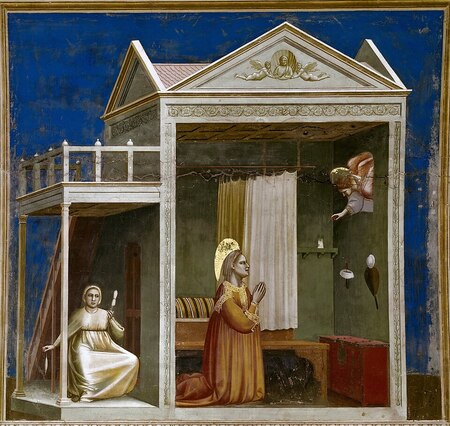
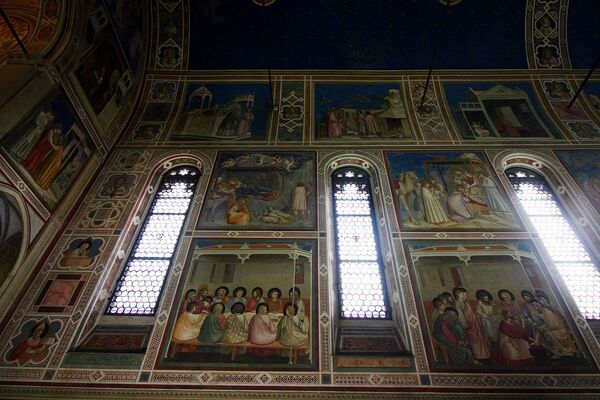
Giotto di Bondone. Annunciation to Saint Anne. 1303–1305 The religious cycle as a prescribed program
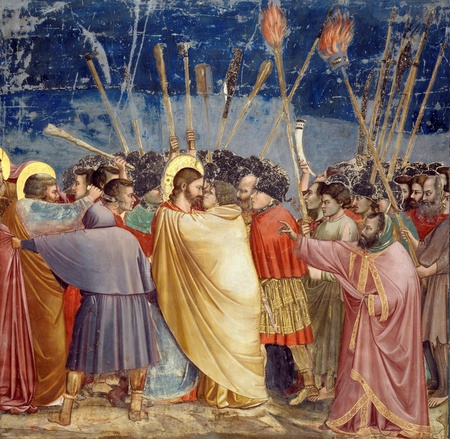
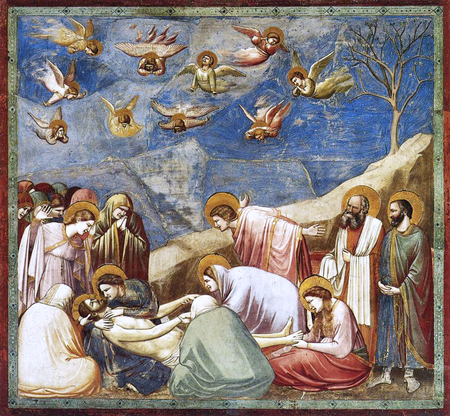
Giotto di Bondone. Kiss of Judas. 1303–1305 Giotto di Bondone. Lamentation. 1303–1305
In the Chapel of Skroveniye, the pictorial cycle is inextricably woven into the architectural structure, not existing in isolation. Viewers are presented not with a single canvas, but with a cohesive system of scenes organically arranged within the space. This composition functions as a deliberate route: it directs attention, dictates the sequence of perception, and harmoniously connects the visual narrative with religious experience.
In this context, the role of the patron remains central. It is the patron who determines the location, the dimensions, and the semantic purpose of the series. At this stage, the cycle is not designed for an undefined audience; it is strictly bound to a specific location and a defined program.
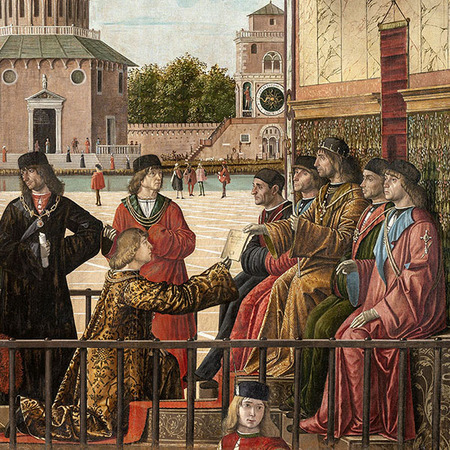
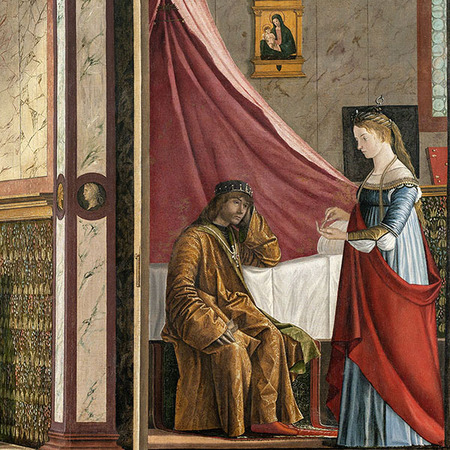
Vittore Carpaccio. Arrival of the Ambassadors. c. 1496–1498
Vittore Carpaccio. Arrival of the Ambassadors. c. 1496–1498
Vittore Carpaccio «The Separation of an Engaged Couple, ” after restoration. c. 1493–1495
Vittore Carpaccio. Martyrdom of the Pilgrims and Funeral of Saint Ursula. 1493
The cycle dedicated to Saint Ursula, created by Carpaccio, takes on the character of a grand visual narrative. The series consists of multiple scenes where the viewer gradually transitions from one event to the next. However, this narrative remains tied to a specific commission, brotherhood, and urban religious culture.
The series here does not oppose the system of patronage. On the contrary, it exists because of it. The patron and the space provide the framework, and the viewer perceives the story within an already organized program.
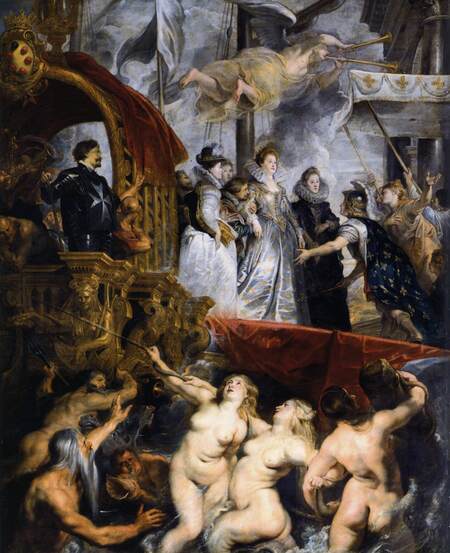
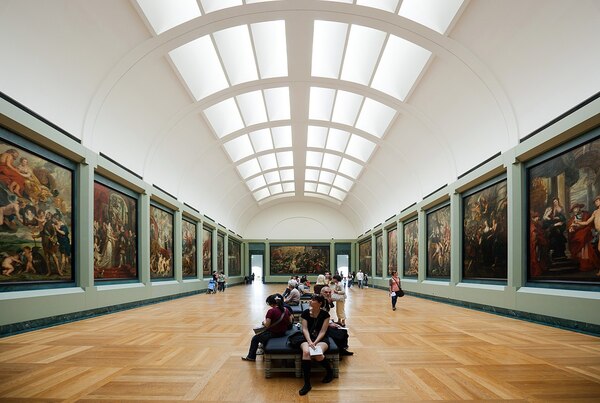
Peter Paul Rubens. The Landing of Marie de’ Medici at Marseilles. 1622–1625
Rubens' series of paintings dedicated to Maria Medici presents a different genre type—courtly and political. In this instance, the continuity of images does not serve the purpose of social critique but rather the creation of a majestic image of an arts patroness. The Queen’s biography is transformed into a ceremonial narrative, where real-life facts interweave with allegories and mythological figures.Such a cycle functions as a mechanism of representation: it asserts the high status of the patron and elevates her life’s journey to the level of a significant historical event.
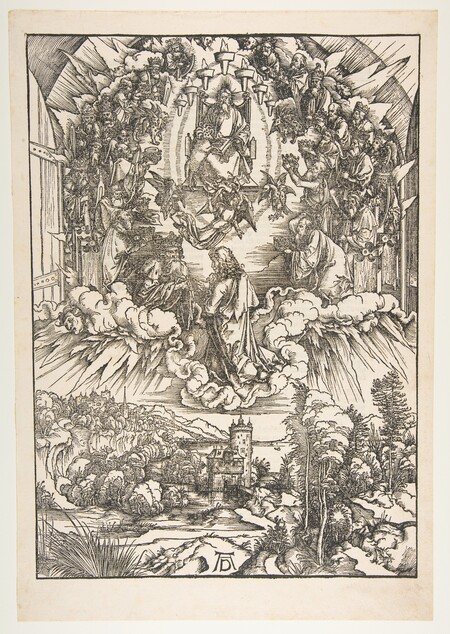
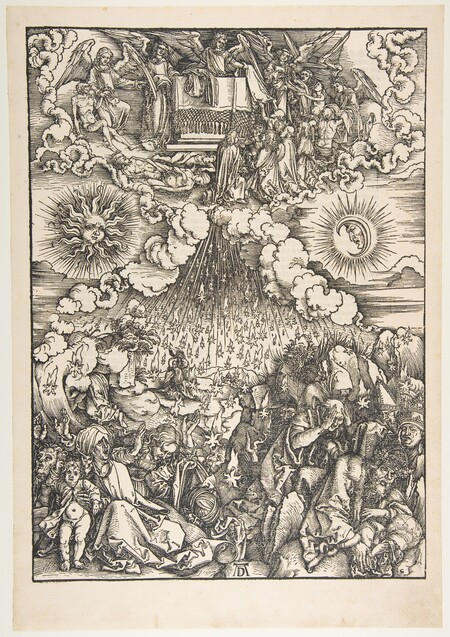
Albrecht Dürer. Saint John Before God and the Elders, from The Apocalypse. 1498 Albrecht Dürer. The Opening of the Fifth and Sixth Seals, from The Apocalypse. 1498
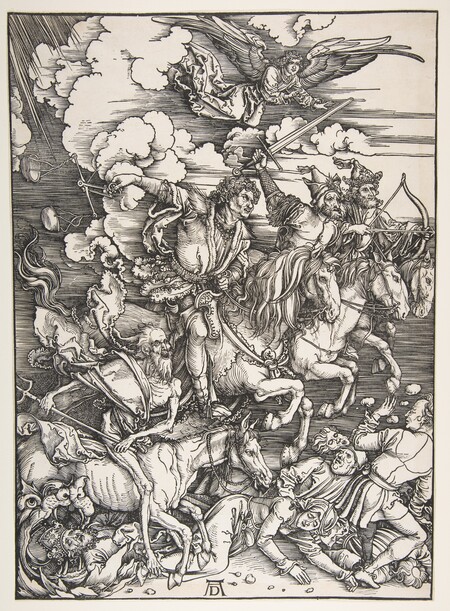
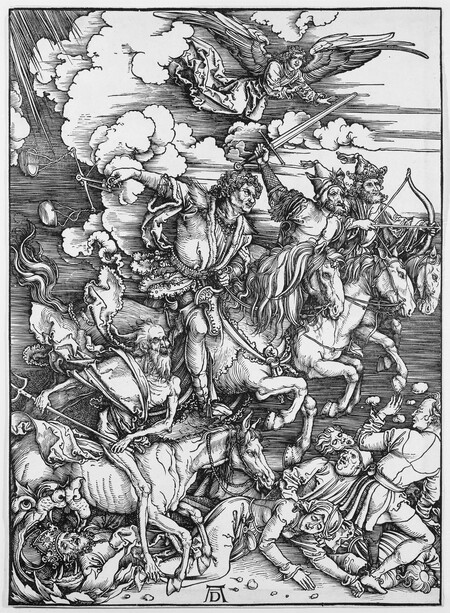
Albrecht Dürer. The Four Horsemen, from The Apocalypse. 1498
Engraving radically changes the nature of the series. Unlike frescoes or palace cycles, printmaking sheets allow for mass reproduction and widespread distribution. The viewer no longer needs to be confined to a strictly limited space to contemplate the image.However, Dürer’s series remains rooted in religious themes. While gaining accessibility, it retains its didactic function: it is designed to reveal sacred history, amplify emotional experience, and guide the viewer toward comprehending the intended meaning.
Jacques Callot. L’Enrolement des Troupes, from The Miseries of War. 1633
Jacques Callot. La Bataille, from The Miseries of War. 1633
The series of works by Jacques Callot marks a shift in focus: instead of emphasizing religious or court hierarchies, the artist reveals the human cost of historical violence. In «The Misery of War, ” conflict is not presented as a triumphant feat but as a continuous succession of calamities, including recruitment drives, battles, pillaging, reprisals, and destruction. This phase constitutes a key transition, allowing for the demonstration of not an isolated episode but a recurring structure of violence. Nevertheless, the work has not yet reached the level of the modern „social drama, ” aimed at a city audience, which would appear later through Hogarth’s creativity in the 18th century.