Navigation
[1]. Concept [2]. Hello Kitty | Kitty White 2.1. Birth of the Icon 2.2. Visual Language 2.3. Cultural Phenomenon and Emotional Attachment 2.4. Global Retail Presence [3]. Conclusion
Concept
Imagine buying a mug, a T-shirt, or a phone case not because you need the item itself, but because it features a recognizable character you already love. You might not even feel you are part of the brand’s target audience, or you may not know what specific products the company that created the character releases. Nevertheless, you are willing to pay to own the item because it is funny, cute, or fashionable. And it is the character that makes it fashionable! In this moment, it stops being just a marketing tool and gains independent commercial value.
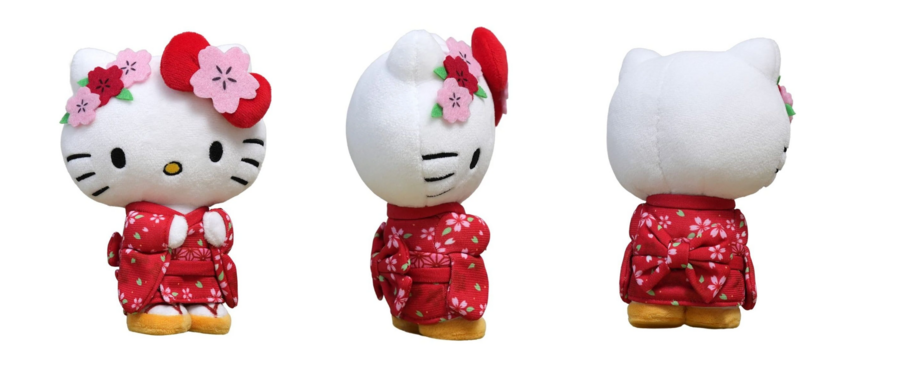
Hello Kitty plush toy. Sanrio
The history of advertising holds numerous examples where fictional characters transcended their initial objective—to present a product and capture consumer attention. Over time, they acquired distinctive personalities, their own audiences, and cultural significance. Some became so popular that they existed virtually independently of the companies that created them.
It is particularly interesting to trace this process using Hello Kitty as an example, which transformed from an image on small merchandise into a global icon of kawaii culture.
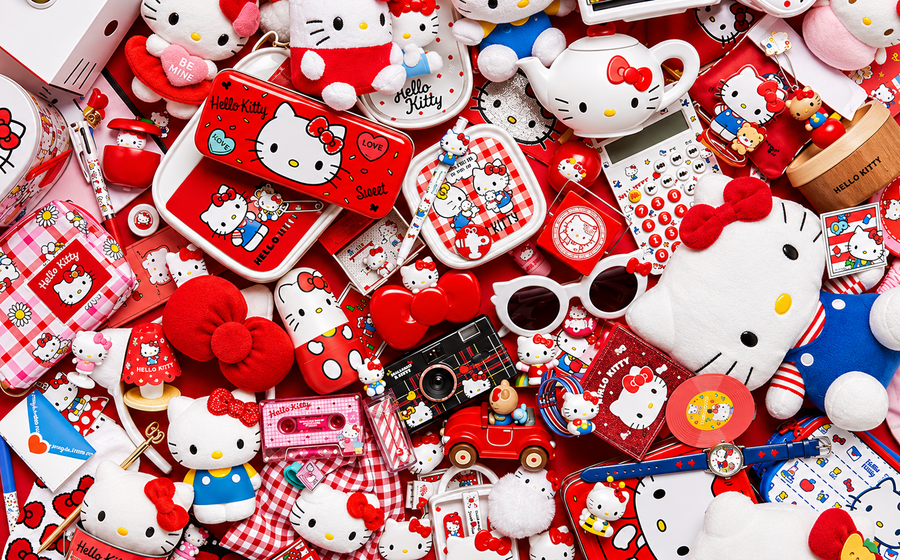
Hello Kitty merchandise. Sanrio
But what exactly causes people to attach themselves to drawn characters? Why do some images remain merely a part of an advertising campaign, while others become objects of collection, fan interest, and independent consumption? How does visual language, character, and the way they interact with the audience help a character transcend the original product?
In this research, I want to explore where the line is drawn between an advertising persona and an independent brand. Special attention will be paid to how a mascot forges an emotional connection with the audience by acquiring its own identity.
Hello Kitty | Kitty White
Hello Kitty. Leon Neal. Getty Images
The Birth of a Hero
Hello Kitty (hereinafter Hello Kitty) emerged from the Japanese company Sanrio, which was founded by Shintaro Tsuji in 1960. Initially, the company manufactured textiles and was named Yamanashi Silk Company, but it gradually observed that customers preferred to purchase items featuring cute decorative images. This observation became the foundation for a new business concept: transforming ordinary objects into charming accessories.
Sanrio Catalog. Sanrio Design The ’70s & ’80s. 2019
The first product featuring Hello Kitty was a small vinyl coin purse, released in 1975. This is how Sanrio added emotional and visual value to an ordinary object. The success of this purse showed that customers were interested not just in the item itself, but also in the character depicted on it.
Hello Kitty’s First Wallet. Sanrio. 1975
Soon, Hello Kitty appeared on stationery, accessories, toys, and other everyday items. Sanrio gradually began to develop the heroine’s image: she gained the name Kitty White, a family, a place of birth, and her own biography. The character ceased to be a mere decorative illustration and transformed into an independent figure. Of course, this doesn’t mean every customer knows about the kitty’s dream job or family, but it makes the character less flat and gives her a lore that the most dedicated fans can dive into.
Scan of the side panel of a «Hello Kitty Biscuit» box. Sanrio. 1997
Family portrait of the White family. Sanrio. 1990–2000
It appears that the emergence of Kitty marked a pivotal moment in Sanrio’s evolution: the company acquired its own distinctive character, which it could utilize on merchandise without needing to license third-party characters, as was previously the case. Going forward, the creation of recognizable characters and the distribution of their images across diverse products would form the foundation of the brand’s commercial strategy. Hello Kitty proved to be more than just a charming accessory for a wallet—she became an independent asset around which Sanrio was able to build a massive system of sales and licensing: everything from comics and animated films to apparel was released featuring Kitty.
Hello Kitty — Cinderella. Sanrio. 2001
Sanrio Catalog. Sanrio Design The '70s & '80s. 2019
Sanrio Catalog. Sanrio Design The ’70s & ’80s. 2019
Visual Language
Hello Kitty. Sanrio. 1974
Visually, Kitty is a very simple character. A white, rounded head, two black eyes, a small yellow nose, six whiskers, and a characteristic bow—just a few elements that make the character instantly recognizable. This design proved especially effective for commercial use: the image is easy to reproduce on products of various sizes, apply to different materials, and adapt across numerous product categories.
Sanrio Catalog. Sanrio Design The ’70s & ’80s. 2019
Sanrio did not limit itself to a single look; instead, they captured the attention of buyers with an ever more diverse Kitty, which, in turn, retained her recognizable image. One of the first noticeable changes occurred in 1981 when Sanrio began experimenting with the design by removing the black outline. By 1982, the Teddy Bear Series was introduced. The work of the third Kitty designer—Yuko Yamaguti—was responsible for this change. She was tasked with refreshing the character, as Hello Kitty sales had begun to slow down after several years of rapid growth by the late 1970s. Removing the black outline softened the image, and the new version regained great popularity with girls.
Hello Kitty Teddy Bear Series. Sanrio. 1982
Designer Hello Kitty, Yuko Yamaguchi. Frazer Harrison. Getty Images
In 1987, Sanrio released the Monotone Series—a line of black-and-white Hello Kitty merchandise. Designer Yoko Yamaguchi received a letter from a high school student. The girl wrote that her friends and parents thought Hello Kitty products were too childish and criticized her for liking them. She asked for items that girls her age could wear. And Sanrio responded to this request.Ultimately, the brand did not abandon its existing character to cater to a new audience, nor did it abandon its original audience; instead, it changed Kitty’s visual presentation.







