Introduction
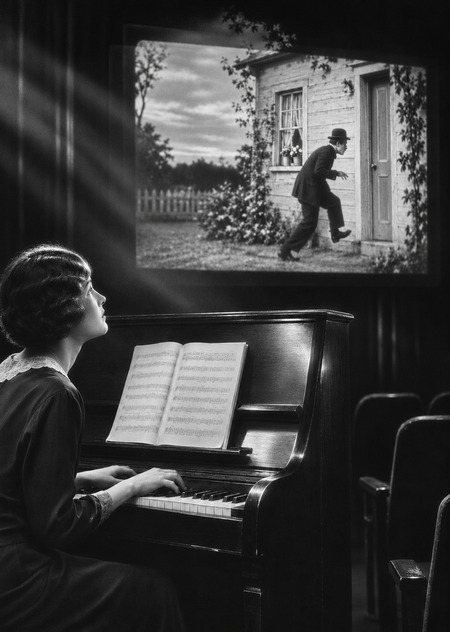
A person on screen approaches a window belonging to another. In the hall, the musician must decide how these few steps will sound. Short, low phrases punctuated by pauses can compel the viewer to listen intently to every movement. When paired with a quick march, the same caution might seem comical. The same shot allows for both interpretations. How did the musician choose what to play while the action was still unfolding?
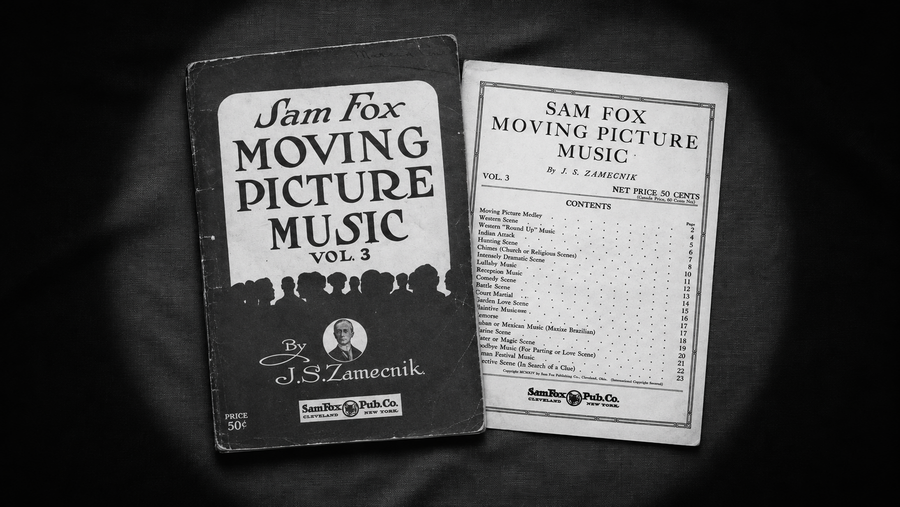
In American cinema of the 1910s–1920s, musicians were aided by printed collections and musical scores specific to individual films [1]. The very index reveals how this selection process was organized. It could feature the name of an emotion, an indication of a character, and a description of the movement. Music for different scenes was sought just as one would look for an item on a shelf, using a familiar keyword. This is how the «Store of Feelings» got its name. From the found index entry to the music the audience heard, several decisions remained. These are precisely what we trace.
Research Question
What specifically could be prepared in advance—the feeling the viewer will experience, or the method for selecting music for a scene?
Hypothesis
The printed rubric narrowed the scope of the search, and the specific interpretation of the action depended on the musical score, the point of entry, and the performer’s decisions.This can be verified in both directions. With the Deputy, we compare two pieces with the same title. In the sheet for «The General,» we trace the reverse movement—one piece is recommended for two different scenes.
Material and Selection Principles
For comparison, American musical publications from 1914–1927 and clips from Buster Keaton’s and Clyde Bruckman’s The General have been selected.The musical examples are grouped into three scenarios—secrecy, haste, and sorrow. Each group contains pieces with similar or closely related functions. By placing the fragments side-by-side, it is easier to observe where a pause interrupts the rhythm, where a steady pulse is maintained, and where the melody drops in pitch. These points are highlighted on the score pages.In the recording, you can hear how the mood shifts. A clip can illustrate a situation characteristic of the segment. When providing a recommendation for a specific episode, the comparison is based on the musical score for the film.
Text Sources
Rick Altman’s historical study helps us understand the working conditions of a musician in a concert hall and the publications that might have been in front of the performer. The organization of indexes and references in the works of John Zemek and Erno Rapa can be compared. Thanks to the manual by Edith Lange and George West, musicians were offered ways to vary familiar themes and connect pieces. James Bradford’s sheet for «The General» offers a comparison between on-screen actions and the indicated introduction and piece title, and for the finale, we can take Michael P. Krueger’s sheet of «Fasilia» as an example.
Navigator
Chapter 1. How Music Search Works in Collections Chapter 2. Musical Sketch of the Scene Chapter 3. The Accompanist’s Role Chapter 4. Musical Scores and Scenes Conclusion Sources Bibliography List of Image and Audio Material Sources
Chapter 1. How Music Search Functions in Collections
Chapter 2. Musical Sketching for a Scene
Chapter 3. The Accompanist’s Role
Chapter 4. Sheet Music and Scenes
Conclusion ·
Sources
Bibliography
List of Image and Audio Material Sources.
Chapter 1. How Music Search Works in Collections
In the early years of cinema, cheap movie theaters suffered from sonic chaos: programs changed every few days, and weary pianists played random tunes from memory, often accompanying a tragic scene with a cheerful dance.To solve this problem and standardize the sound, at the turn of the 1900–1910s, music publishers and film studios began releasing specialized sheet music collections (photoplay albums), mood encyclopedias, and cue sheets for films.
Facade of the Nickelodeon Cinema in Toronto (Ontario). Circa 1910.

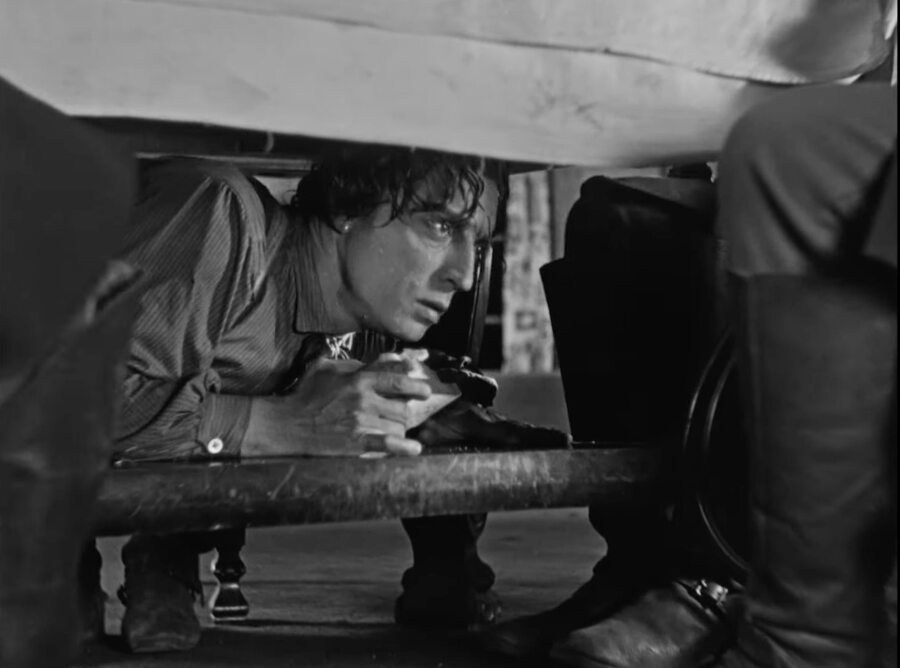
«The General» (1926), 32:47. No. 19 — March Burlesque, Gillet. The burlesque march sets a comedic tone for a scene where the hero is about to be spotted.
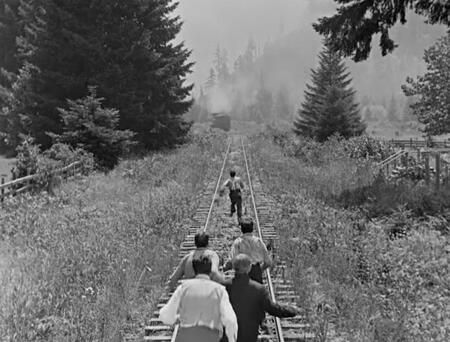
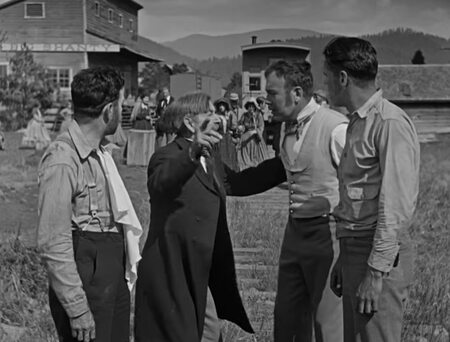
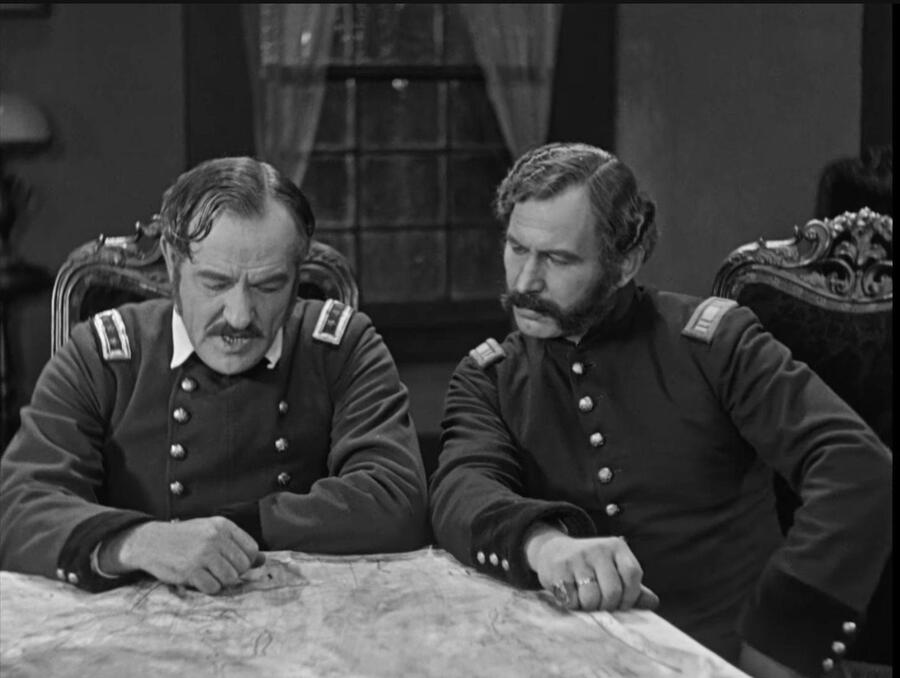
«The General» (1926), 14:52 Marietta (From «The General»). The prompt is tied to the heroine’s capture and the train heist. The frame shows the station’s reaction to his departure.







