Magic Pieces: Communication theory and brand promotion
I. Beyond aesthetics: an interpretive approach to design as communication
— сommunication theory in the field of design and contemporary art
Contemporary design and art cannot be considered without communication. Any visual object like a piece of jewelry, exhibition or brand identity is more than just an aesthetic form. It is a message embedded in a complex production process and its associated meanings.
Communication theory provides us with a well-structured framework in order to understand those processes. It can transform our intuitive perception into a systematic concept that can describe and explain how meaning is produced, translated, and interpreted. It is very important in design and contemporary design, where various objects function as communicative acts to address different things like cultural values, identity, and experience.
There are two major theoretical orientations that can be distinguished within communication studies.
Objective theories are about numbers, graphs, and repeatability. They capture those aspects of communication that can be calculated or at least predicted.
Interpretive theories are focusing rather on 'what it means' than clear numbers and predictions. In short, these theories are based on context and multiple interpretations.
Designer and contemporary jewelry strives precisely not to dictate to the viewer but to engage them in a play of meanings—a sort of open ending instead of a straightforward moral. Here, it’s impossible to talk about searching for a symbol with the «correct» interpretation: each person sees something unique and brings it to a piece of their own story. All this leads us to interpretive approach
Frameworks such as Robert Craig’s seven traditions of communication theory provides us with multiple lenses for analyzing design practices. Through these perspectives, a design object can be understood as:
— a semiotic system of signs and symbols — a sociocultural practice embedded in everyday life — a phenomenological experience shaped by perception and bodily interaction — and a discursive gesture that reflects or reshapes cultural narratives.
Semiotic and phenomenological approaches form the foundation of the Magic Pieces brand’s communication strategy. Semiotically the jewelry serves as a system of open symbols that are inspired by concepts of magic, ritual, and personal mythology. These forms promote personal interpretation rather than prescribing meaning. Phenomenologically, jewelry is made to be experienced through touch, wear, and emotional connection, making it a personal communication tool.
Instead of viewing jewelry as a decorative piece, «Magic Pieces» views it as a personal artifact."Wearers can express their identities, inner states, and beliefs through the pieces, which serve as carriers of subjective meaning. There is communication between the product and the wearer as well as between the brand and its target market.
II. Magic Pieces: a second life for your jewelry
— a brand presentation for a general audience
Magic Pieces is a jewelry brand for people who are irresistibly drawn to shiny objects like magpies attracted to sparkle. The brand doesn’t judge this impulse. Instead, it gives it a new direction: beauty becomes not only a desire, but also a conscious choice.
The main idea is transformation. Customers can bring old jewelry they no longer wear rings, earrings, bracelets and recycle it into a new piece with a contemporary design. Something forgotten and unnecessary becomes something modern, personal, and valuable again.
Getting a new piece is simple. You drop off your old jewelry at any Magic Pieces store. Then you choose a new design from the online catalog. The brand melts and reworks the material, turning it into a new accessory that continues your story, but in a new form.
Magic Pieces is more than decoration. It is a way to keep meaning while changing shape: a second life for materials, emotions, and memories. Each piece becomes a small personal artifact beautiful, wearable, and filled with a sense of renewal.
III. Recycling as value creation: the Magic Pieces strategy
— presenting the brand for a professional audience
Magic Pieces is a contemporary jewelry brand built around a circular production model and meaning-driven design. The brand converts unused jewelry into new, modern pieces, combining recycling practices with a curated design system and a hybrid customer journey.
The product-service model integrates two key spaces:
— offline stores as collection and consultation points, where customers hand in old jewelry for recycling; — a digital catalog where customers select a new design, supported by clear explanation of process, value, and timelines.
The brand proposition rests on three interconnected values:
1. Circularity and sustainability By reusing precious metals from existing jewelry, Magic Pieces reduces waste and aligns itself with current ecological and ethical consumption agendas.
2. Personalization as participation Customers do not simply purchase an object: they initiate its transformation. The material origin creates a strong emotional anchor and increases perceived value through personal involvement.
3. Symbolic and experiential value Magic Pieces positions jewelry as a communicative object not only an accessory, but a carrier of meaning. The act of melting and redesigning becomes part of the brand narrative: transformation, «second life, ” and renewal.
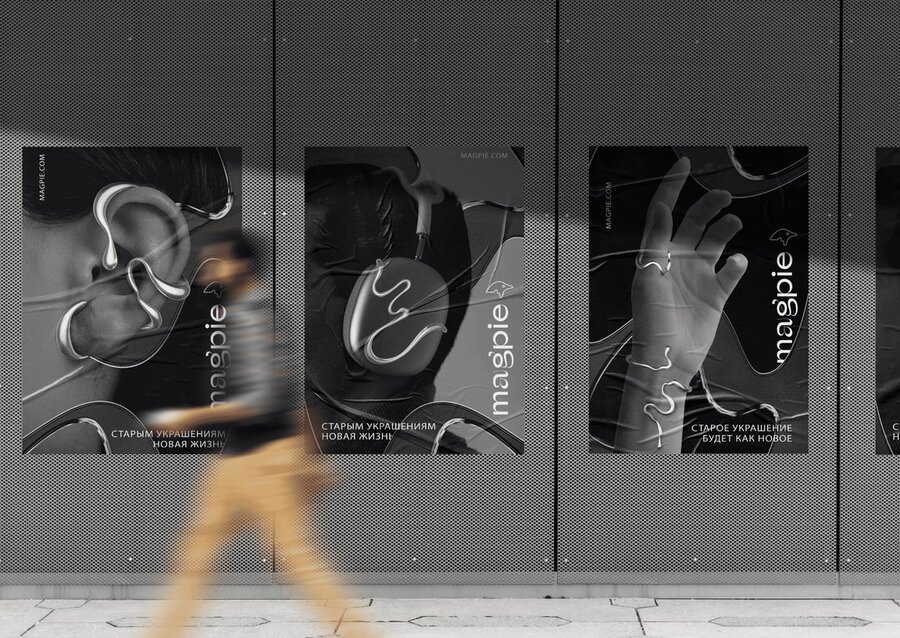
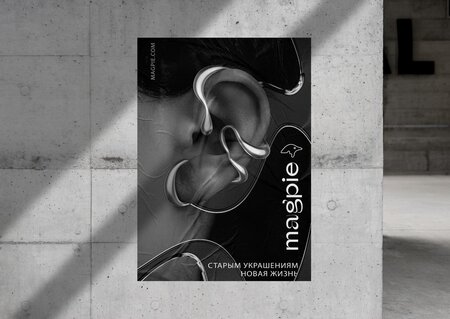
Visually, the brand identity balances modern minimalism with symbolic motifs connected to magic and metamorphosis. The magpie image functions as a recognizable metaphor: a playful reference to desire for shine, reinterpreted through the idea of conscious choice. Material cues (metal texture, fluid forms, traces of melting) reinforce this concept and connect visual language to production reality.
In communication strategy, Magic Pieces emphasizes transparency, narrative depth, and dialogue with its audience. Instead of purely promotional messaging, the brand builds trust through process storytelling, community content, and collaborations that support the values of sustainability and design culture.
IV. From theory to practice: applying course principles to presentation design
— how the theory from the course served as the basis for this project?
The communication theories studied in the course can become the foundation for brand positioning. One of the main concepts of «Magic Pieces» is recycling old jewelry into new pieces. When communicating with consumers, the brand appeals to themes of mindful consumption and sustainable production, thus becoming part of the ecological discourse in society. In this case, the brand’s communication can be seen not only as a marketing tool but also as a socially and culturally significant practice.
IV.I. Building brand persuasion: essential communication theories
To properly convey the brand’s values to the target audience, it’s important to consider the main principles of persuasive communication. For example, according to the Elaboration Likelihood Model, there are two routes of persuasion — rational (central) and emotional (peripheral). To attract attention from a new audience unfamiliar with the product, it’s important to use eye-catching branding. A stylish color palette, modern design, thoughtful packaging, and original social media content will help the brand stand out from competitors. However, besides content based on external cues, it’s important to create a deeper narrative, telling engaged customers in detail about the jewelry creation process and the relevance of recycling.

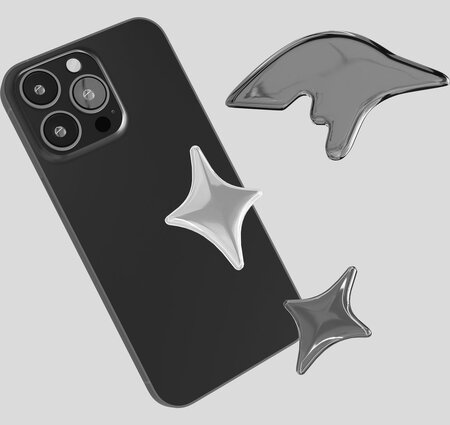
Also, we should pay attention to the Theory of Planned Behavior, which says that to motivate customers to buy, we need to consider their attitudes, social norms, and perceived control. To form a positive belief in the need for jewelry recycling, it’s important to describe the creation process in detail, making the idea as clear as possible through schemes and charts. In the context of social norms, the brand can build a community around itself of young progressive buyers who support modern trends and think about ecology and consumption issues. To make the buying process as accessible as possible, the brand can encourage customers with discounts and special offers. Also, to expand the circle of customers, the brand offers a line of merch products that have a lower cost compared to jewelry pieces. The collection includes phone stickers, branded notebooks, and jewelry stands.
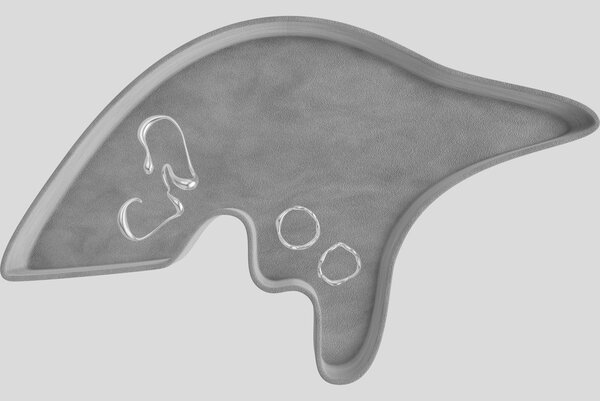
Another important tool to convey meanings is the use of signs and symbols in the brand’s visual style. The semiotic tradition helps analyze how meanings of ecology and transformation are transmitted through visual and verbal signs. In social networks, the brand uses the concept of «second life,» transformation, and cyclicity, where jewelry recycling appears not only as a production process but also as a sign of sustainability and conscious choice. The brand’s logo contains an abstract image of a magpie and reflects the desire to acquire beautiful shiny items, but it transforms into a conscious choice. By its shape, the logo resembles melted metal, reflecting the jewelry production process. The use of a limited color palette with dominant silver and black shades conveys the brand’s status, enhancing the product’s value in consumers' eyes.
IV.II. Application of theories in the context of brand promotion in the media space
One of the main communication channels in the modern world is media and social networks. Within such theories as dialogic theory and two-way symmetrical model of PR, social networks act as a space for dialogue between the brand and the audience. According to the logic of McLuhan’s theory «the medium is the message», the very form of the brand’s presence in social networks becomes part of its meaningful message.
Within media theories and digital communication, social networks are seen as a media environment with specific opportunities and limitations that affect interaction and audience engagement. Features of platforms like visuality, interactivity, and asynchronicity form a special type of social presence and determine how the brand’s ecological values and meanings are perceived and interpreted by users.
In the context of media logic theory, it’s necessary to properly define the form and format of communication, considering the narrative style characteristic of each platform. For example, TikTok is better for short, catchy video clips, which may not match the brand’s philosophy of sustainability and slow consumption. Meanwhile, Telegram allows posting not only images but also text posts that introduce customers to the brand’s ideas in more detail.
Since, according to the Two-Step Flow Theory information seems more convincing to the mass audience if evaluated by opinion leaders, for brand promotion in social networks, we can attract influencers and UGC creators.
In conclusion, applying communication theory in practice allows forming a comprehensive brand promotion system. Relying on persuasion strategies, brand identity, and narrative components, «Magic Pieces» conveys to the audience the values and meanings embedded in the brand’s philosophy.
Communication Theory: Bridging Academia and Practice // Smart LMS HSE URL: https://edu.hse.ru/course/view.php?id=133853 (Accessed: 03 Dec 2025).
Magic Pieces // HSE UNIVERSITY ART AND DESIGN URL: https://portfolio.hse.ru/Project/177633#