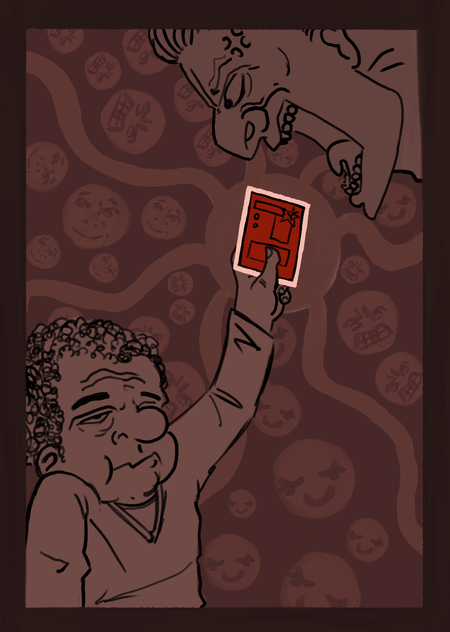
Explanation
A board game where you constantly receive new violations from which the only recourse is to write an explanation. Write explanations by assembling combinations from various cards. Complete combinations as profitably as possible, experiment, earn stars, and when all the violations are cleared—wipe the noses of the other players!
A cool image here
How to Win
It’s simple: You accumulate the required number of points in your explanation, earn stars—victory points—and continue the cycle. If you have the most stars, you’ve won!
The player’s turn consists of three actions: Draw → Combine → Score
The round begins with drawing cards. You choose from the following: 2 Argument cards 1 Justification card (if you have none, you receive this card for free) 1 Appearance cardThen, you draw one Violation card.
Image selection of cards; a simple animation can also be added
Now it’s time to assemble the combination.
Carefully examine the violation card, then start the combination, assign it the required number of points, and finish with the justification card.Calculate the final score and your turn is over.
There are two types of combinations: ideal and non-ideal.
You scored exactly the points needed—you assembled the perfect combination.You scored more than needed—you assembled a suboptimal combination.
here is an image showing the difference between an ideal and a non-ideal combination
The ideal combination yields more points and incurs no penalty. However, the imperfect combination is achieved faster.
Furthermore, sometimes it is more advantageous to put together an imperfect combination
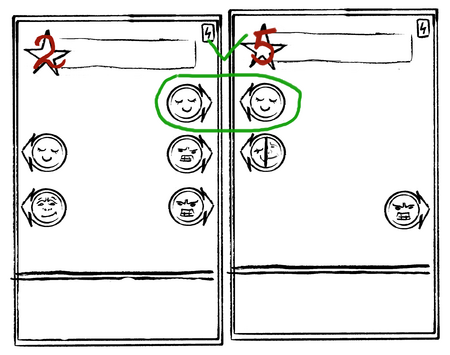
Cards are joined by keys
If at least one key on the two cards is the same on the same line, you can connect these cards.
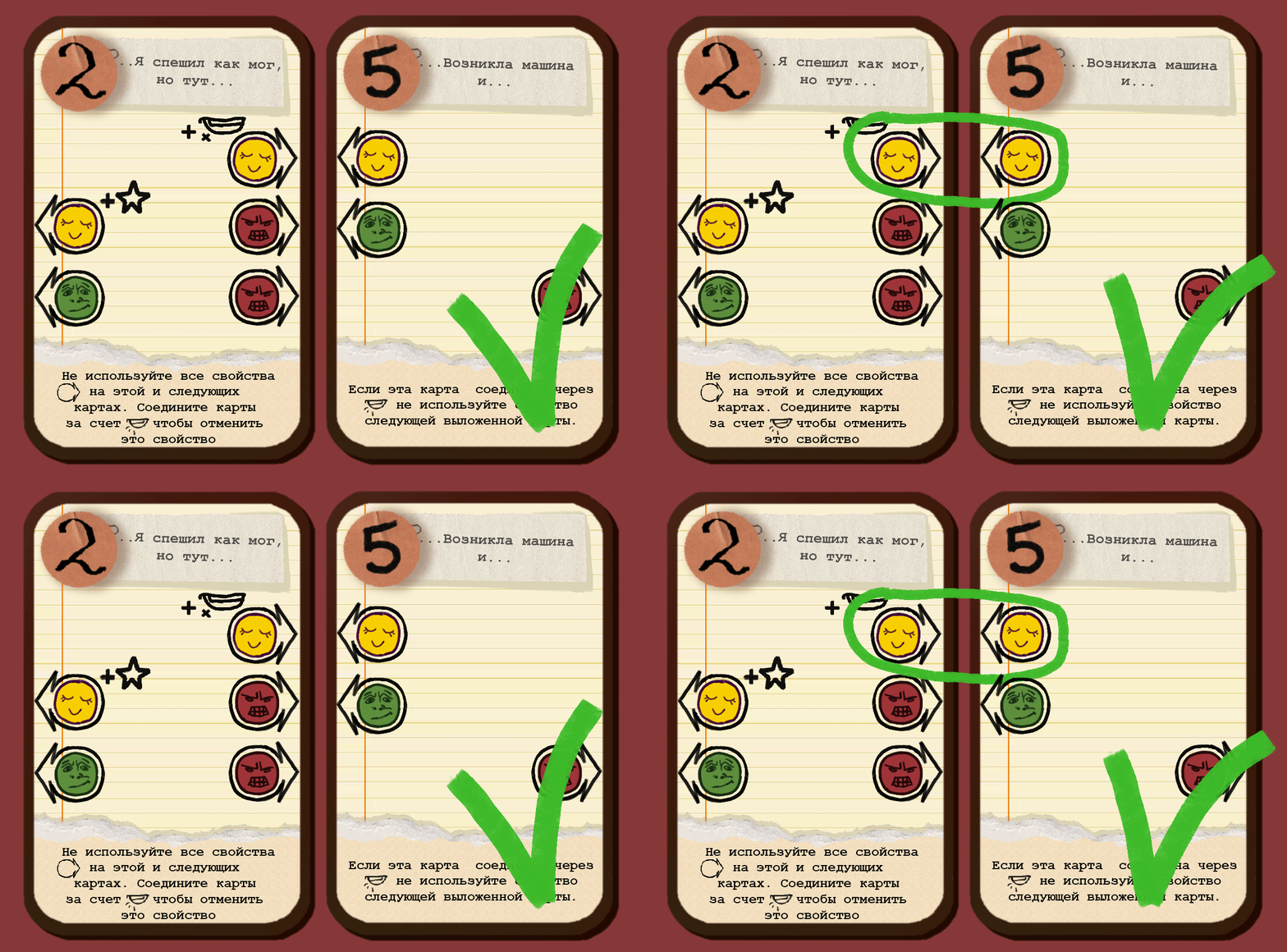
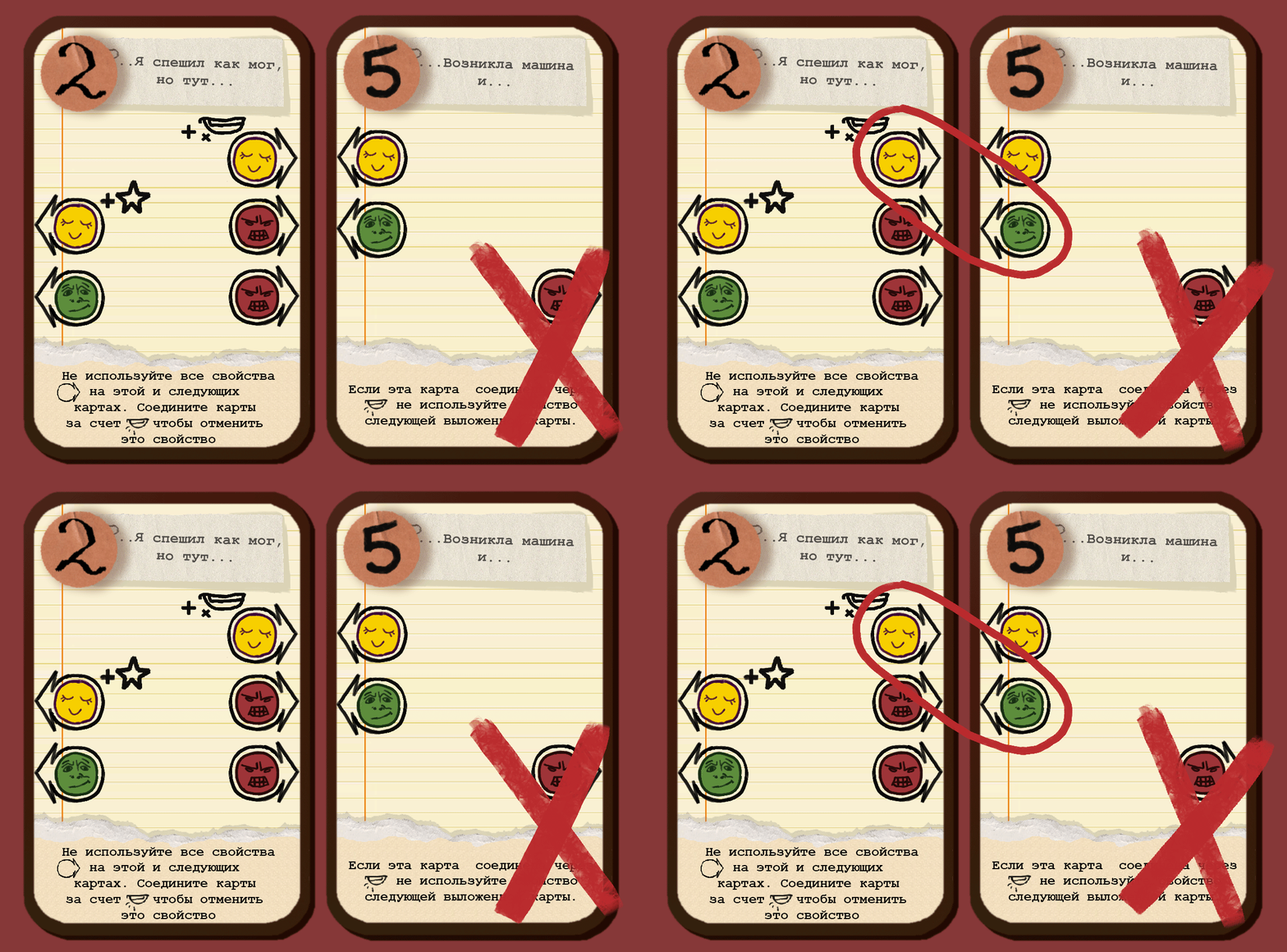
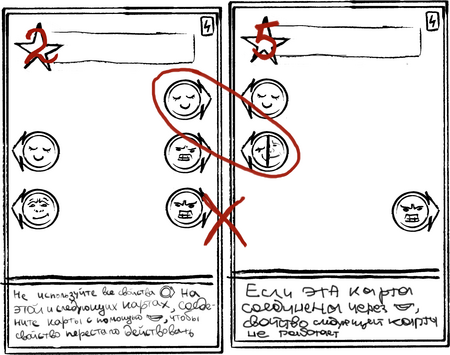
PLACEHOLDER
There are three types of keys, and one special, mixed type. You can connect two types of keys to it at once.
Image, collage with all keys
If you cannot or do not want to link maps using keys, then…
Log in
Combine any two cards that could be part of a combination, regardless of whether they have matching keys or not.If you used a bluff, you privately take the bluff card
PLACEHOLDER
Image 4: The Lie Card—face down and face up
On the maps of lies—debuffs, but don’t worry about them for now while they are kept private.
Lying cards are revealed in two ways:
- If you have lying cards in your hand at the start of a turn, you must reveal one of them.
- If you use specific abilities of keys or cards.
If a lying card is revealed, you must fulfill its conditions.
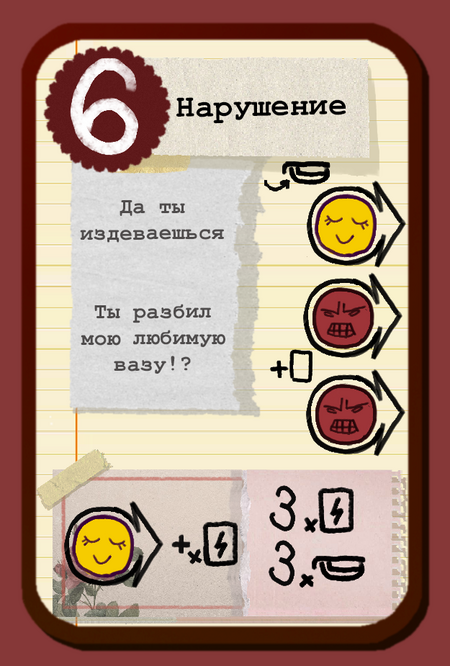
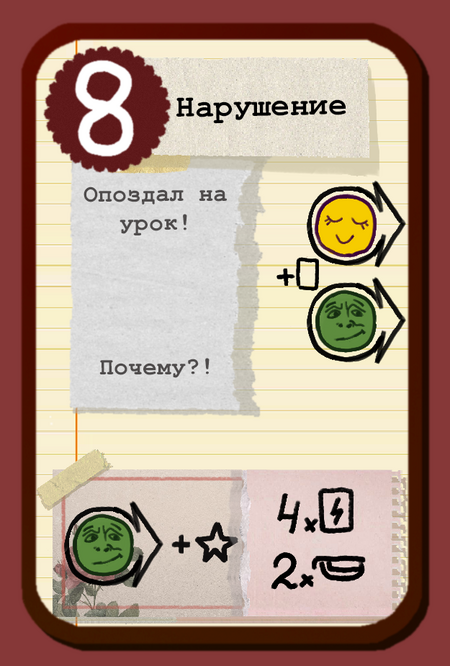
Violation — the first card in your combination,
shows the number of points you need to score with a combination, as well as:1. The maximum number of cards allowed in the combination2. The number of times the player can lie3. A bonus for connecting specific keys