Navigation Menu
I Concept II Crime Scene — Stairs, Rooms, Hallways III Traces of the Crime — Axe, Money, Hands, Objects IV Confession and Guilt — Acknowledgment, Internal Conflict V Conclusion VI Filmography VII Bibliography VIII Image Sources
Concept
Fyodor Dostoevsky’s novel, «Crime and Punishment, ” is not merely a narrative of crime and punishment, but a profound exploration of the human soul, moral choice, guilt, and the possibility of redemption. The work’s complex psychological drama and the universality of its questions have made it the foundation for numerous cinematic adaptations. However, adapting a literary work requires more than simply transferring the plot—it demands finding visual means capable of reflecting the hero’s inner world and the philosophical aspects of the original text.
This study is timely because it allows us to trace how the same literary plot becomes the basis for diverse cinematic interpretations. In literature, Raskolnikov’s internal conflict is revealed through his thoughts, reflections, and psychological descriptions, whereas cinema employs different expressive tools: space, shot composition, light, editing, object details, camera movement, and sound. Of particular interest is the question of how abstract concepts like crime, guilt, and punishment are embodied on screen.
The main research question is: How is the visual language of crime and guilt transformed in the cinematic versions of F. M. Dostoevsky’s „Crime and Punishment“ and in other works from different eras and artistic movements?
Research Hypothesis. It is hypothesized that the visual representation of crime and guilt does not adhere to a single form and changes significantly depending on the artistic principles and historical context of cinema. In some films, the hero’s internal conflict is conveyed through distorted or enclosed space; in others—through details, gestures, observation, or specific editing techniques. Free adaptations and works that touch upon Dostoevsky’s philosophical questions may not only alter the visual methods of conveying guilt but also re-evaluate the very concept of inevitable punishment.
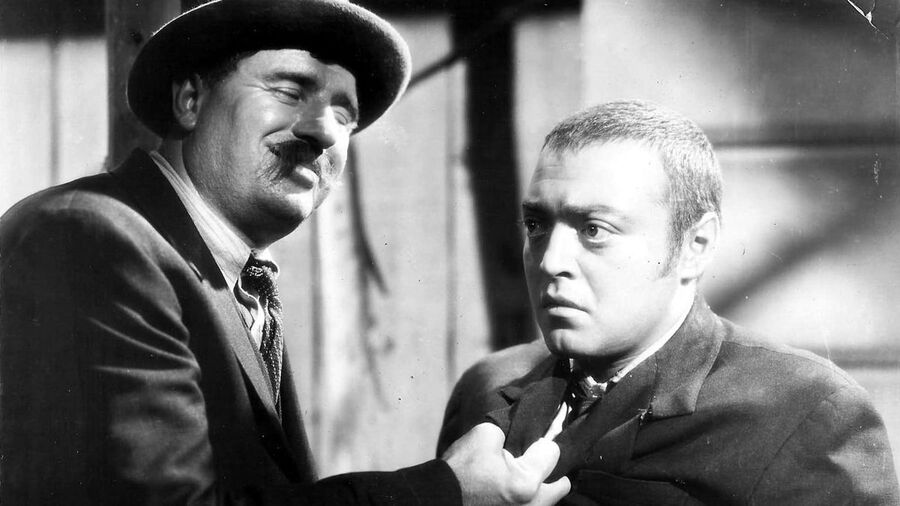
Joseph von Sternberg. «Crime and Punishment.» 1935
The comparison of these five films is expected to reveal how the screen’s depiction of crime evolves—from the visualization of psychological crisis and the inevitability of internal punishment to doubts about the existence of universal moral retribution.
Material Selection. For this study, five films were chosen that differ in their time of creation, national origin, artistic principles, and degree of connection to the literary original. The selection includes Josef von Sternberg’s Crime and Punishment (1935), Georges Lampen’s Crime and Punishment (1956), Robert Bresson’s The Pickpocket (1959), Lev Kulidzhanov’s Crime and Punishment (1969), and Aki Kaurismäki’s Crime and Punishment (1983).
The selection is based on the diversity of interpretations of Dostoevsky’s moral conflict. Georges Lampen’s film (1956) presents a French psychological crime drama in which the internal feeling of guilt is gradually revealed through close-ups, the tonal expressiveness of the black-and-white imagery, and the psychological interaction between characters. The American version by Sternberg, in contrast, emphasizes the psychological confrontation between characters and the interplay of light and shadow. Bresson’s film, The Pickpocket, is a free adaptation where the nature of the crime changes, yet the themes of alienation, internal conflict, and moral choice remain intact. Kulidzhanov’s film offers a Soviet interpretation of the novel, paying special attention to the psychological and ethical aspects. Finally, Kaurismäki’s Crime and Punishment transplants the plot to modern Finland, presenting the crime in a restrained, unrationalized manner: instead of focusing on the idea of the right to kill, the focus shifts to the protagonist’s alienation, the material traces of the act, and the impossibility of its formal proof.
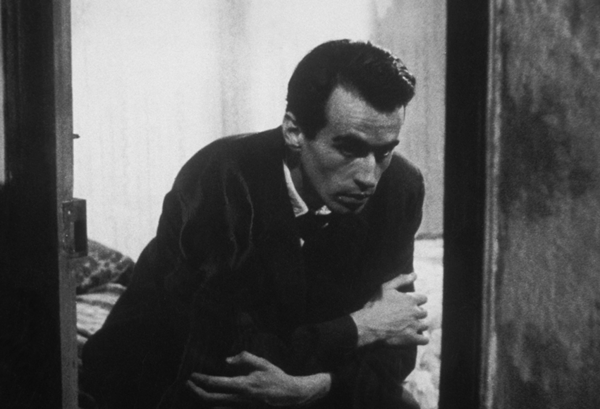
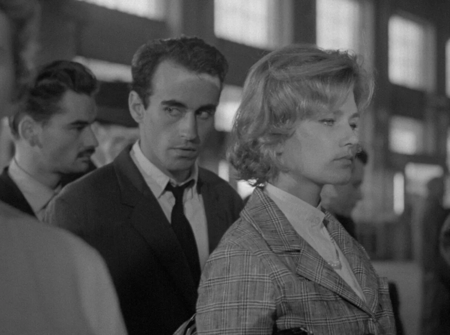
Robert Bresson. The Pickpocket. 1959.
Research Structure. The study is not organized chronologically nor is it structured around individual films; instead, it centers on recurring visual and thematic motifs. This approach allows for comparing films within each thematic section and identifying variations in the use of cinematic techniques. The selection of works for comparison may vary depending on the specific section’s theme. Within each chapter, not all six films are analyzed, but only those that most precisely and expressively articulate the chapter’s theme. Where the motif is weakly expressed, a comparison would be superficial.
Selection and Analysis of Textual Sources. The theoretical foundation of the research will comprise scholarly publications and monographs dedicated to film adaptations of literary works, cinematic language, German Expressionism, psychological realism, and the oeuvres of the directors under consideration. Special attention will be paid to works analyzing the transformation of Dostoevsky’s works in world cinema.
Textual sources will be utilized to substantiate the analysis of specific visual choices and to refine historical perspectives.
The space of crime—rooms, stairwells, hallways
In the works of Fyodor Dostoevsky, St. Petersburg is not merely a backdrop upon which events unfold. This city becomes an extension of the characters' internal conflict. Cramped rooms, suffocating stairwells, narrow corridors, and crowded streets create an atmosphere where physical confinement interweaves with psychological tension. When the novel is adapted for the screen, this characteristic gains visual embodiment. Architecture, framing composition, lighting, and perspective help convey the character’s emotional state without resorting to explicit narration of their thoughts.
Adaptations of «Crime and Punishment» by various directors—such as Joseph von Sternberg, Lev Kulyaghinov, Robert Bresson, and Woody Allen—interpret the space of crime in distinct ways. In the first two films, it is closely tied to the novel’s material environment. However, in the works of Bresson and Allen, the motif of crime is transposed into different spatial and social contexts. Yet, a common theme runs through all four films: how to visually represent the rupture between a person and the surrounding world after committing a crime.
Room: The physical boundary of the inner world
Lev Kulidzhanov. «Crime and Punishment.» 1969. Raskolnikov in his garret
In the film adaptations, special attention is paid to Raskolnikov’s personal space. His room serves not only as a place of residence but also as a visual reflection of his social and psychological isolation. The confined space, sparse furnishings, and close arrangement of objects around the protagonist create a feeling of a closed-off world from which it is difficult to escape.In Lev Kulidzhanov’s film, Raskolnikov’s room interior helps connect the hero’s personal crisis with his material circumstances. Shots of the bed, window, table, and stove present the space as limited and filled with everyday objects. The hero becomes part of a cramped architectural structure that underscores his vulnerability within society. It is important not only to consider the room’s dimensions but also how the human figure relates to its boundaries—the interior seems to leave no room for free existence.
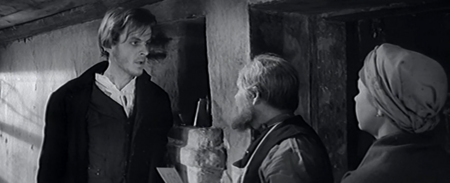
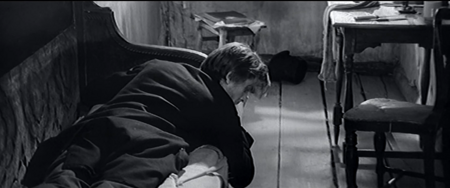
Lev Kulidzhanov. «Crime and Punishment.» 1969. Raskolnikov in his garret
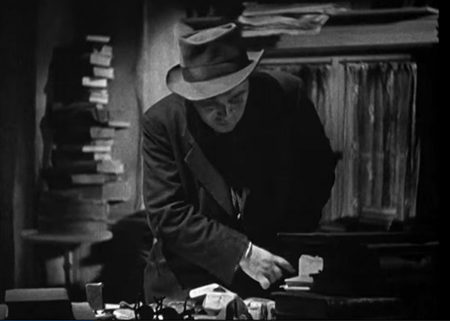
Regarding Sternberg’s film, attention should be drawn to the lighting and shadows in the room. The contrast between the illuminated and darkened areas makes the space visually heterogeneous. It does not unfold completely; rather, some parts remain concealed. This composition symbolizes the duality of the protagonist’s situation: externally, he lives in a familiar environment, but his internal state is now defined by the crime he has committed.
Joseph von Sternberg. «Crime and Punishment.» 1935. Raskolnikov in his room
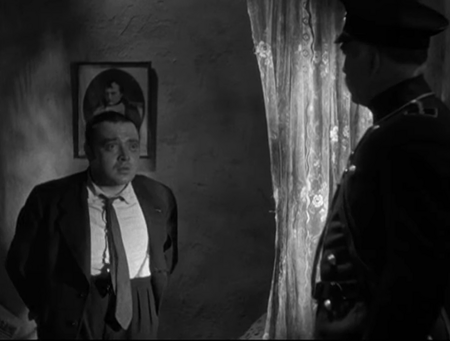
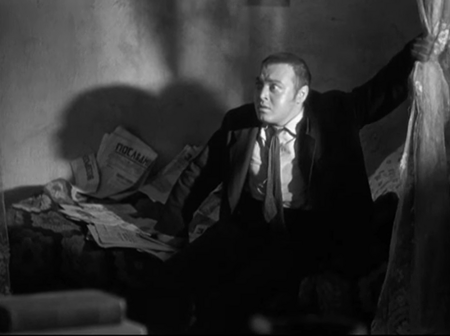
Joseph von Sternberg. «Crime and Punishment.» 1935. Raskolnikov in his room
Sternberg, by working with space, creates a room whose cramped nature is emphasized not only by its small dimensions but also by the abundance of objects—newspapers, books, and various other items—that fill almost every available area. The accumulation of details creates a sense of disarray and visually narrows the interior. Raskolnikov seems to be surrounded by objects that restrict the open space around him. Consequently, the room is perceived not as a neutral setting, but as a closed environment that heightens the feeling of isolation and the character’s psychological oppression.
Staircase: Movement within a Closed System
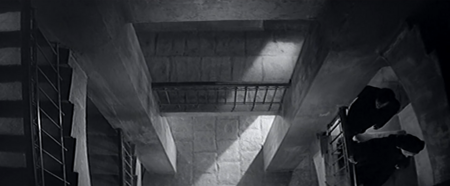
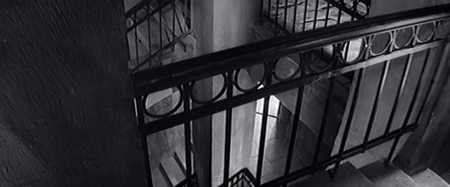
Lev Kulidzhanov. «Crime and Punishment.» 1969. On the stairs in the usurer’s house
In screen adaptations of the novel, the staircase plays a special role due to its liminal position between various spaces. It functions simultaneously as a means of transit and an architectural boundary. Unlike an open street, the stairwell is enclosed by walls, steps, and turns, making movement strictly subject to the defined architecture.
In the film directed by Lev Kulidzhanov, Raskolnikov’s movement through the staircases of the affluent houses symbolizes the space where the crime takes place. The repetitive steps and the enclosed nature of the stairwells create a sense of moving into another’s space, bringing the protagonist closer to a point after which his familiar world will change.
Lev Kulidzhanov. «Crime and Punishment.» 1969. On the stairs of the usurer’s house
When analyzing compositions, it is crucial to consider the direction of movement, the camera angle, and the figure’s placement relative to architectural elements. If a human figure appears small compared to the stairwell, the space acquires an overwhelming quality. Conversely, if the camera zooms in on the subject, the architecture is perceived as an extension of their limited field of view.
In the work of director Robert Bresson, this principle of spatial organization echoes his overarching system of segmented spaces. The significance lies not only in the act of moving between these zones but also in how the space unfolds sequentially—through discrete segments—rather than being perceived as a unified whole.
Robert Bresson. «The Pickpocket.» 1959. Selected shots of Michel’s movement as the impossibility of fully immersing oneself in the environment.
For Bresson, the technique of editing is closely interwoven with the organization of space. He does not attempt to capture the entire room to create a cohesive geography of action. On the contrary, the space in his films is constructed from individual shots connected by cuts: the viewer observes a fragment of a room, then a door, a staircase, or a hallway, and then another space. However, the transitions between these shots do not always provide a complete sense of how they relate to one another.
The cuts not only impede the character’s fluid movement but also emphasize the gaps between separate zones. This results in a feeling of confinement and alienation: Michel’s world appears as a collection of isolated spaces through which he passes but with which he does not establish deep connections.
Space Without Exit: From Hallway to Prison Cell
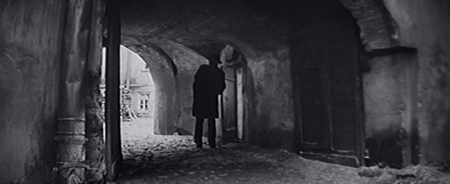
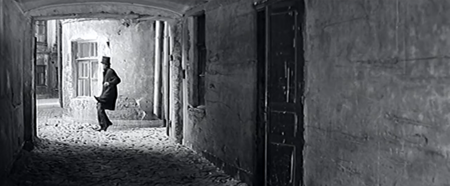
Lev Kulidzhanov. «Crime and Punishment.» 1969. The hidden corners the protagonist passes through during his escape
The corridor differs from the room by its function: it is designed for movement, yet its linear structure constrains that movement. The walls define the boundaries, perspective draws the eye inward, and the repeating doorways create the impression of a sequence of enclosed spaces.
In Lev Kulidzhanov’s film, the dark passages and arched corridors draw particular attention. Their architecture creates a distinct perspective that allows a human figure to be placed deep within the space, separating it from the viewer across several spatial planes. The arched openings seem to frame the figure, limiting its visibility while emphasizing the distance between the person and the surrounding world. This compels the viewer to focus not only on the protagonist but also on the architecture itself—an architecture that seems to envelop them.
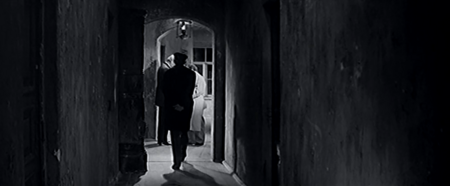
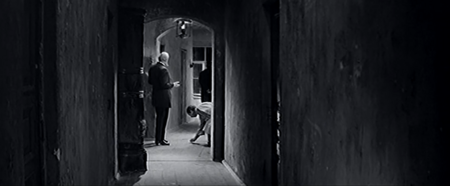
Lev Kulidzhanov. «Crime and Punishment.» 1969. Raskolnikov walks away after speaking with Razumikhin.
The relationship between the scale of the human figure and the surrounding environment is of vital importance. High vaults, long walls, and dark sections of the corridors visually overwhelm the person, making them seem small and vulnerable within the space. The depth of the frame intensifies this sensation: the figure might be far from the viewer, and the lines of the architecture direct the gaze toward a distant point. The corridor ceases to be merely a connection between rooms and transforms into an autonomous environment that dictates the person’s position and constrains their visual freedom. Consequently, the architecture becomes expressive—it not only directs Raskolnikov’s movement through the city and buildings but also generates a feeling of his isolation and lack of liberty.
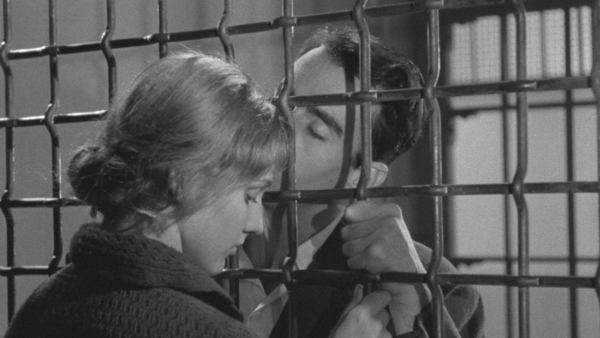
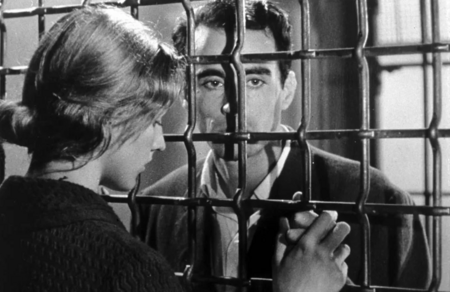
Robert Bresson. The Pickpocket. 1959. Michel and Jeanne in the film’s finale







