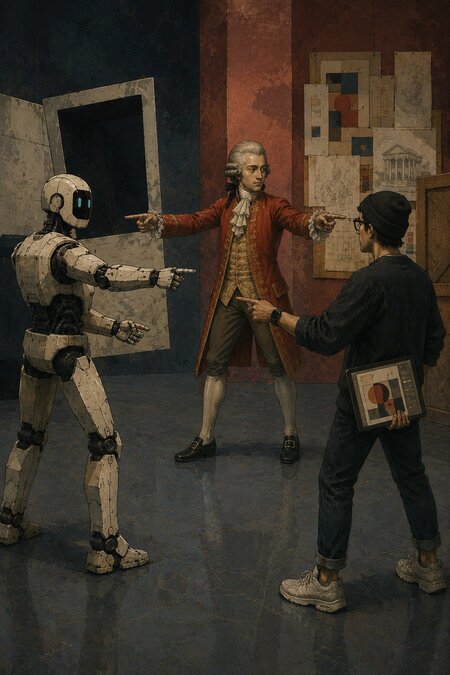
If an AI analyzes a vast amount of photographs, illustrations, films, and other works of art, how autonomous can the result of its work be considered? Where is the line between inspiration, appropriation, and copying?
No One Knows Where Inspiration Ends and Plagiarism Begins
Opponents of unrestrained AI use point to the opacity of training data. The user likely has no idea which specific images were used to train the neural network, or if copyright permission was granted for that usage.
If a person consciously copies someone else’s work, it is plagiarism. But when a similar result appears after analyzing millions of images, the line becomes blurred.
Human Culture is Built on Borrowing
The training of a neural network can be compared to how a human learns.
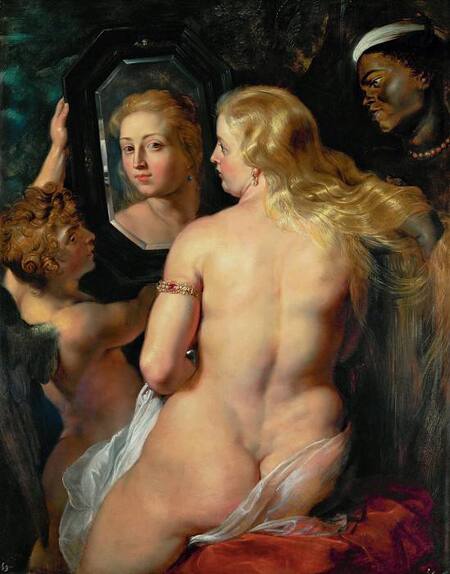
Artists study the paintings of old masters; directors draw inspiration from other films; musicians listen to other musicians. In this case, the question arises: why does a human have the right to learn from others' work and create something new, while an algorithm does not?
This gives rise to one of the key conflicts in the modern discussion about AI: is training a model on others' works a form of analysis or hidden copying?
Everything Changes When the Source Can Be Identified
In practice, most professionals draw the line based on the final result of the work.
If the generated image appears original and does not refer to a specific work or author, it is usually perceived as a new result. However, the situation changes when one can identify the artist’s characteristic style, a famous character, a specific film shot, or a composition within the work.
The more obvious the connection to the original work, the higher the risk of plagiarism accusations.
This is precisely why major studios prefer to avoid using models with opaque data origins—the risk that the rights holder could prove a connection between the result and their original work years later is too great.
Attention is Shifting from the Result to the Process
Defining the line between borrowing and plagiarism in the age of AI is becoming increasingly complex.
Where previously one could compare two images and establish a fact of copying, now a complex technological system—trained on a massive dataset—stands between the author and the final image.
As a result, many industry professionals suggest focusing not so much on protecting the generation itself, but on protecting the human creative contribution. The project concept, the scenario, character design, storyboards, artistic choices, and the logic behind the work’s creation are increasingly viewed as the primary vectors of authorship. For many specialists, this is where the clearest and most legally sound boundary exists today between human work and algorithmic work.