Of course.
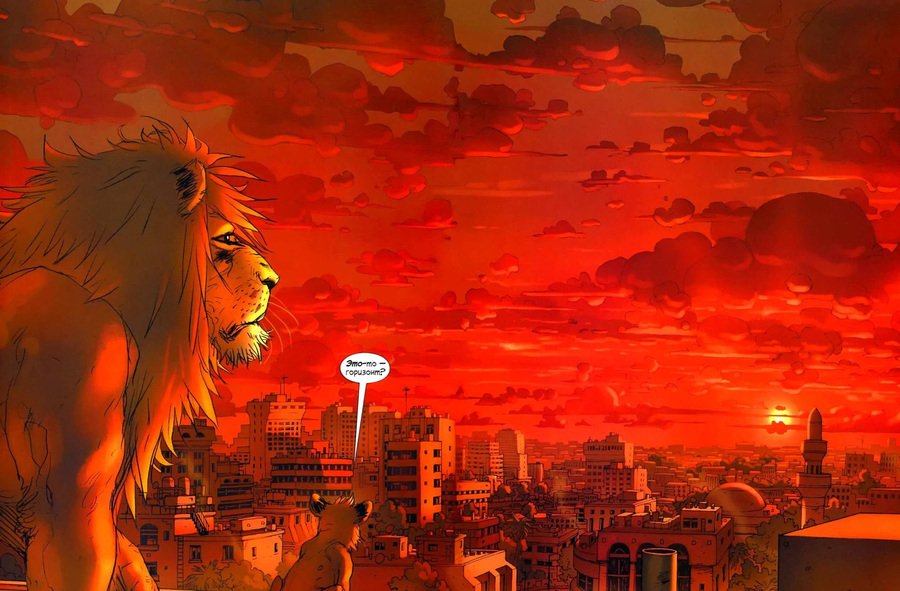
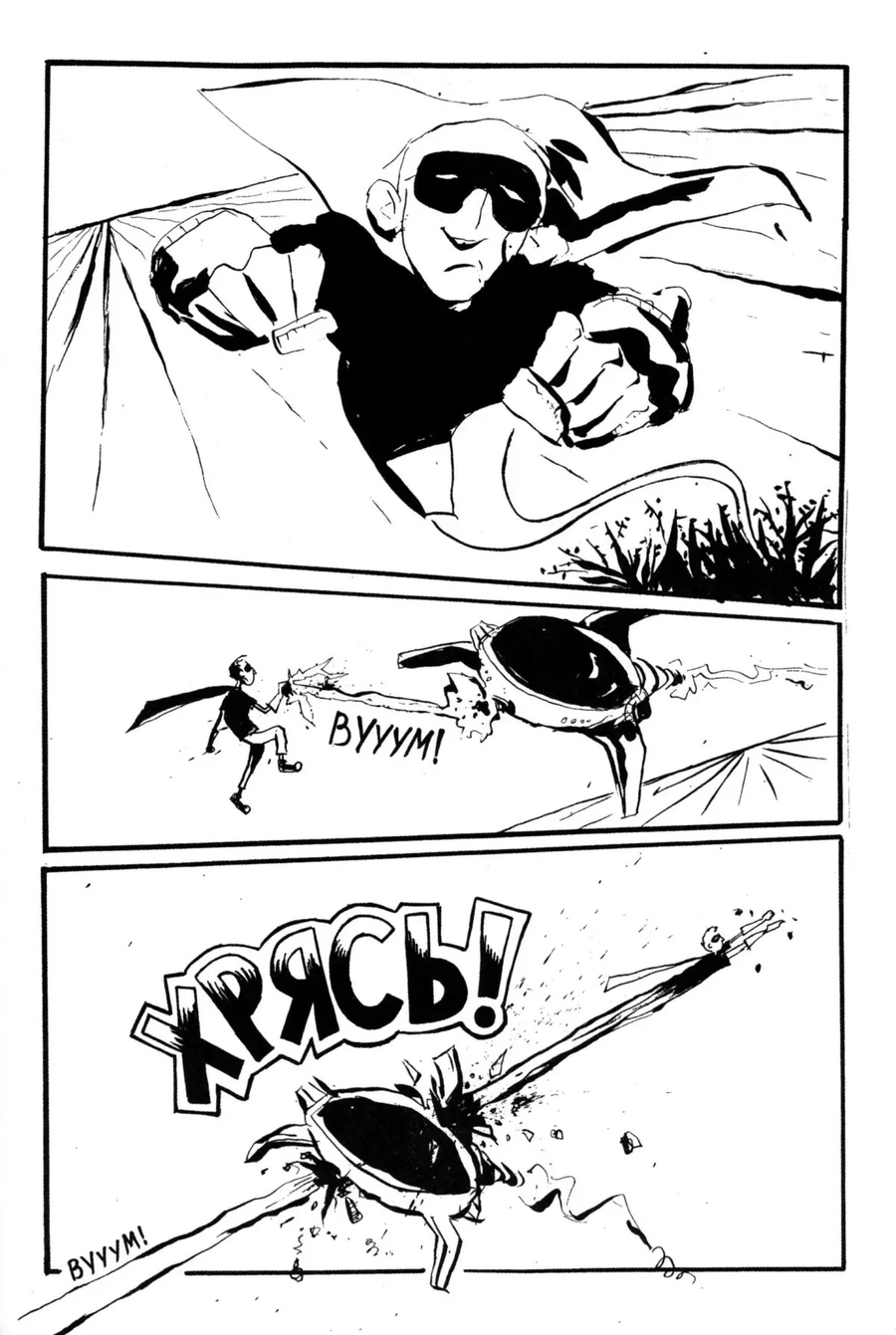
«The Death of Captain Marvel, ” 1982. Brian K. Vaughan, Nico Genhrikon
Section Index:
1. Concept Description
2. Pale Death. Essex County. Life on the Farm
3. Expected Death. The Death of Captain Marvel
4. An Unnoticed but Significant Death. Amazing Fantasy (1962).
5. The Death of Order and Power. Predators in Baghdad.
6. The Death of Macro- and Micro-Cosmos. Crisis on Infinite Earths (1985).
7. Conclusion
8. Bibliography and List of Sources
Concept Overview
Death is a fundamental aspect of life—one without which we cannot conceive of our own existence or existence itself. A particularly crucial detail when contemplating death is the impossibility of knowing it—where the moment of death occurs, its sole possible recipient loses not just the capacity to know, but the very subjectivity that could have known. Thus, a person can only explore death through the experience of the Other. However, this is not death itself, but the process of dying—the transition from one state to another where we witness life changing. For us, death is connected to loss, grief, and fear—in other words, to life after the loss of the Other. But what it is like to experience such a permanent loss remains a mystery for humankind.
«The Death of Captain Marvel, ” 1982 Jim Starlin
This is why, in my comic book research, I want to analyze not death as an event itself, but the process of dying stretched out over time.
To begin, I must establish a specific definition—one that will guide my work on this material: dying as the approach to death. I intend to exclude any interpretation where every moment of life is a form of dying (the so-called being-toward-death). I also will not aim to explore post-mortem states or their potential worlds and interpretations. My task will be to narrow the theme specifically to those moments (minutes, hours, sometimes days or months) when a person passes through bidding farewell to everything that made them human, ceases to exist as an independent entity, and becomes memory and reception of the surrounding world—thus completely losing agency over the self.
This could manifest as conversations with loved ones, the act of a final will, internal composure before the concluding surge, or the fading of vital energies on the deathbed.
The graphic interpretation of dying in this case is one of the most compelling variations for experiencing another’s life.
In this regard, I wish to explore various manifestations of decay. During the material selection process, I focused on five core themes—moving from a local narrative (recollection of death) to a global one (the death of all things).How can an artist reflect the sensation of dying? What techniques convey the internal storm of emotions, and precisely how do they achieve this? How does death behave in an imagined world where there are no clear boundaries between beginning and end?To analyze these occurrences, I will primarily consult the works of Philippe Arthus and Emmanuel Levinas. Among others, I will engage with the oeuvre of Friedrich Nietzsche and examine literary works, including Leo Tolstoy’s «The Death of Ivan Ilyich» and Fyodor Dostoevsky’s «Crime and Punishment.»
Pale Death. Essex County. Life on the Farm
My mother passed away.
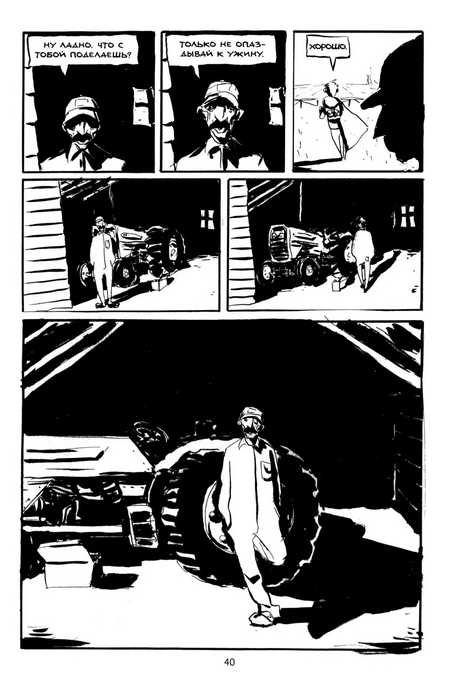
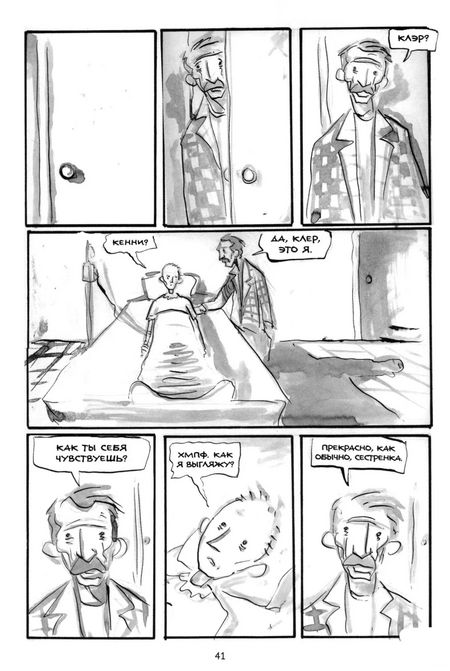
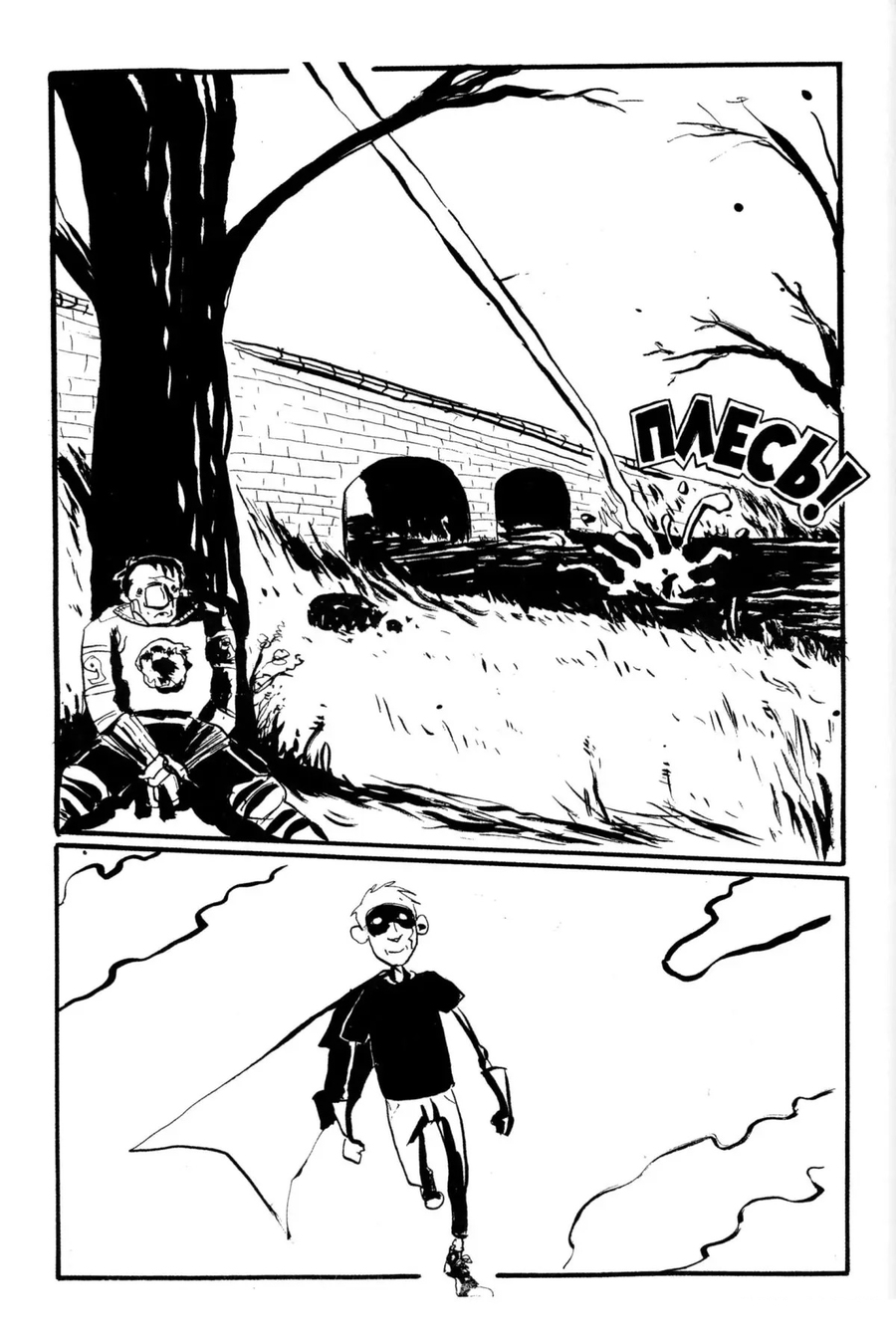
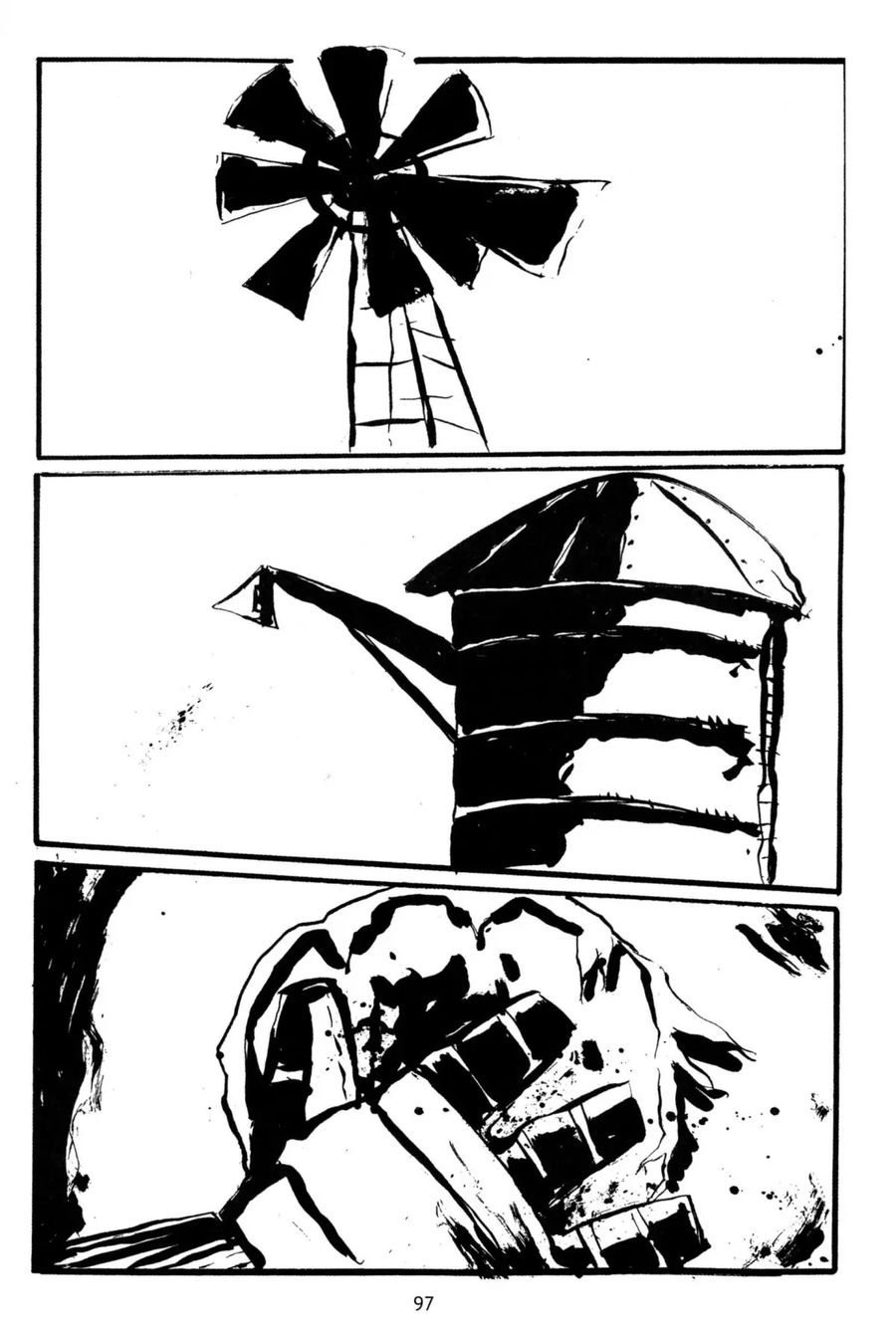
«Essex County, Vol. 1. Life on the Farm, ” 2018. Jeff Lemire
In the comic «Essex County. Farm Life, ” the main character, Lester, ’s mother dies. We don’t see how it happens. All we are left with are faint memories of her last days and what came after.
The memories are rendered by the artist as faded and blurred against the backdrop of the main narrative. The focus of the frames is concentrated on faces and dialogue. Their rhythm is painfully monotonous—a feeling evoked by the presence in a sterile hospital where days are indistinguishable and life slowly fades.
When introduced to Claire, her mother, and her sister, we see not Claire herself, but how she was remembered by Uncle Ken, her brother. Throughout the entire narrative, there are no mentions of her outside the context of her dying. Primarily, this is about his experience of living through death through another person.
Although we do not see the girl’s death itself, the author allows us to witness how Kenny dies.
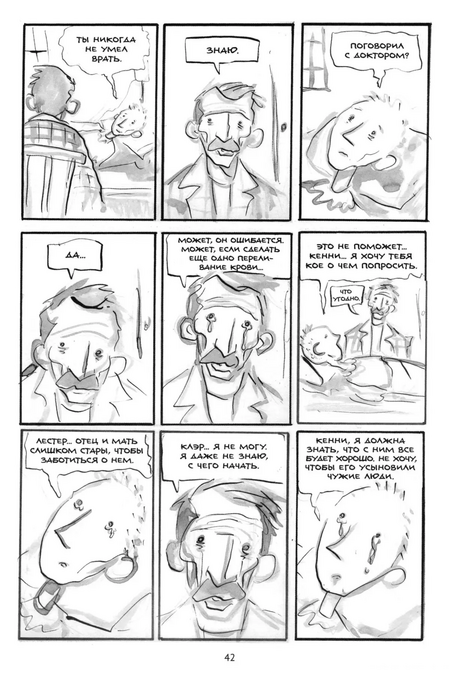
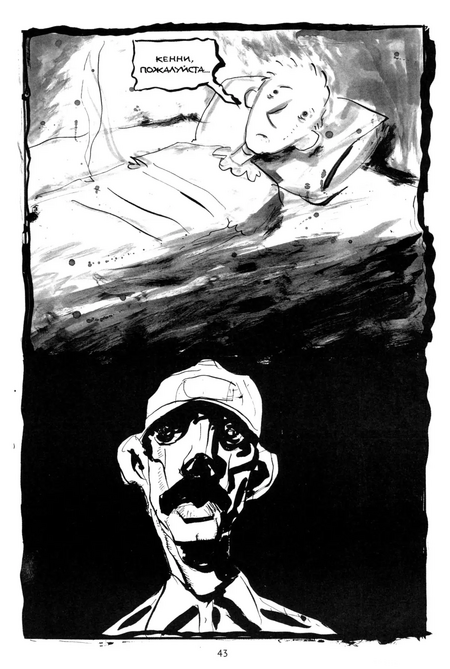
The death of Uncle Ken is not literal. It is not the demise of a body, but the fading of an old identity and way of life. Previously, Ken was a man without children or the responsibility of caring for them, but with his sister, this old way of life dies too. Overnight, his role abruptly shifts, and throughout the comic, Uncle Ken navigates both the grief of losing a loved one and the grief of losing himself.Against the backdrop of his sister’s slow decline, his own dying process occurs in mere seconds during the conversation.
On page 43 of the comic, we see this stark transition from one state to the next—a jagged boundary dividing memory from the present. Uncle Ken’s depiction screams of the sorrow he endures.
This is evident in the saturation of his memory concerning his sister’s request; it is far more vibrant than all the preceding frames. In a sense, for Ken, it is literally a memory of his own death, a reality he cannot reconcile.
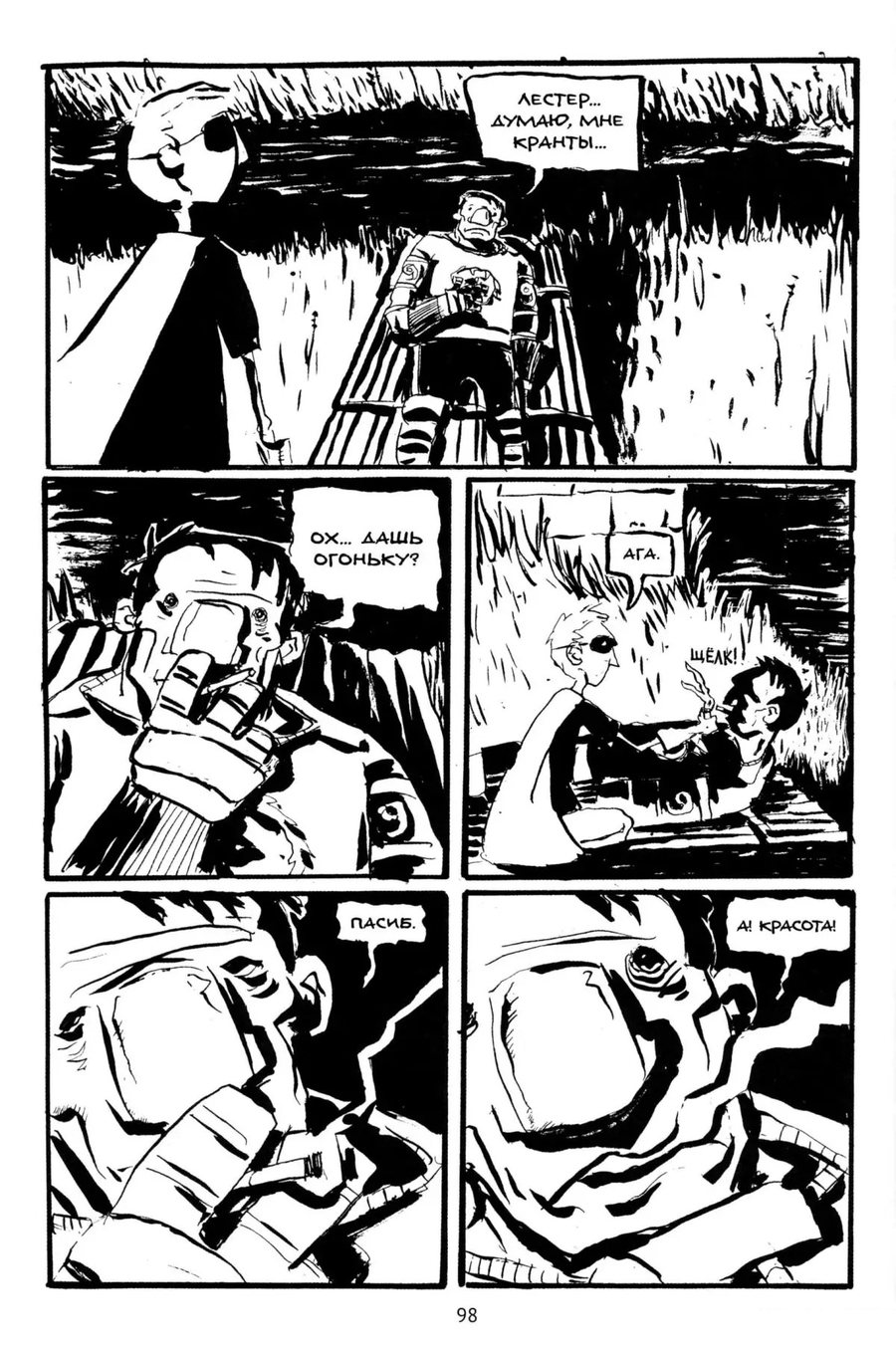
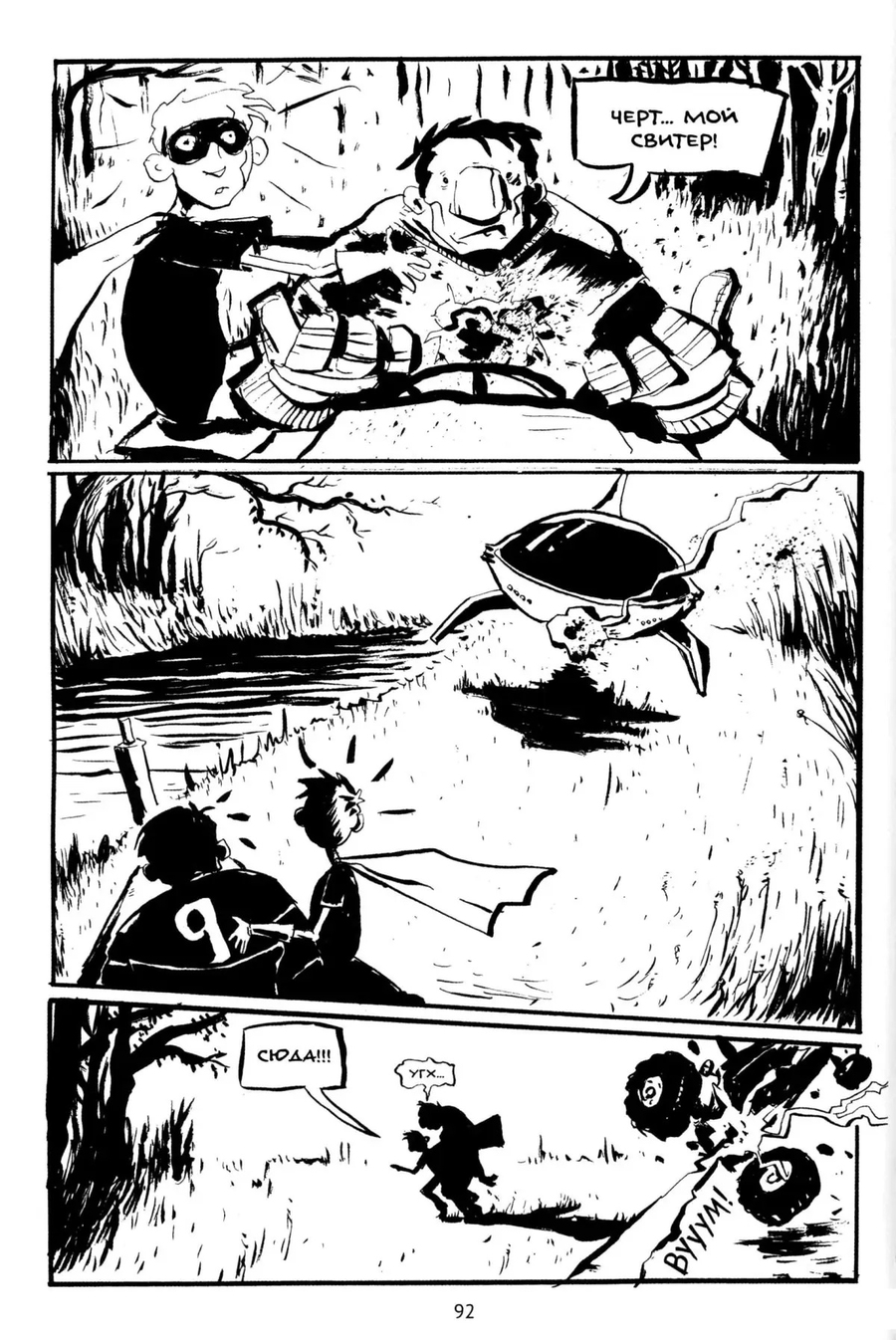
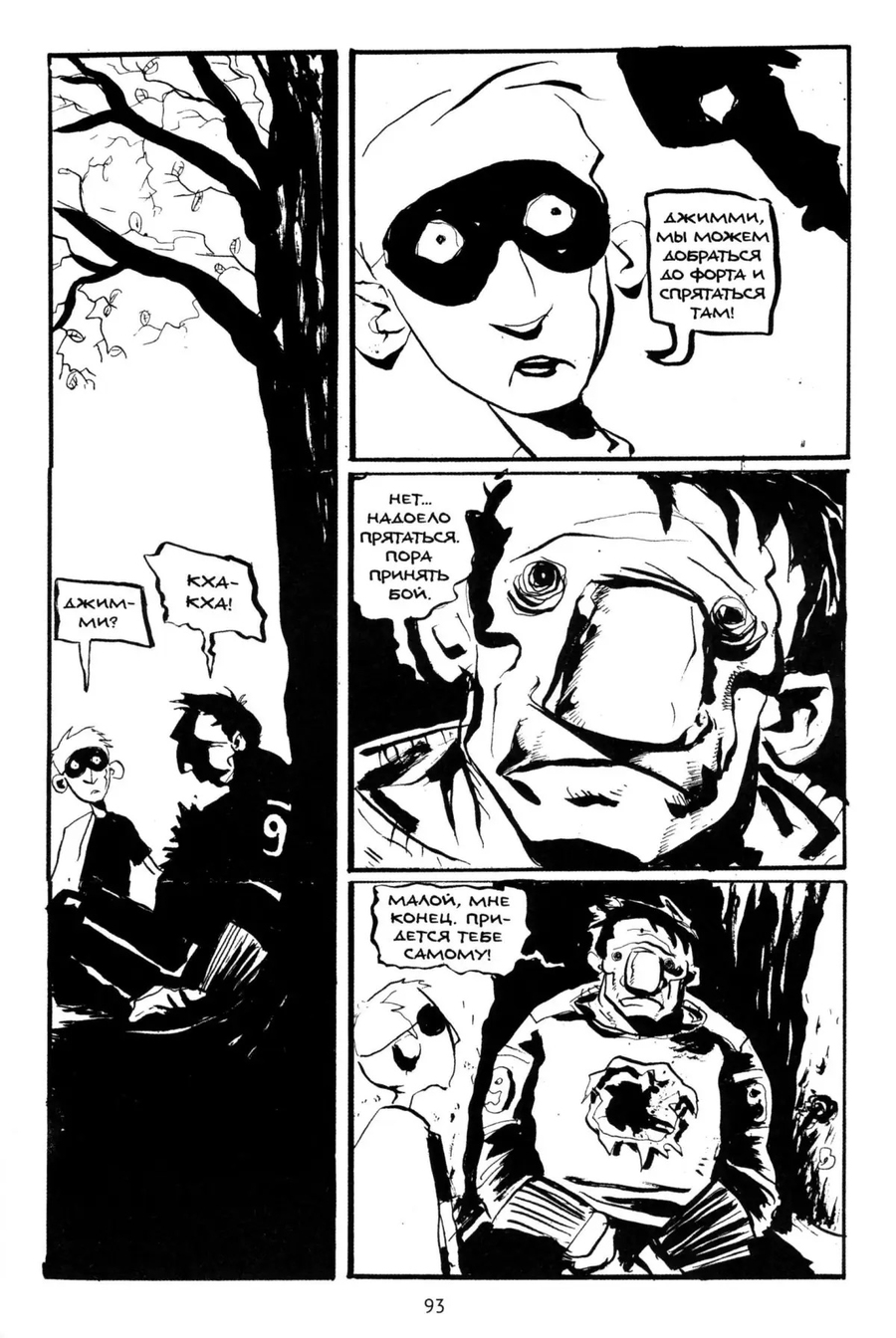
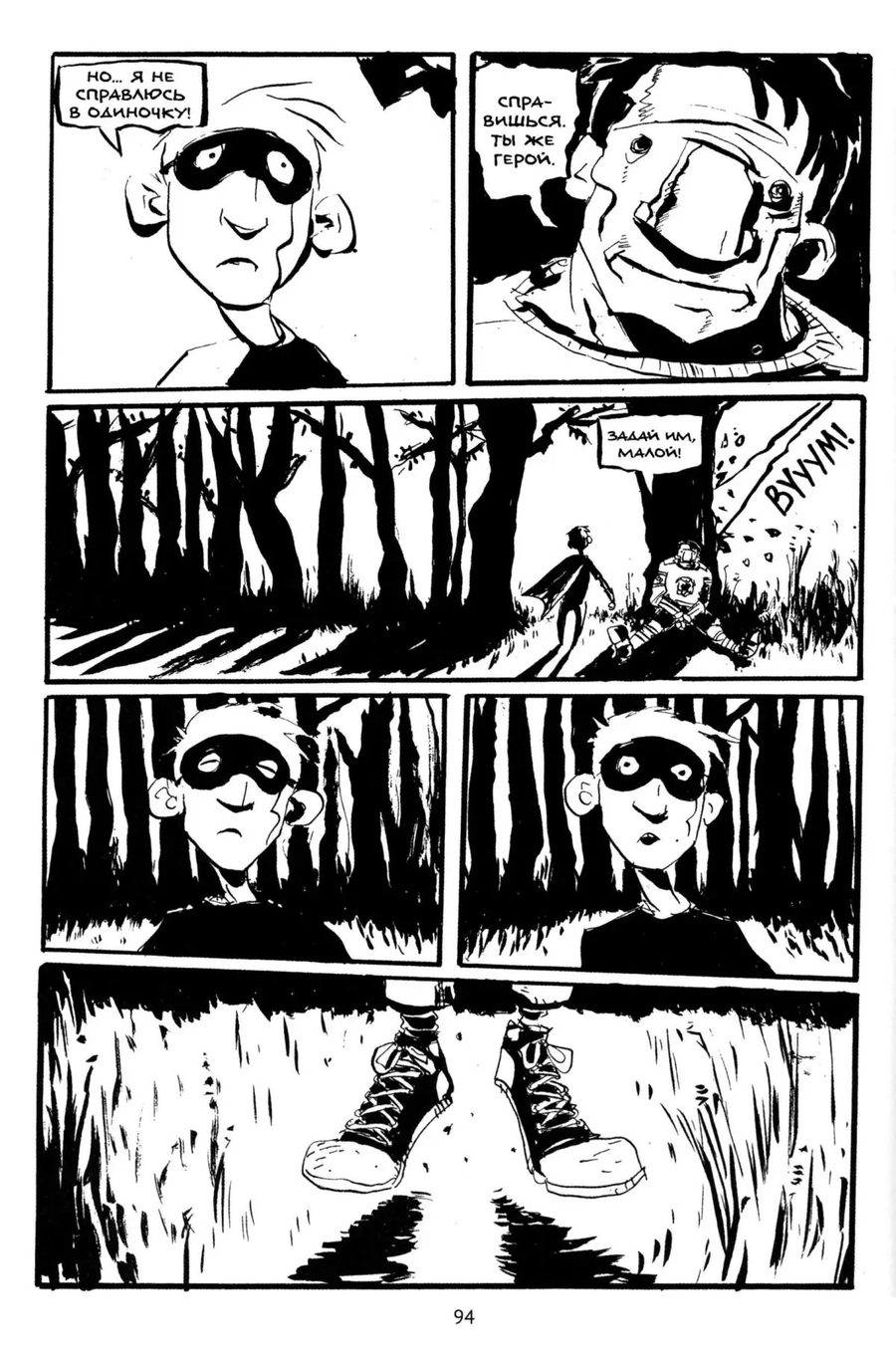
Then Jimmy died. With him, Lester died in a sense.
Leicester—a ten-year-old boy, Claire’s son, whom Kenny took in. His relationship with his uncle is strained, and it is then that Leicester meets and befriends Jimmy.