«You can only hide in the dark. When the sun shines in your eyes, you are always visible.»
This quote frames the central question of the research: where does the sense of horror originate in cinema dealing with cults and sects?
Navigator
1. Concept; 2. Cult as a Territory of Darkness; 3. Exhibition Contrast: From Winter Darkness to Scorched Sky; 4. Totalitarian White: The Erasure of the Individual; 5. Toxic Pastel: Dissonance of Form and Content; 6. Geometry of Fanaticism: Symmetry Breakdown; 7. Conclusion; 8. List of Materials Used.
1. Concept
For a long time, the answer to the question of terror was unequivocal—it came from darkness, concealment, and mystical secrecy. In the history of classical cinema, the sect was inextricably linked to the «canon of darkness»: it was always a conspiracy in the gloom, nocturnal sabbats, the claustrophobia of basements, and a desaturated palette («Rosemary’s Baby, ” „The Witch“). Shadow served as the primary set dressing for fear. The viewer shivered at the premonition of an invisible threat.
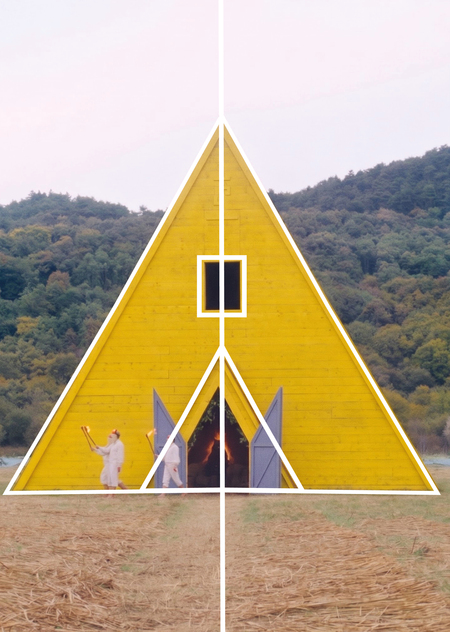
However, a tectonic shift has occurred in contemporary auteur cinema—most vividly in Ari Aster’s film Midsommar. The cult moved out of the underground into the vastness of the endless polar day. Darkness ceased to be the condition for suspense. The director constructs the image of the Hårga cult through excessive daylight, sterile white attire, perfect geometry, and the pastel color palette of a children’s fable.
Thus, the essence of this study lies in the following: the terror of the cult has ceased to rely on mystical gloom and has transformed into a formal optical method of working with light and color. It is not the fear of darkness, but the torment of excessive visibility. Anxiety is born from the cognitive dissonance between the cruelty of the ritual and the sun-drenched pastoralism. In a space devoid of shadows, there is nowhere for a person to hide from the community’s gaze.
The hypothesis is that the «light cult» in «Summer Solstice» is not merely a change of scenery, but an optical effect of sensory overload. The abandonment of the classic dark canon in favor of high-key lighting and an aggressive pastel palette transforms light and white from symbols of safety into tools of visual terror and the erasure of personal boundaries.
2. Cult as a Territory of Darkness
От готического подполья к психологической клаустрофобии
Throughout most of the 20th century, cinema constructed the image of the cult through the classic «dark canon.» Cults were always associated with the underground, concealment, and a total scarcity of light. Darkness in these films was not merely the absence of illumination, but the fundamental setting for fear and the primary condition for suspense. Directors employed techniques such as deep shadows (chiaroscuro), confined, enclosed interiors, and night shoots to keep the threat hidden until the very end. The viewer had to fear what they could not discern, and the space functioned as a visual cage. In this paradigm, light symbolized safety and the rational, daytime world, while shadow represented the irrational space where chthonic forces operated and the hero’s personal tragedy unfolded.
«The Seventh Victim» (1943) and «Rosemary’s Baby» (1968)
Угроза в каменных джунглях
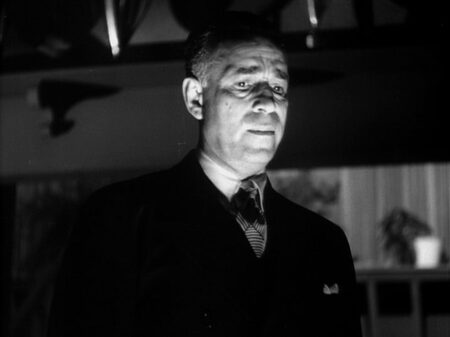
Mark Robson. Still from the film «The Seventh Victim» (1943)
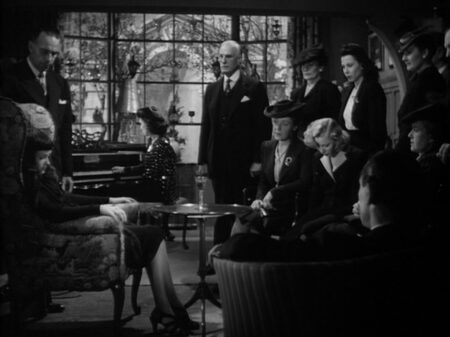
Mark Robson. Stills from the film «The Seventh Victim» (1943)
The urban sect masquerades as respectable neighbors, but their true nature only reveals itself in isolated, windowless spaces. Claustrophobia is created through narrow corridors, locked doors, and deep shadows on the characters' faces.
Roman Polanski. A still from the film «Rosemary’s Baby» (1968)
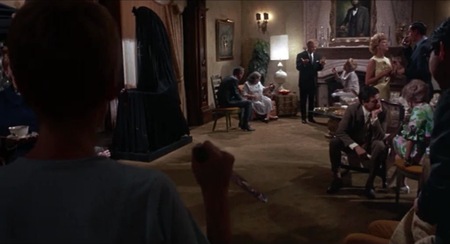
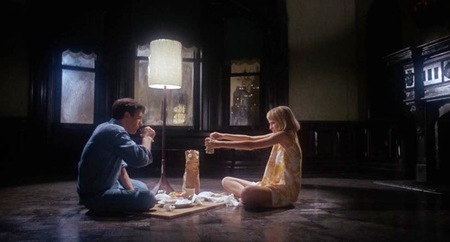
Roman Polanski. Stills from the film «Rosemary’s Baby» (1968)
«The Witch» (2015)
Хтонический мрак Новой Англии
Robert Eggers uses natural lighting and a color grading devoid of warm tones. The earthy-gray, desaturated palette conveys a sense of abandonment and religious fanaticism, where the forest acts as a mute, impenetrable wall.
Robert Eggers. Stills from the film «The Witch» (2015)
«Apostle» (2018)
Изоляция и кровавый натурализм
Garrett Evans. Stills from the film «Apostle» (2018)
The island community exists amidst visual grime and perpetual grayness. The gloom here underscores the physical violence and primal cruelty of the cult hidden on the edge of civilization.
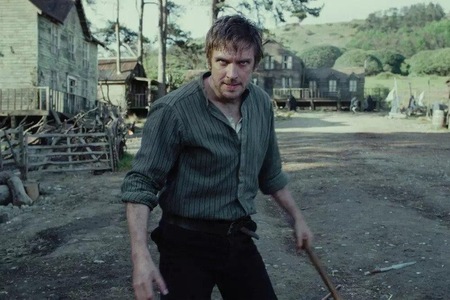
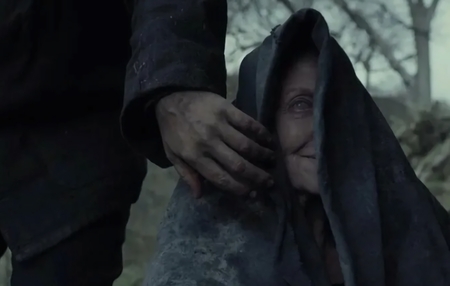
Garrett Evans. Stills from the film «The Apostle» (2018)
«Suspiria» (1977)
Эстетизация ужаса через неон
Dario Argento. Still from the film Suspiria (1977)
A transitional form of visual terror. Dario Argento leaves action in darkness, but explodes that darkness with aggressive, unnatural colors—acidic red, blue, and green. Color begins to function as an independent source of anxiety for the first time, yet it still requires night as its canvas.
Dario Argento. Stills from the film «Suspiria» (1977)
Darkness as a shelter, not an optical mode
In the classic canon, light and shadow merely serve the narrative secret. Ethereal quality and threat arise from what is intentionally concealed beyond the visible.
3. Exhibition Contrast: From Winter Darkness to Scorched Sky
От личной травмы во мраке к тоталитарному свету общины
The radical nature of the visual language in «Solstices» (2019) resides in its internal contrast and its play with the audience’s expectations. Director Ari Aster and cinematographer Pavel Pogozhelsky construct the film as a journey from classic dark horror into a terrifying, blinding pastoral. The film opens with a drawn-out winter prologue in the United States, which is visually resolved within the paradigms of neo-noir and Gothic: deep, inky shadows, underexposed (dark) shots, snow, night, and confined spaces of apartments, doorways, and mirrors. In this space, darkness serves as a refuge for the main character’s (Danny’s) personal trauma and symbolizes her isolation.
However, as the plot progresses, the lighting scheme changes radically. The climax of this transition is the scene set in the Swedish community of Horg. The camera physically flips 180 degrees, passing through a peculiar «solar portal, ” and the viewer finds themselves in a space of endless polar day. In Horg, shadows are virtually absent, the exposure is pushed to overexposure (high-key lighting), and the depth of field is maximal. The intimacy of darkness gives way to the dictatorship of light. Here, sunlight brings not warmth, but the sterility of an operating room: it spotlights everyone, making solitude or keeping a secret from the collective impossible.