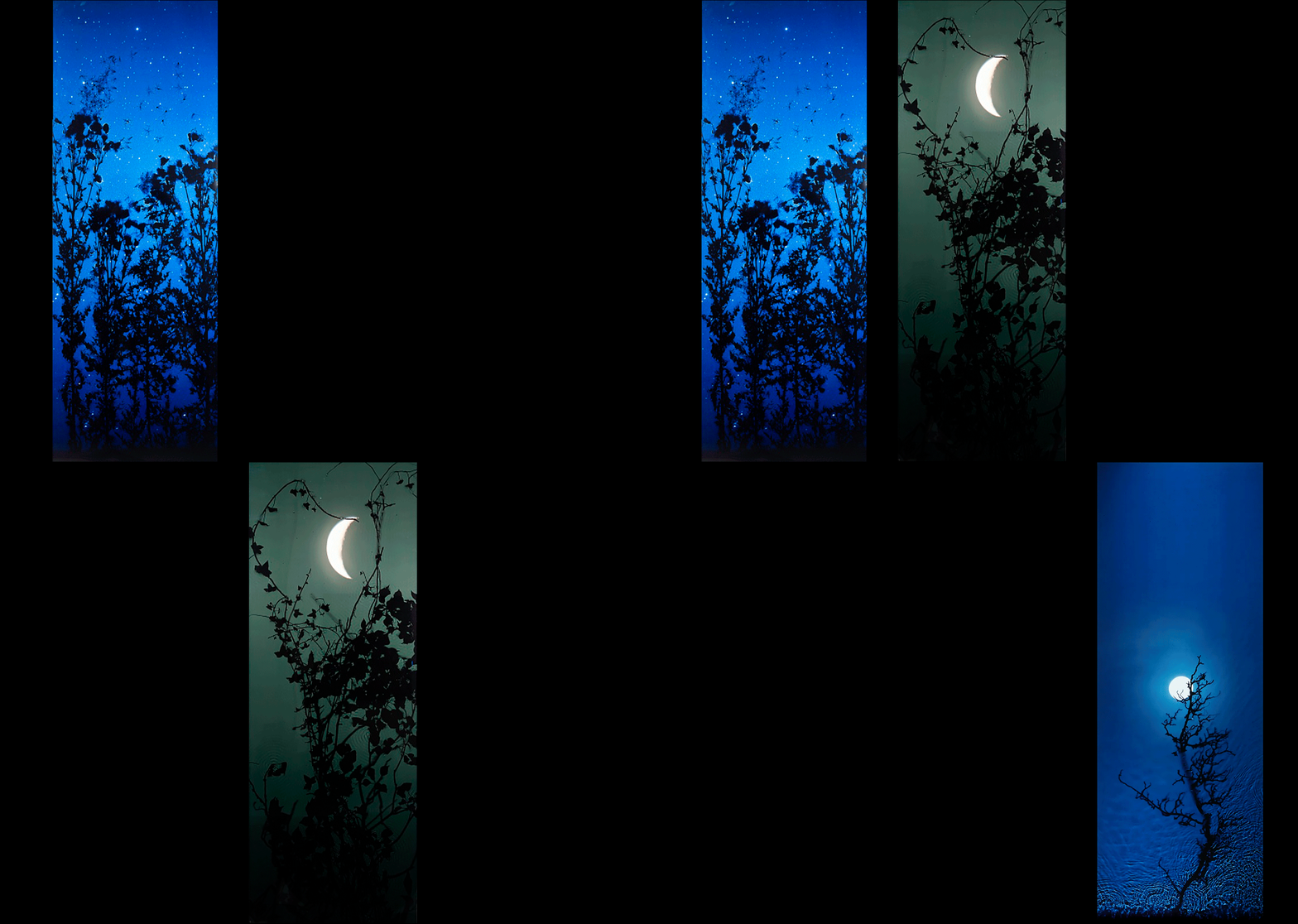
Susan Derges. Star Field — Queen Anne’s Lace. 1955 / Crescent, Ivy. 2002 / Crescent, Ivy. 2002
| Concept |
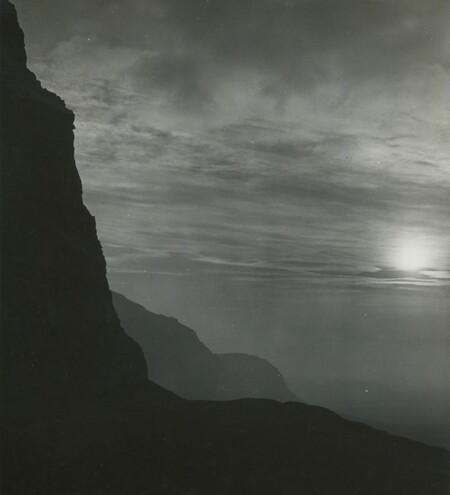
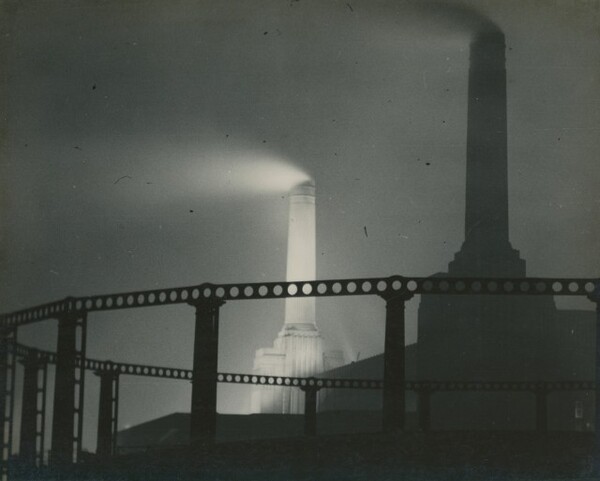
Bill Brandt. Sunset over King Arthur’s throne, Edinburgh. 1948 / Battersea Power Station. 1935
A silhouette photograph is a technique where the subject is sharply contrasted against the background, allowing identification based solely on its edge or contour. It possesses a dual nature, which makes it compelling. On one hand, a silhouette is a method of recognition; we can identify a human figure, a landscape, or an object based on a single external contour. On the other hand, the silhouette strips the subject of many of its familiar characteristics—such as volume, texture, tonal transitions, and space. As a result, the photograph begins to be perceived less as a depiction of a specific object and more as an independent visual construct composed of shapes, lines, proportions, and the relationship between light and dark.
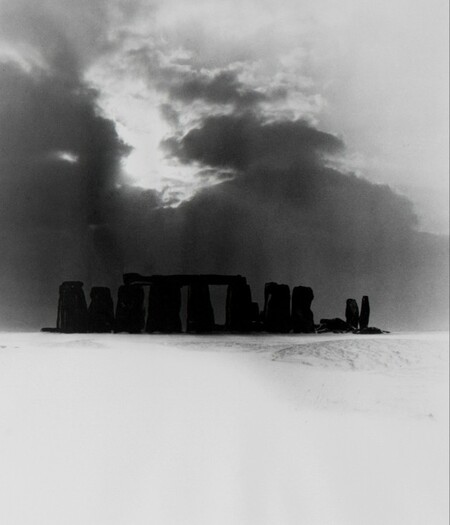
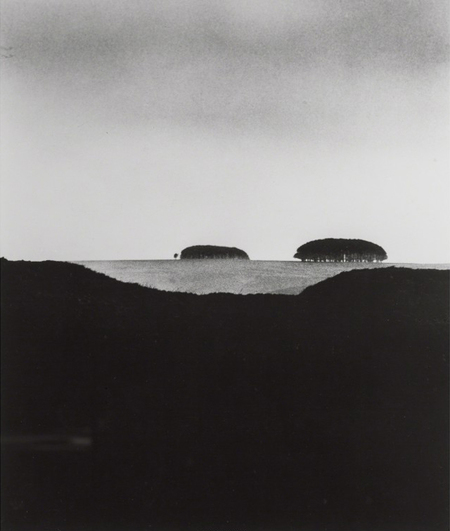
Bill Brandt. Stonehenge in the Snow, 1947 / Barberry Castle, Malborough Downs, 1948
In this study, the concepts of silhouette and shadow are deliberately rendered synonymous, as sources pertaining to shadow are also relevant to the silhouette; a detailed justification for this will be provided in the main body.
The principle of rubrics involves dividing visual material into blocks associated with the image object. This approach allows one to examine a silhouette within various visual contexts and trace how the same formal technique acquires different meanings depending on the subject depicted. First, it is important to trace the history of the silhouette—its emergence as a simplified method of portraiture and its significance for the subsequent photographic tradition.
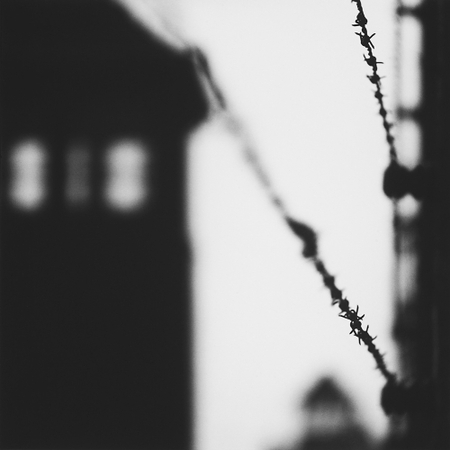
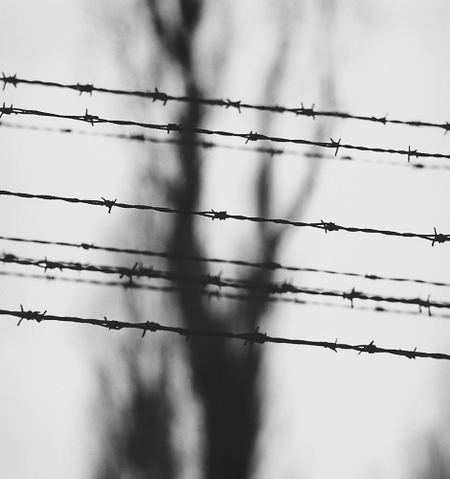
Michael Kenna. Barbed wire fence and trees, Birkenau, Poland. 1992 / Guard tower and enclosure, Birkenau, Poland. 1993.
Photographic material was selected based on criteria such as the expressiveness of the silhouette form, the degree of image simplification, the role of contrasting light, and the nature of the interaction between figure and background—especially in works where the silhouette becomes a conscious tool for the artistic organization of the frame.
The research’s written foundation consists of art historical publications, academic studies of the history of photography, materials from specialized museum collections, and professional art journals. The theoretical basis includes Nancy Forgion’s article «The Shadow Only: Shadow and Silhouette in Late Nineteenth-Century Paris» (1999), Victor Stoichity’s study «A Short History of the Shadow» (1997), and Haji Kenan’s work «Photography and Its Shadow» (2020). To study the human figure, we reference the works of John Pulce and William Ewing, which focus on the body in photography.
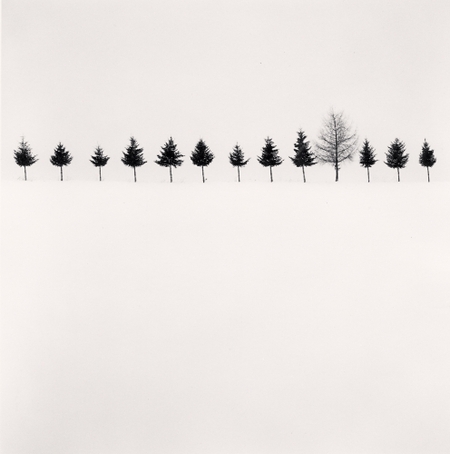
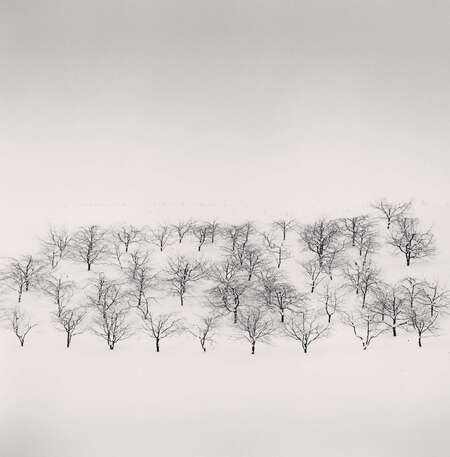
Michael Kenna. A Series of Trees, Biwa, Hokkaido, Japan. 2012 / «Sixty Trees, Nakafurano, Hokkaido, Japan.» 2004
Bill Brandt. St. Paul’s Cathedral in moonlight. 1939
The key research question is: Under what conditions does silhouette photography tend toward graphically and geometrically organized imagery? The initial hypothesis is that silhouette photography occupies the boundary between two medial principles: it maintains a photographic connection to reality, yet through high-contrast lighting and the elimination of detail, it approaches graphic design. The less the image relies on conveying volume and texture, the more autonomous the roles of line, shape, rhythm, and geometry become. The degree of this effect depends on the subject of the shoot, the nature of the image space, the compositional solution, and so on—but this study focuses specifically on the first of these factors.
| Navigation |
- What is a silhouette?
- Plane, Line, and Geometry
- Landscape Photography and Natural Objects
- The Living Body in Silhouette
- Conclusion
- Sources
What is a silhouette? |
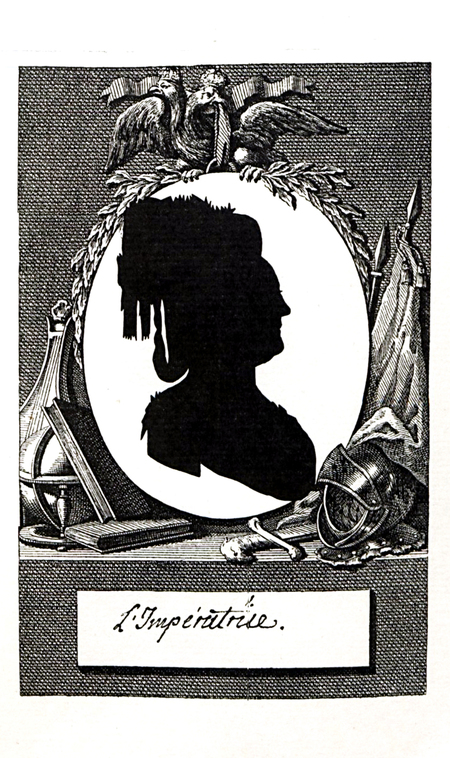
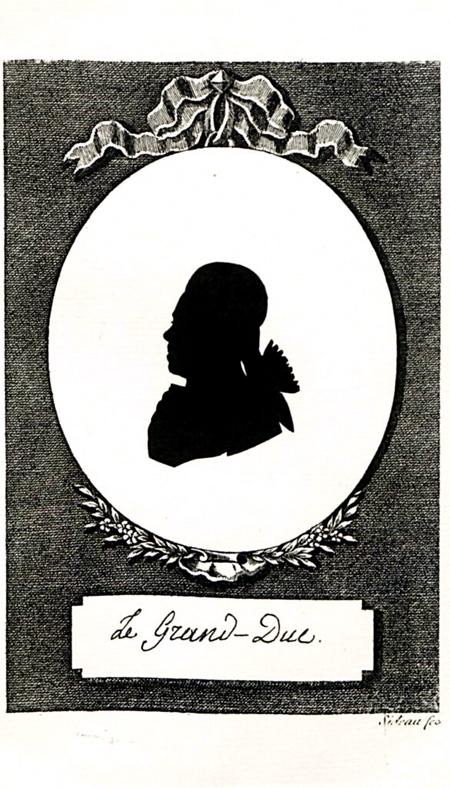
Frédéric George Sidot (Jean-François Sidot). «The Empress» (silhouette portrait of Empress Catherine II, L’Impératrice). 1782–1784 / «The Grand Duke» (silhouette portrait of the heir apparent, Grand Duke Paul Petrovich, future Emperor Paul I, Le Grand-Duc). 1782–1784
The history of the silhouette as an art form predates photography by a long time: its origins are rooted in the tradition of rendering the human profile through the outline of a shadow cast onto a lighted surface. In the 18th century, silhouette portraiture gained widespread popularity across Europe due to its accessibility and simplicity: the profile was cut from black paper or painted onto a light background, conveying the individual features of a person through the external contour. Over time, the silhouette gradually separated from the direct depiction of shadow and evolved into an independent portrait technique, where recognizability was ensured primarily by the precision of its outlines.
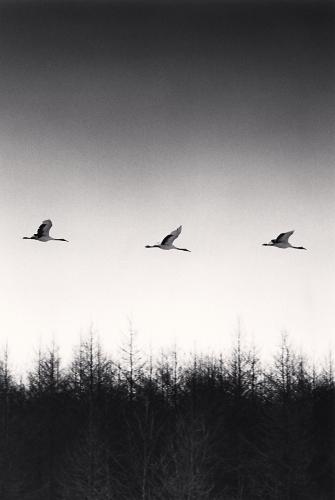
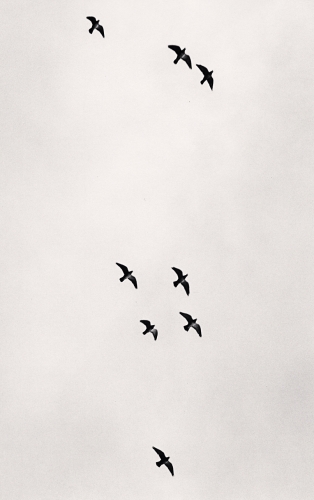
Michael Kenna. Three Flying Cranes, Tsurui, Hokkaido, Japan. 2009 / Michael Kenna. «Eight Birds, ” Beijing, China. 2016
In the art of the late 19th century, shadow ceased to be perceived solely as a supporting means of conveying volume and became an independent expressive element capable of revealing not the internal details of a subject, but its generalized image.
In photography, this relationship found new development through the ability to control backlighting: the subject darkens against a bright background, its internal details vanish, and the external boundary becomes the primary carrier of information.
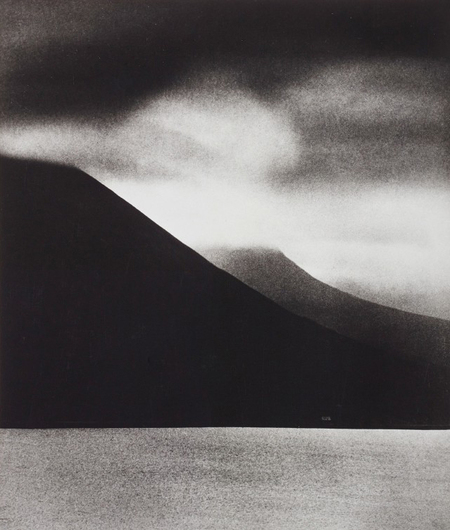
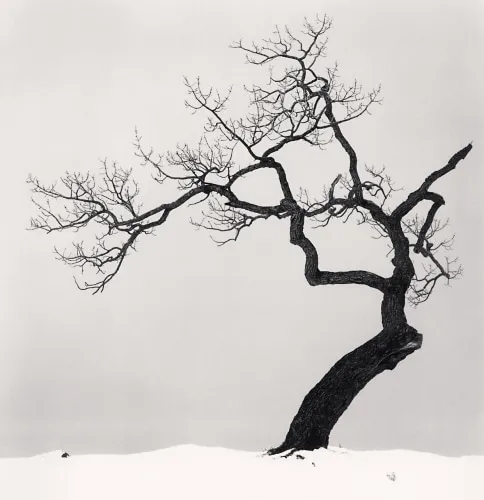
Bill Brandt. Sky Mountains, 1947 / Michael Kenna. «Tree on Kussaro Lake, Study 1, Kotan, Hokkaido, Japan.» 2002
Van H. «Construction.» 1957
Based on the above, the silhouette and shadow are linked not only visually but also historically: the silhouette represents a fixed boundary of shadow, transformed into an independent image. Therefore, a silhouette photograph can be viewed as a continuation of the artistic tradition of depicting shadow, where the physical light effect is converted into a graphic form that maintains a connection to the real object.
Plane, Line, and Geometry
Barbara Morgan. «Corn Leaf Rhythm.» 1945 (printed ca. 1972)
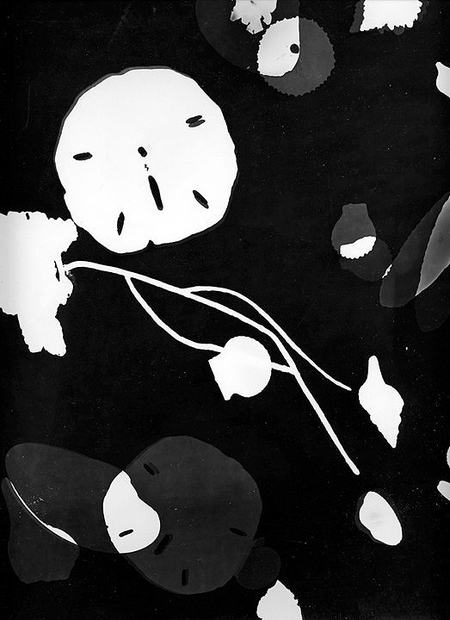
In the context of graphic photography, the silhouette ceases to be merely a means of depicting an object and becomes an independent compositional element. The subject loses most of its material characteristics—the texture of the surface, volume, and tonal transitions yield to a uniform mass. The focus shifts primarily to the boundary between the object and the background, as this is what defines the image’s form. The contour acquires the significance of a line, and the filled dark area gains the meaning of a graphic shape. This kind of transformation allows the photograph to be considered within the framework of visual arts based on the interaction of planes and geometric relationships.
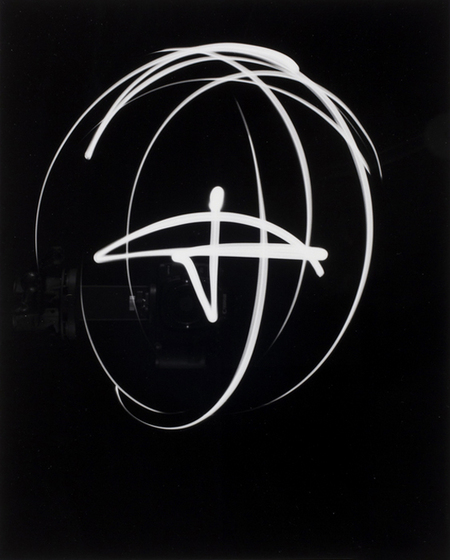
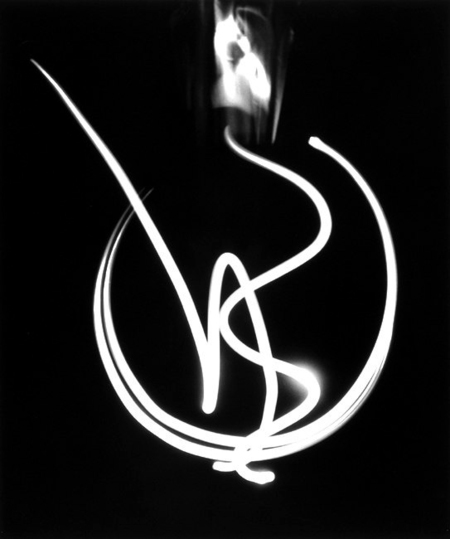
Barbara Morgan. Play of Light. Cadence, 1940
The transition from a recognizable form to abstraction is also fascinating. When a photographer intentionally excludes details, the viewer begins to perceive the image through the relationship between large masses, repeating contours, and voids. This principle is similar to the formal experiments of modernism, where the image was freed from the need to literally reproduce reality. The silhouette also serves here as a means of questioning the boundary between the real object and its visual representation.