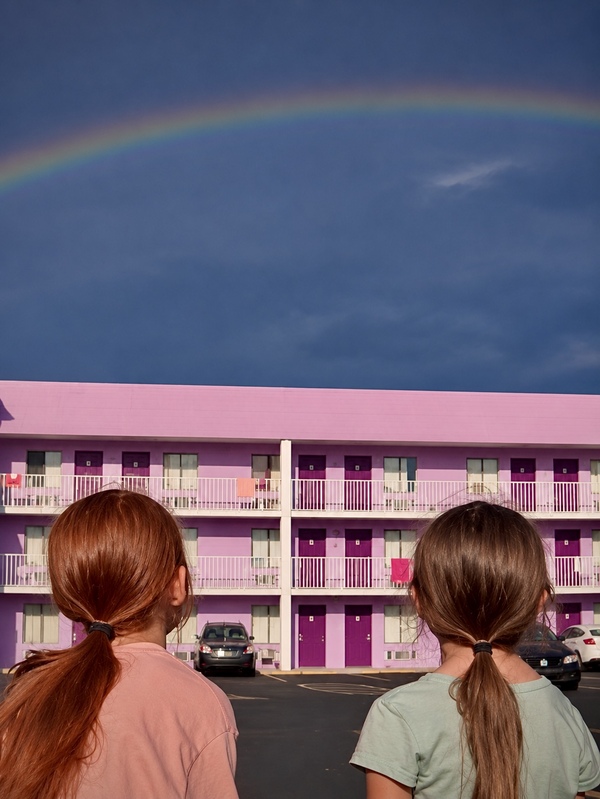
Navigator
— Concept — Innocence and the Child’s Perspective — Nostalgic Childhood Aesthetics — Play Space and the Illusion of Safety — Adult Reality — Farewell to Childhood

Concept

«Florida Project» (2017) — a Sean Baker film about six-year-old Munni, who lives with her mother in an inexpensive motel near Disney World. Through children’s play and vibrant surroundings, the film portrays a world where childhood carefree spirit coexists with the poverty and instability of adult life.Sean Baker is known for his focus on the lives of marginalized and socially vulnerable groups, and his dedication to depicting the everyday existence of people rarely placed at the center of cinematic narratives. His films combine a realistic portrayal of the social environment with unusual visual expressiveness.
For visual analysis, I exclusively use frames from the film «Florida Project.» The research structure is based on a sequential breakdown of the key visual elements that shape the perception of the narrative. I examine camera placement and framing, spatial organization, color and light, the portrayal of characters and the material environment, and the characteristics of visual texture. Each example helps determine the role that a specific directorial choice plays in establishing a child’s perspective and revealing the social reality in which the protagonist exists.
The primary sources for this research were interviews with director Sean Baker and cinematographer Alexis Zabe, in which they discuss camera work, location selection, color palette, and the film’s visual concept. These are supplemented by film studies articles dedicated to the motel setting, the depiction of poverty, and the social context of the picture.The key research question is: How does the visual language of the film «The Florida Project» convey the child’s perception of the world while simultaneously revealing the fragility of that world when confronted by adult reality?
Innocence and the Child’s Perspective
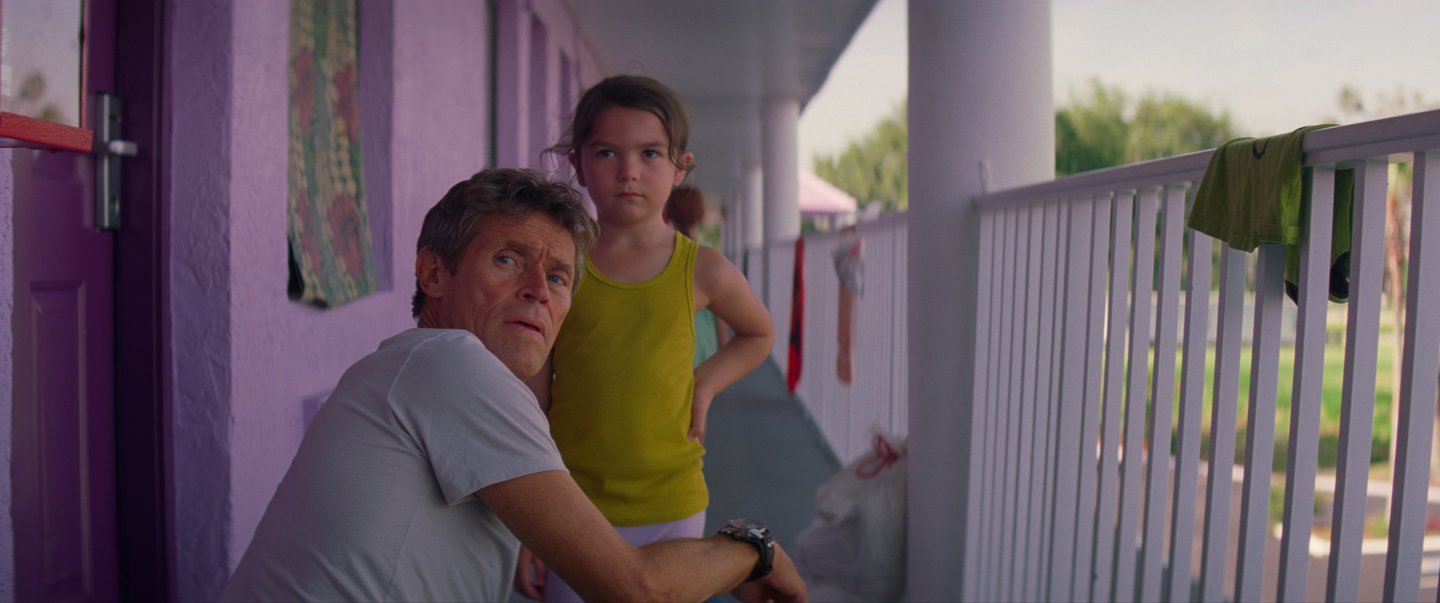
One of the defining features of the visual language of «Project Florida» is the desire to portray the surrounding world from a child’s perspective. To achieve this, Sean Baker utilizes a low camera angle: it is often situated at eye level with the children or slightly below. The director himself noted that he did not want to film the children from above, but rather aimed to show them as large and significant within their own world[3].
Wide-angle optics also play a crucial role. They allow for the capture of more surrounding space, showing the subjects not in isolation, but in constant interaction with the architecture and the environment. Because of this, the viewer sees not only Munni’s actions, but also the places that become part of her games and adventures.
The camera does not always literally follow the heroine. The film combines carefully constructed compositions with a freer, almost documentary-style shoot. The camera can observe the characters from a distance, allowing the viewer the opportunity to notice details of the surrounding reality that fall outside the scope of a child’s attention.
Thus, the camera’s positioning and framing choices create a dual perspective: the viewer is positioned close to a child’s perception while simultaneously being able to observe the social reality hidden behind Munni’s familiar world.
Nostalgic childhood aesthetics
«One foot in childhood innocence, the other in reality.»
Operator Alexis Zabe in an interview for Awards Daily[4]
The color palette of the «Florida Project» is one of the key tools in crafting its visual world. The saturated pink, purple, and orange hues of the motel facades, signage, and surrounding infrastructure evoke an artificial, storybook environment brimming with the atmosphere of summer and entertainment. Simultaneously, the green vegetation of Florida creates a striking contrast with the vibrant architecture, adding complexity to the film’s overall color perception.
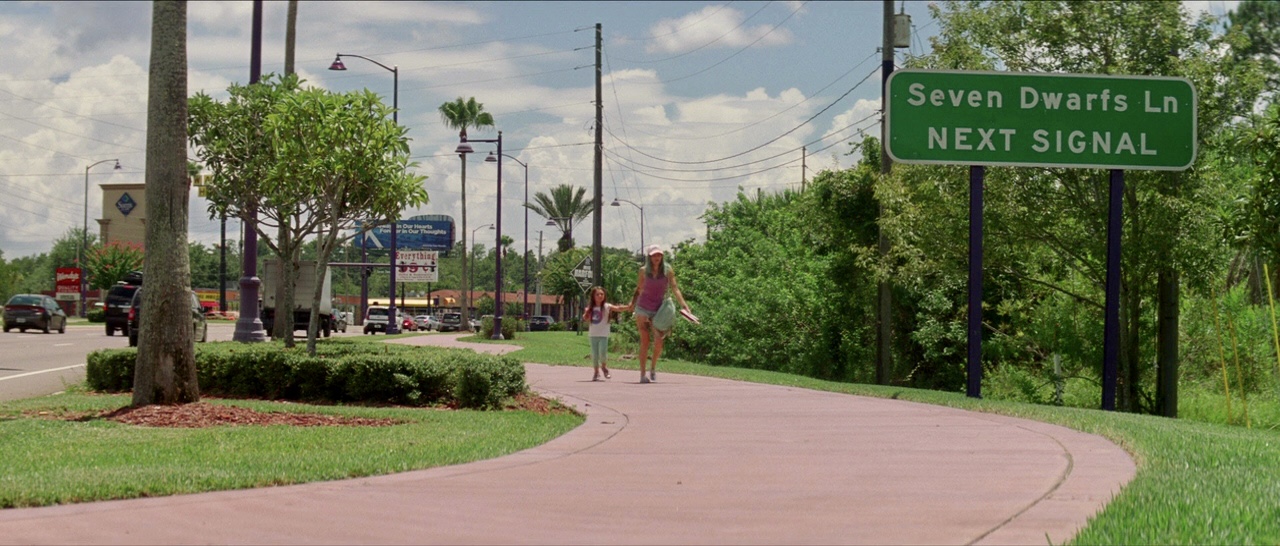
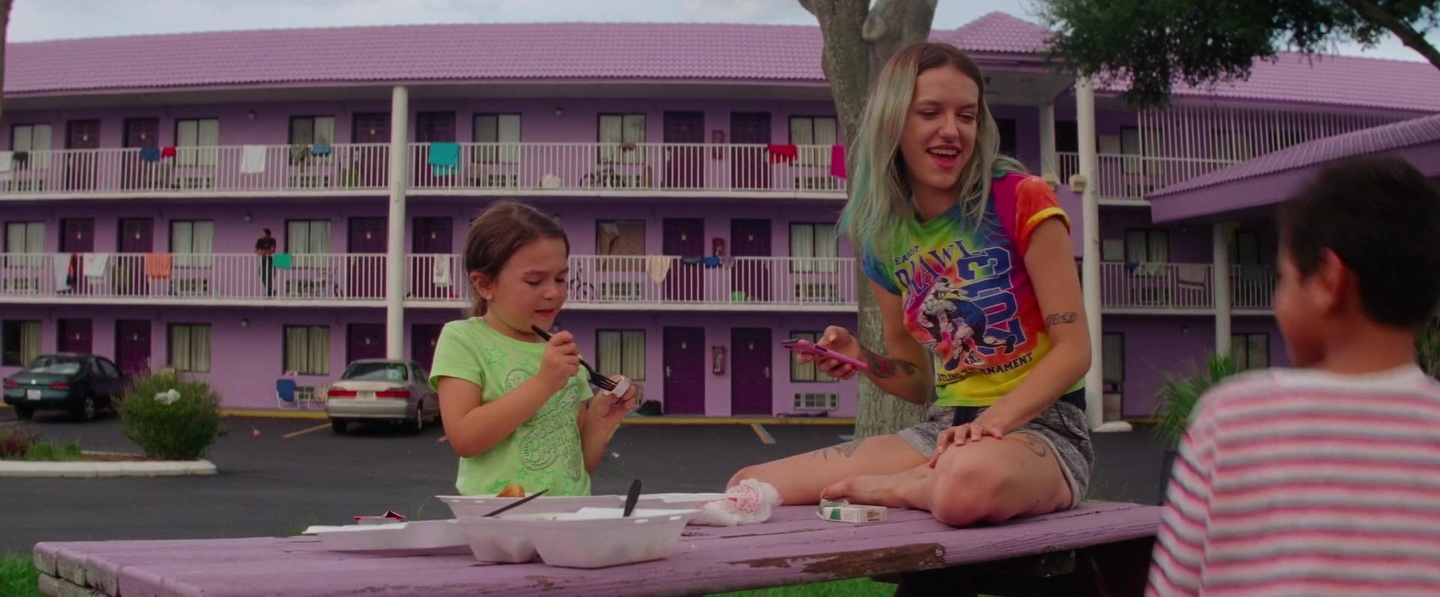
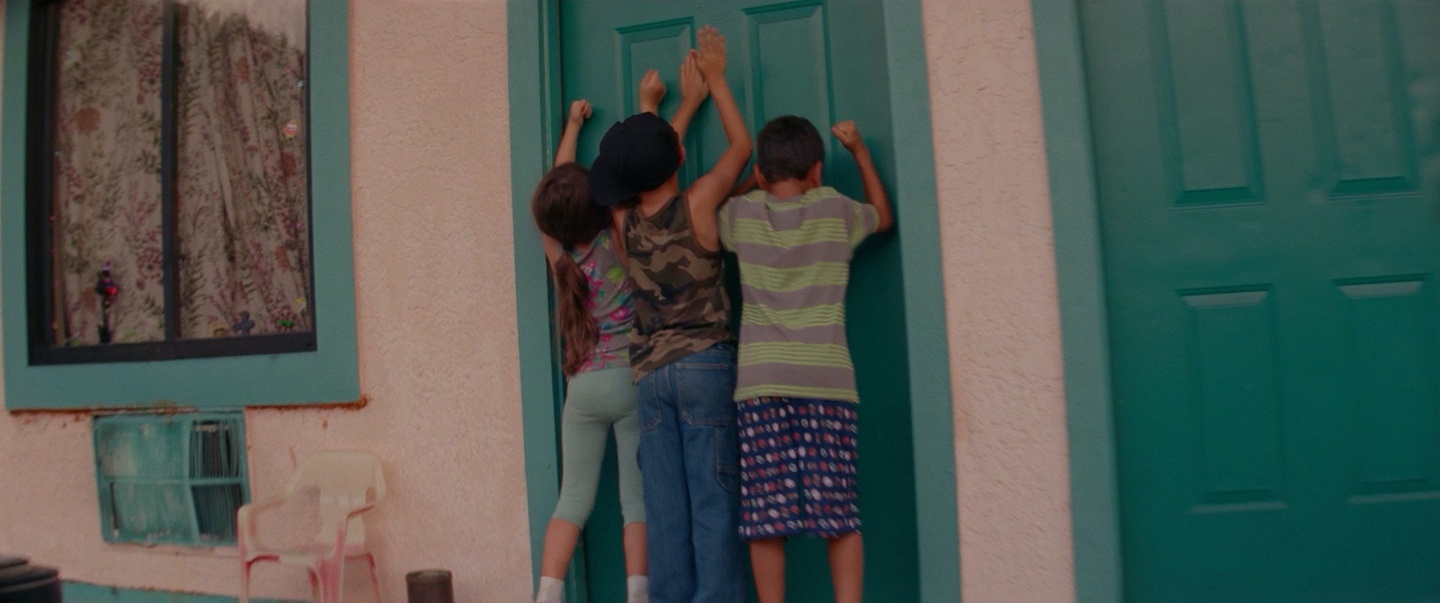
Operator Alexis Zabe described the painting’s color concept using the metaphor of «sweet and sour» [4]. He associated pink, purple, and orange hues with sweetness and fruity associations, while green represented a bitter, acidic sensation. Thus, the palette is constructed not merely through the combination of colors, but through the clash of different emotional experiences. Importantly, these shades are not distributed according to a «children’s world—adult world» principle; they coexist within a single visual space.
High saturation and contrast amplify the sense of artifice in the environment. The Magic Castle Motel, with its bright pink facade, certainly resembles a fairy-tale castle; however, its architecture and the condition of the grounds contradict this image. This results in a peculiar set piece for a children’s tale, behind which lies the everyday life of socially vulnerable people.
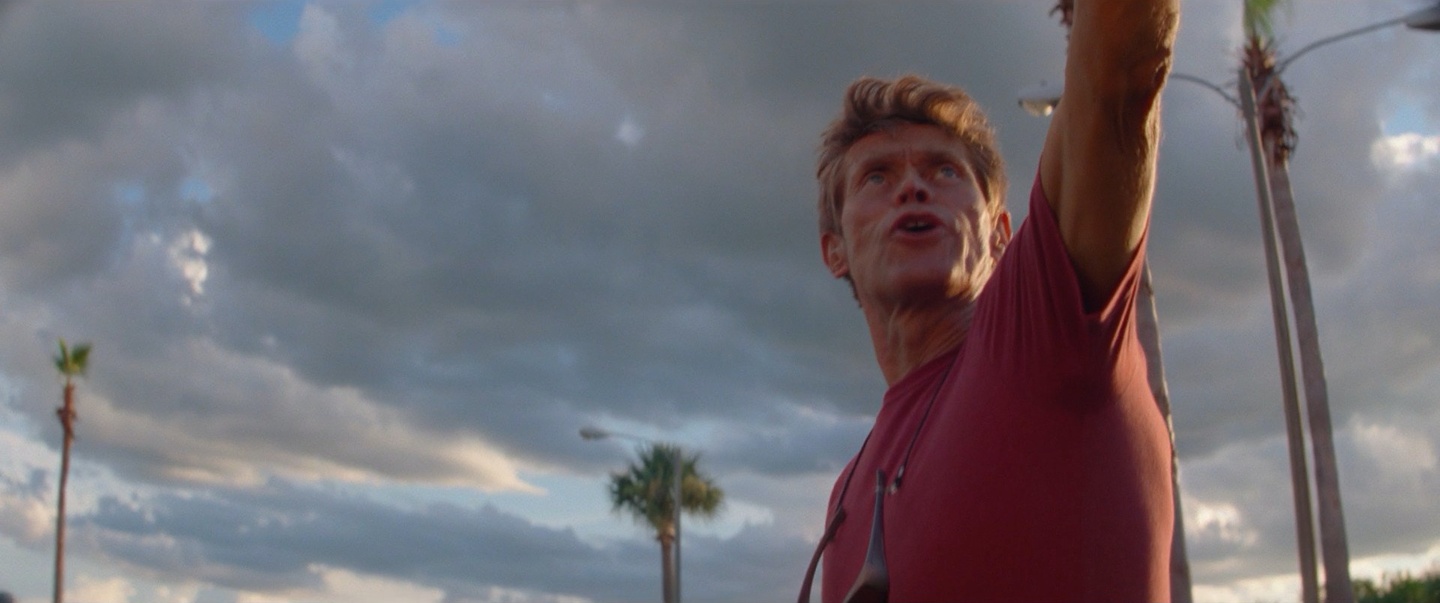
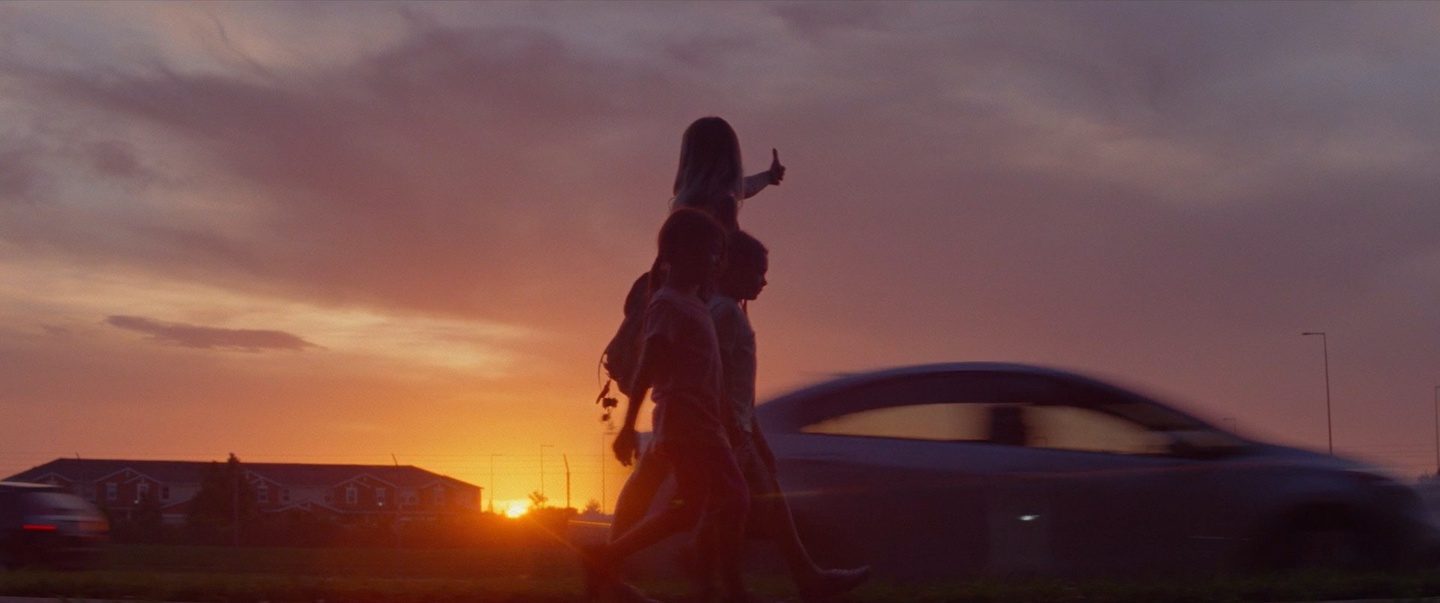
Natural sunlight plays a distinct role. The bright Florida light, open skies, and clouds create a feeling of endless summer. Zabe noted that the film crew tried not to fight the changing weather, but to utilize its characteristics [4]. Therefore, the light and weather conditions become part of the visual atmosphere, rather than merely technical parameters of the shoot.