Introduction
In Jim Jarmusch’s film Only Lovers Left Alive (2013), Adam and Eve have existed for several centuries, yet the film barely shows the eras they have lived through. Instead of historical scenes, the movie focuses on the characters' daily actions, habits, and relationships.Their age-old experience becomes noticeable primarily in the visual representation—through objects, interiors, urban spaces, light, and camera movement. Therefore, the object of this study is the visual language of eternity—the ways the film conveys a sense of prolonged existence without directly depicting the passage of centuries.
The key question is how composition, recurring movements, setting, and lighting create a sense of immortality and help reveal the differences between Adam and Eve.
The research is founded on the hypothesis that eternity in the film is expressed through three interconnected principles: repetition, accumulation, and continuity. Circular movements and similar compositions evoke a sense of cyclical time.Objects from different eras and traces of the past in the architecture suggest that what has been lived does not vanish but remains part of the present. The predominance of nighttime scenes blurs conventional temporal markers, fostering a feeling of continuous existence.
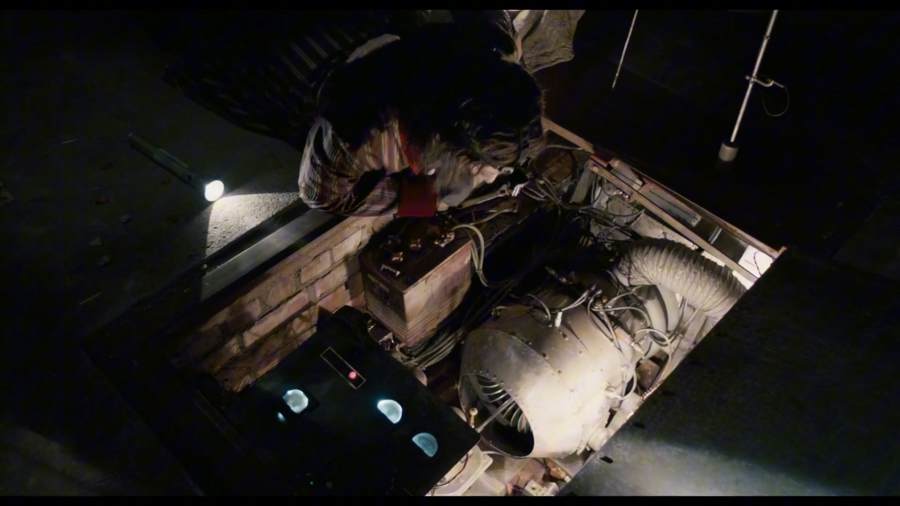
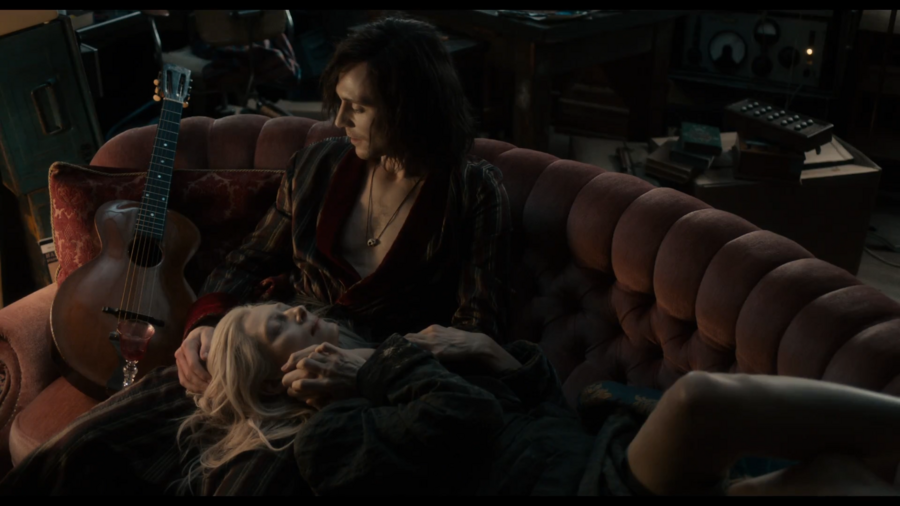
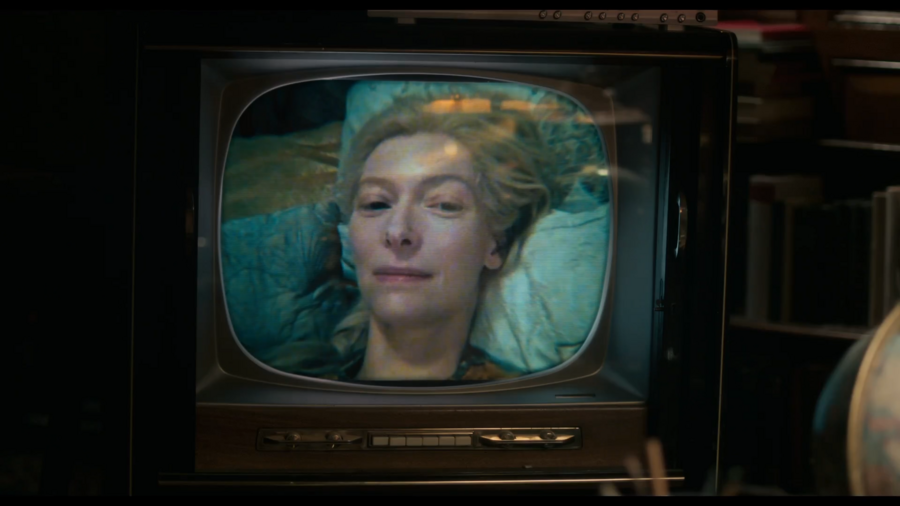
However, immortality is not presented as a uniform experience for both characters. Adam perceives the accumulated past with fatigue and disappointment, whereas Eve retains an interest in the surrounding world. These differences manifest not only in the characters' behavior but also in the organization of their living spaces, the nature of the lighting, and their shared scenes. Comparing the visual solutions allows us to view eternity not as a pause in time, but as a shift in attitude toward it.The research material was selected based on the presence of recurring and comparable visual devices. The core consists of still frames from the film: the introductory sequence with rotation, musical scenes, the characters' interiors, views of Detroit and Tangier, nighttime shots, and frames depicting the characters' joint presence.For analysis, individual images, comparative collages, sliders, and video segments are used. The latter are necessary where the meaning of a device is revealed over time—through camera movement, editing, or character actions. The images serve as the primary evidence, while the text clarifies the observations and their connection to the research question.
The theoretical foundation is provided by Bruce Block’s work on composition, movement, and rhythm, as well as Patti Bellantoni’s research on the emotional role of color in film.
To clarify the details regarding the film’s visual world, materials from production designer Marco Bittner Rosser, interviews with Jim Jarmusch, and publications on retro-aesthetics are utilized. These sources are used to explain techniques and verify facts, but they do not replace the independent analysis of the shots. The study’s goal is to determine how visual elements help the viewer sense the passage of time through the eyes of immortal characters and why the same eternity carries a different meaning for them.
Chapter 1. Time in a Circle
The film opens with a repetition of circular motion. The rotation connects images of outer space, a vinyl record, and the main characters. This technique allows time to be presented not as a straight line, but as a continuous process in which movement returns to the starting point.
Bruce Block, in his book «Visual Storytelling,» identifies three components of rhythm: «alternation, repetition, and tempo» [1]. All three principles can be found in the film’s opening sequence. The repetition of the rotation creates a visual connection between the frames, and their alternation establishes a unified rhythm. Because of this, the editing transitions are perceived as a continuation of a single process.
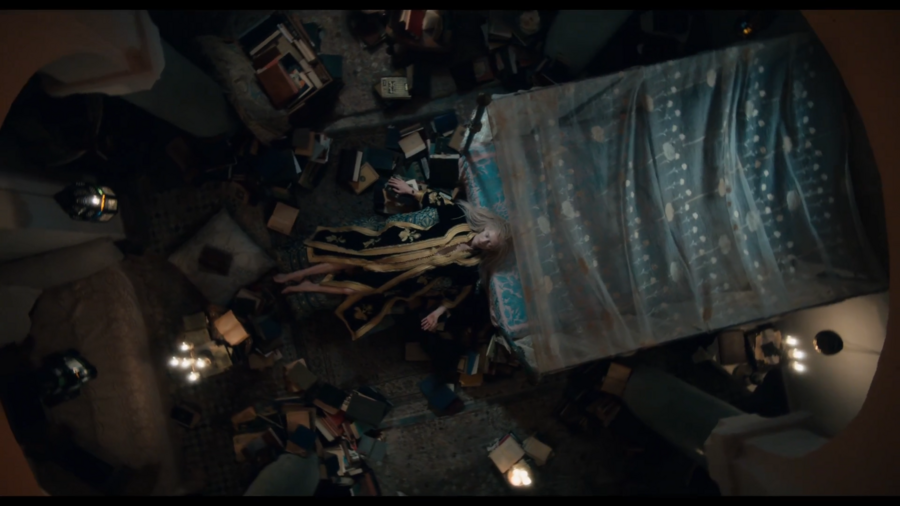
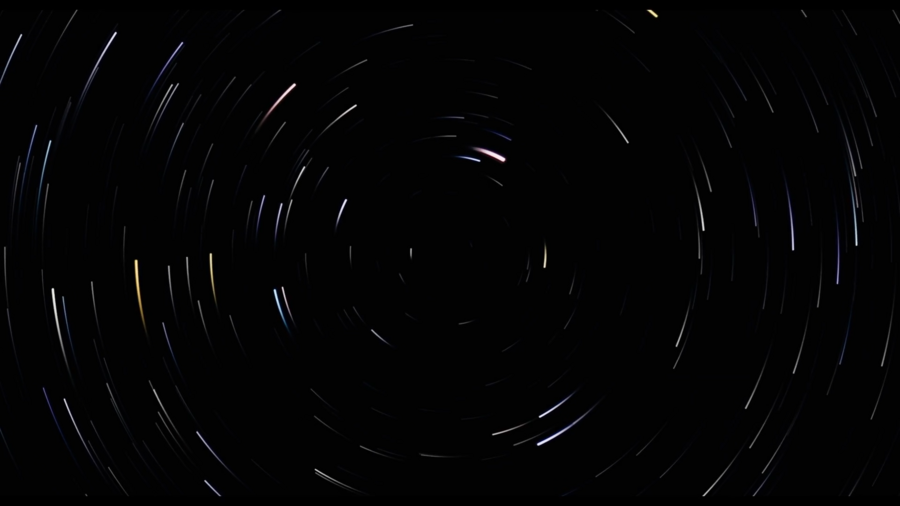
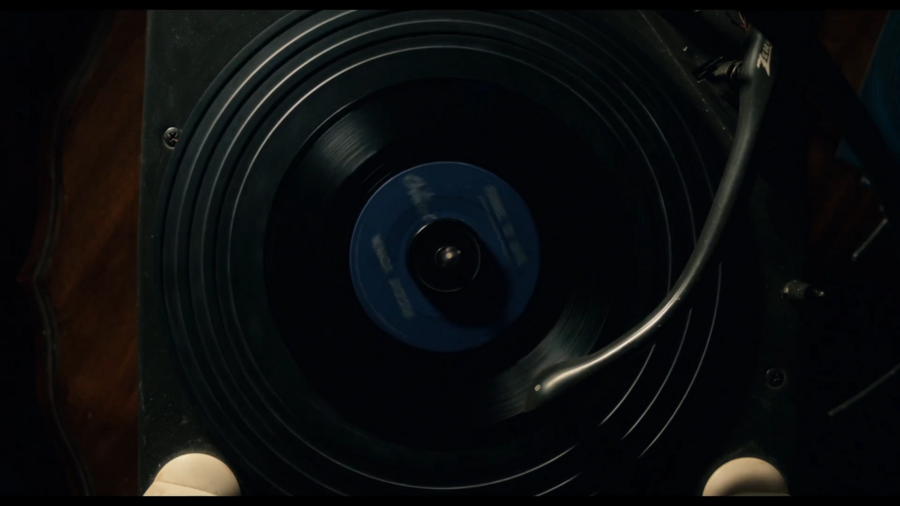
Jim Jarmusch. «Only Lovers Left Alive.» 2013. Opening sequence stills.
In the initial sequence, Adam and Eve are presented using similar angles and camera movements. Even though the characters are in different cities, the repetition of this visual device creates a connection between them.
Their individual spaces become parts of a single narrative.
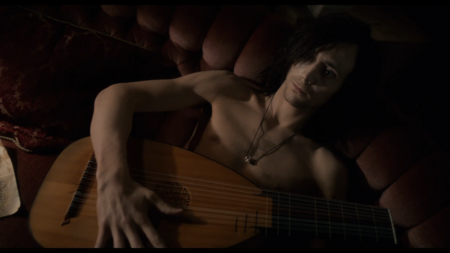
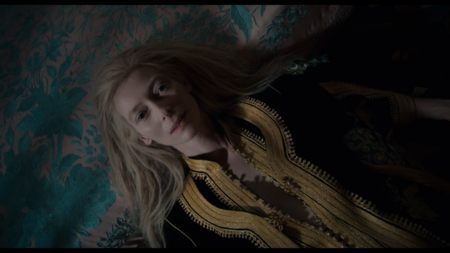
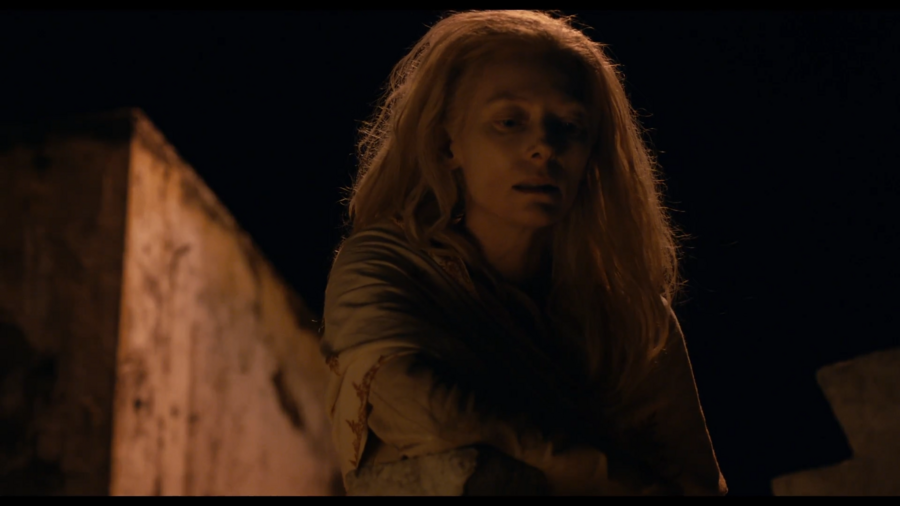
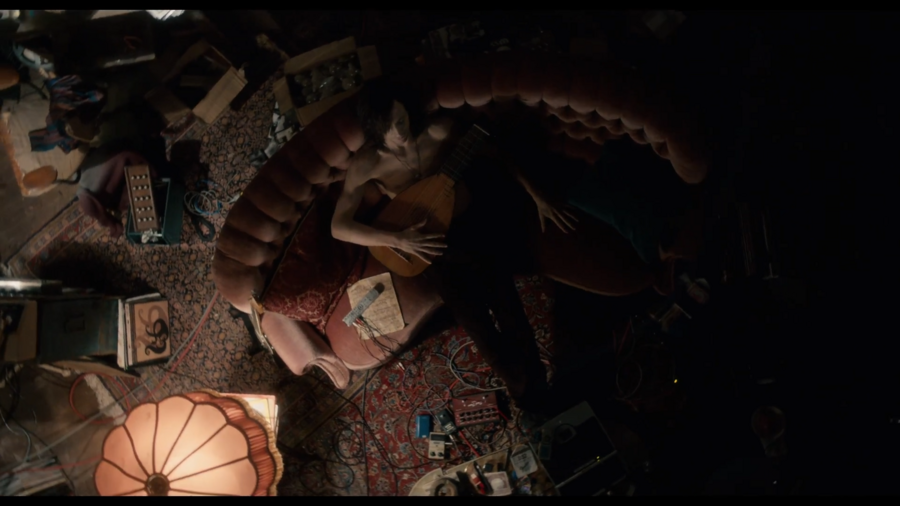
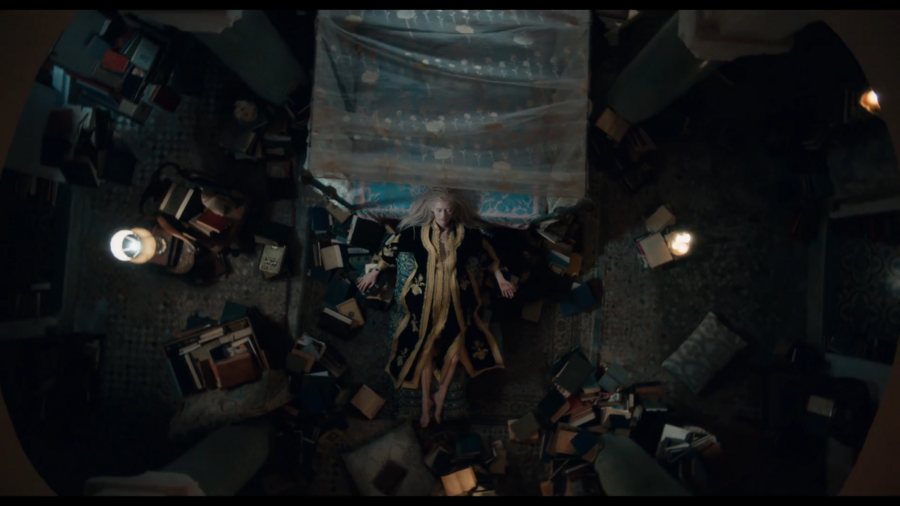
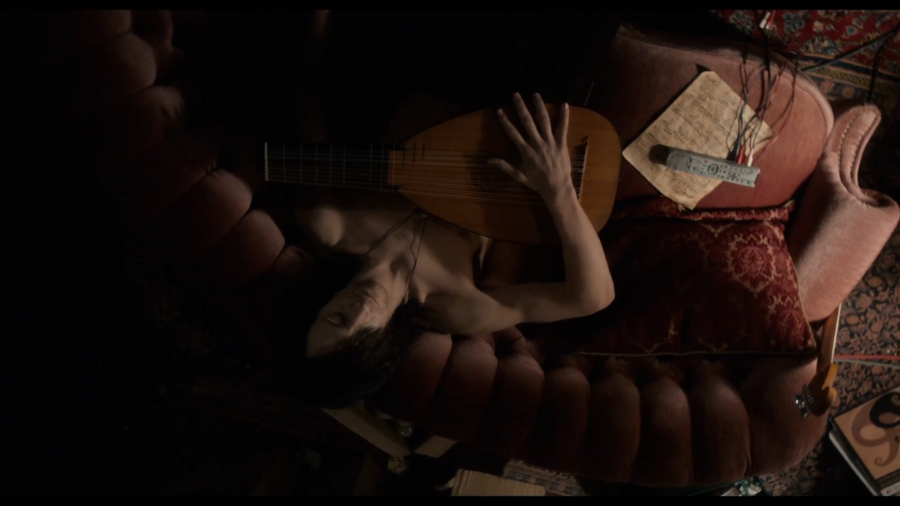
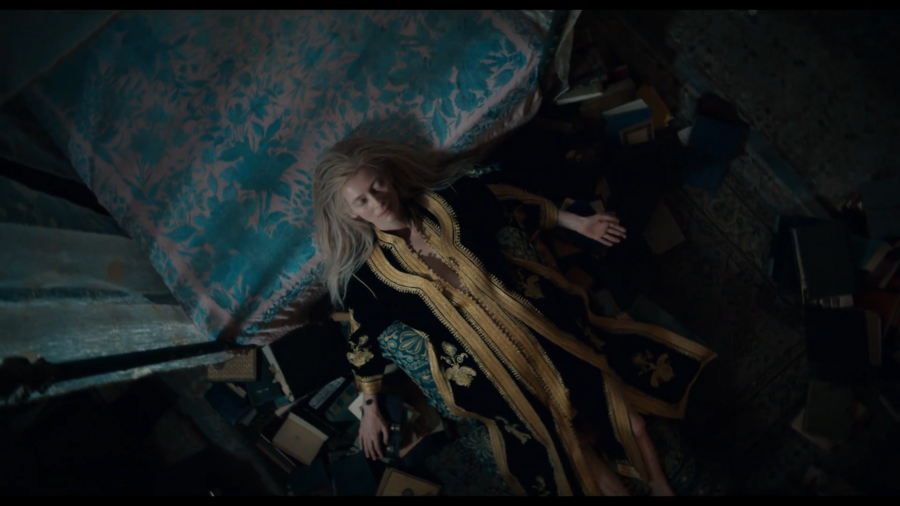
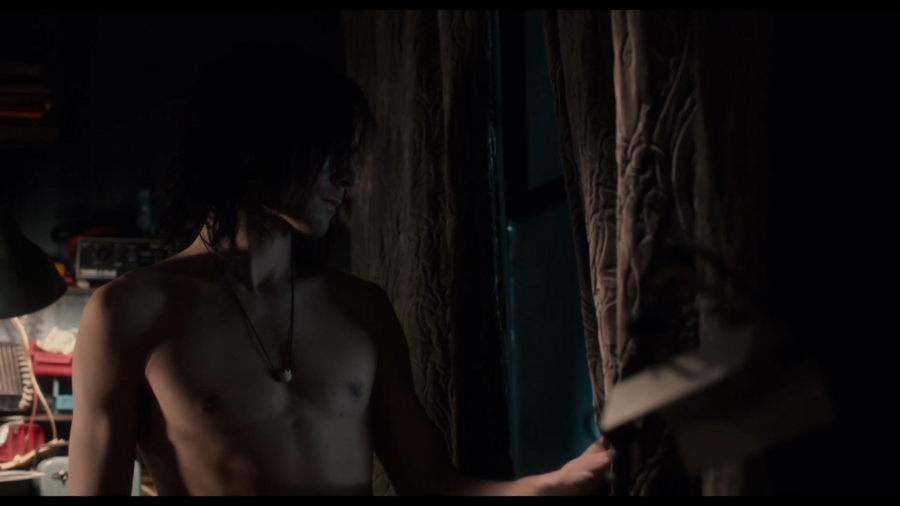
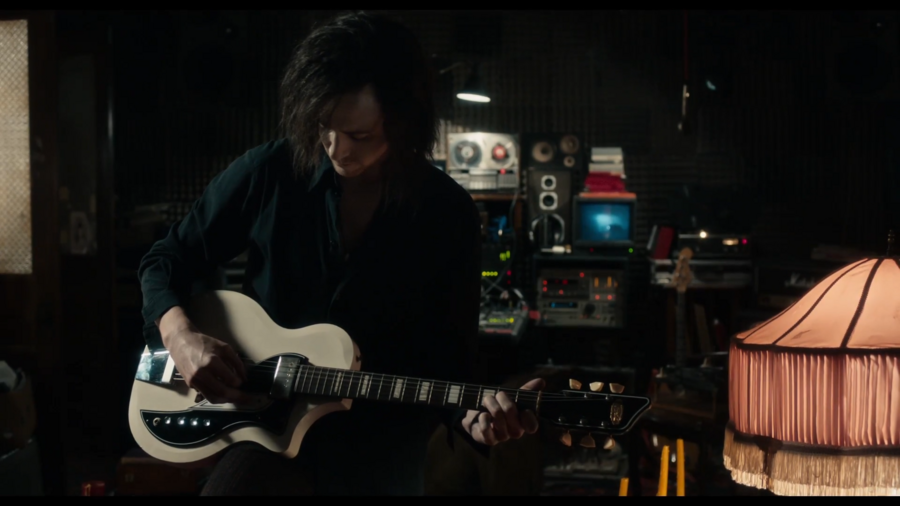
Music plays a significant role in Adam’s daily life. The repetitive actions associated with records and musical instruments create a steady rhythm to his existence. In such a world, time is perceived not only through the succession of events but also through the return to familiar activities.
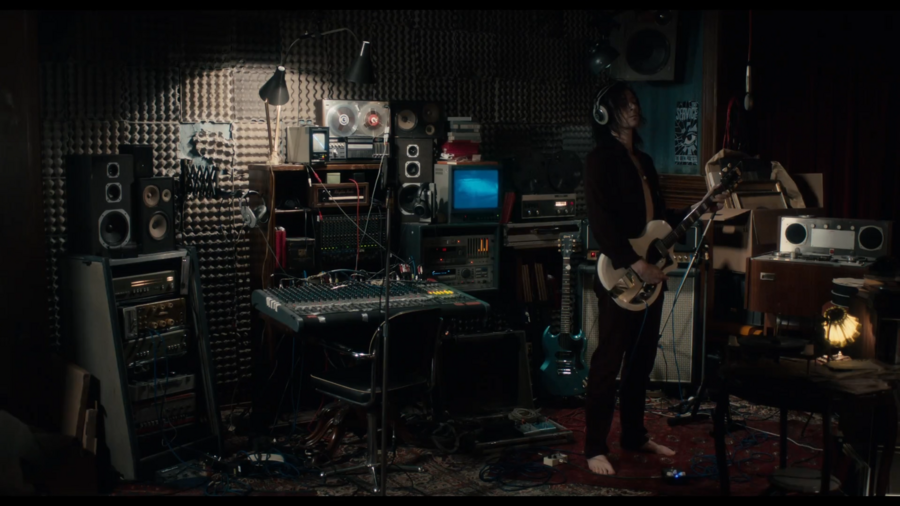
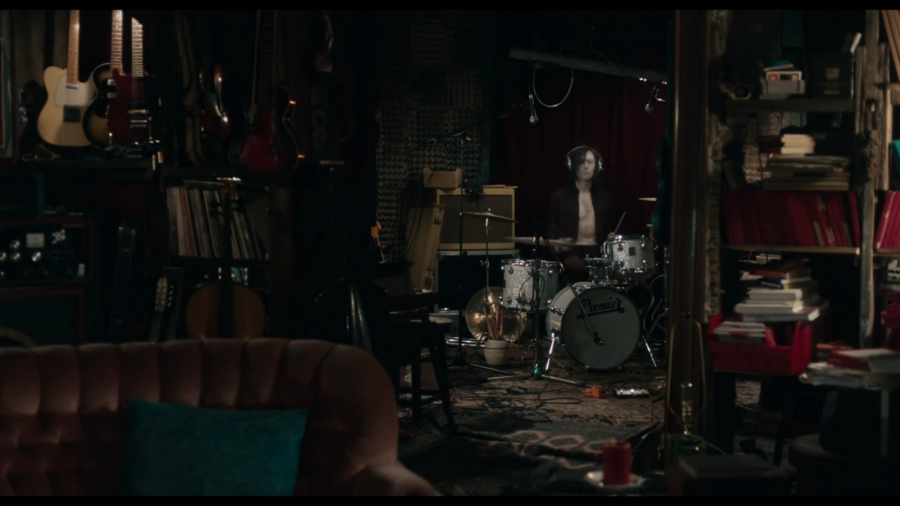
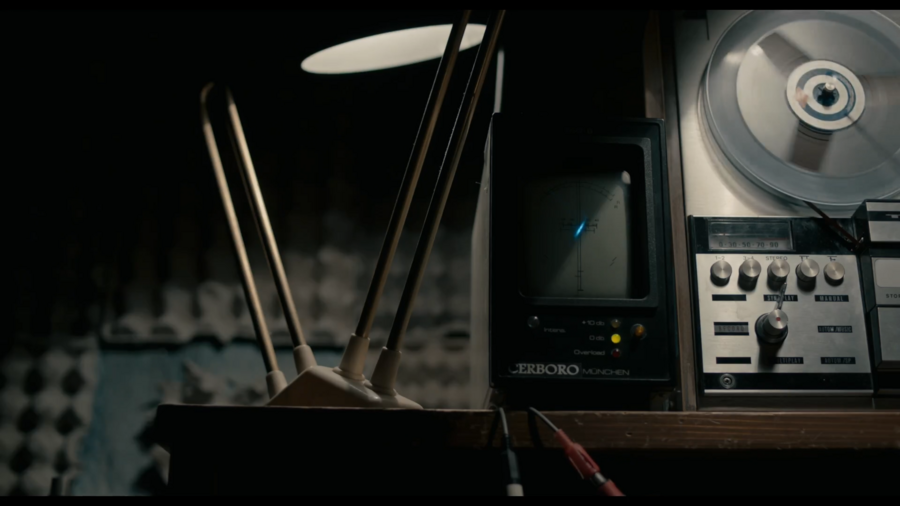
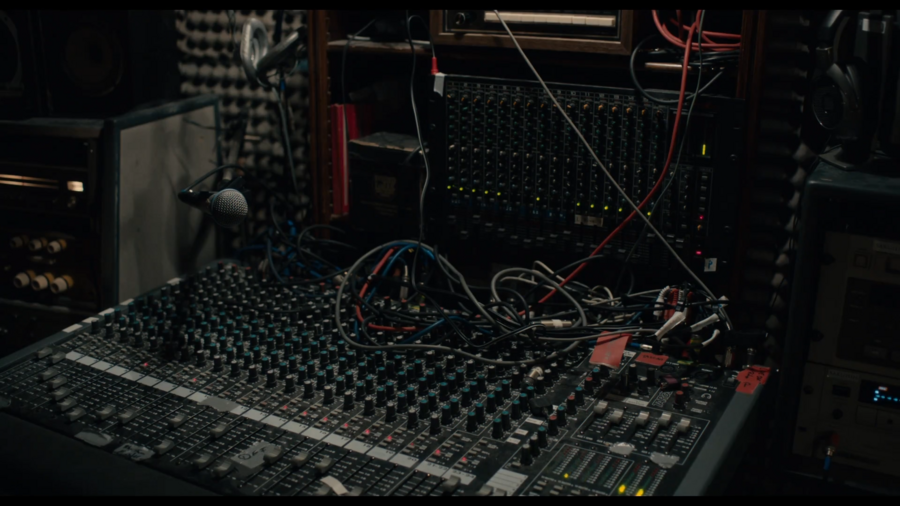
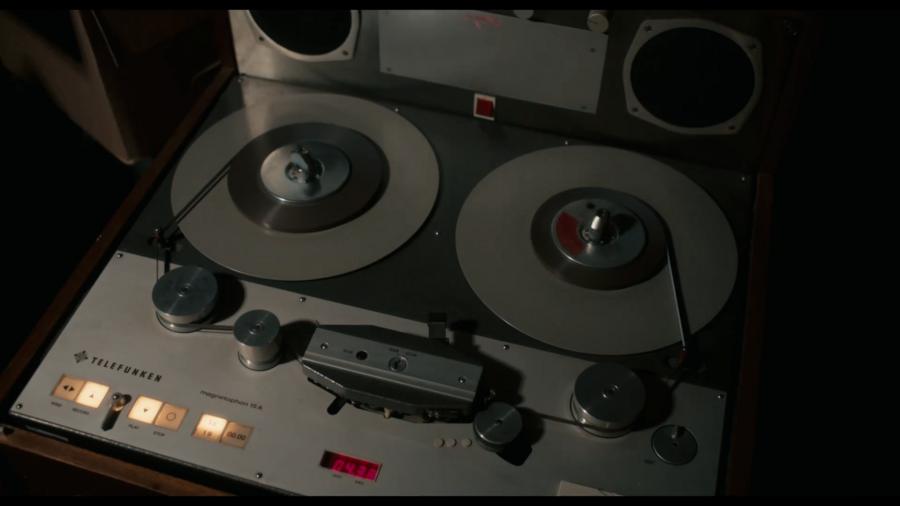
Jim Jarmusch. «Only Lovers Left Alive.» 2013. Clips from musical scenes.
The motif of the circle and rotation reappears repeatedly throughout the film, particularly in scenes related to music. Circular elements of musical equipment, vinyl records, tape reels, and drums become noticeable parts of the composition, often positioned near its center. Thus, the circular form continues to be present in the imagery even when camera movement ceases.
In other scenes, this motif is conveyed through the characters' movement. Adam and Eve rotate and dance to music, creating a repeating pattern of motion. The circle ceases to be merely an object’s shape and becomes part of the action.
The circular motion and similar compositions in the opening sequence unite Adam and Eve, despite the distance separating them. The musical actions complement this principle of repetition. As a result, time in the film begins to be perceived not merely as a sequence of events, but as a sustained rhythm of existence.
This approach allows us to convey the feeling of the characters' lifespan without directly depicting the centuries they have lived through.
Chapter 2. The Past Among the Present
The immortality of Adam and Eve is manifested not only in their memories but also in the surrounding space. Objects from different eras continue to be used alongside contemporary items, making the past a constant part of the present.
2.1. Adam’s House
Interiors and urban spaces allow for the conveyance of characters' centuries-old experiences without explicitly depicting the ages they have lived through.
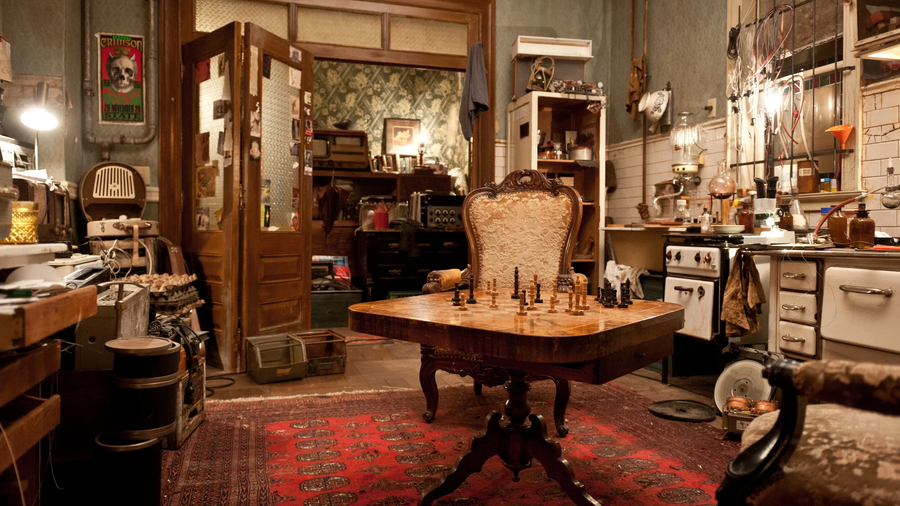
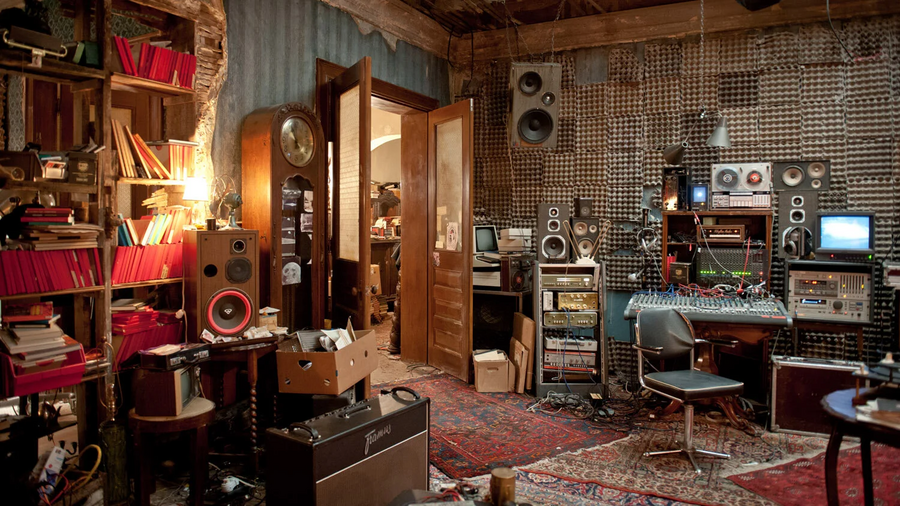
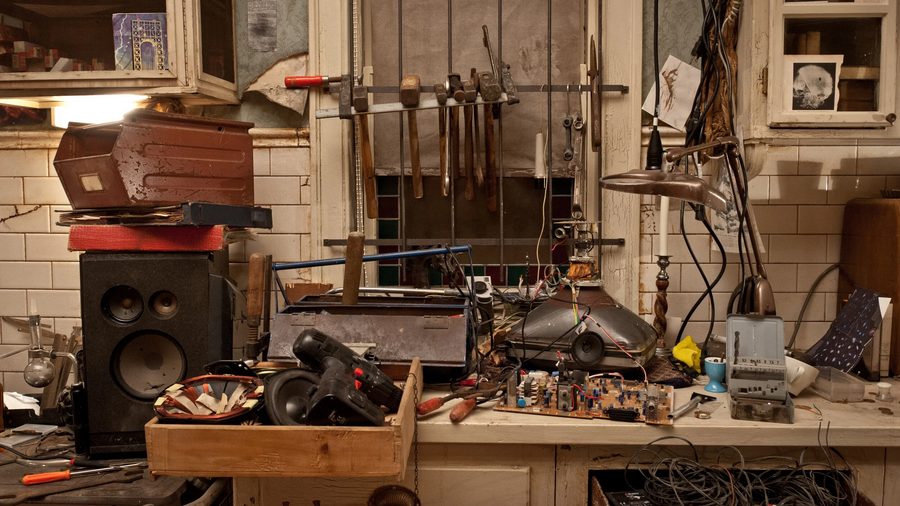
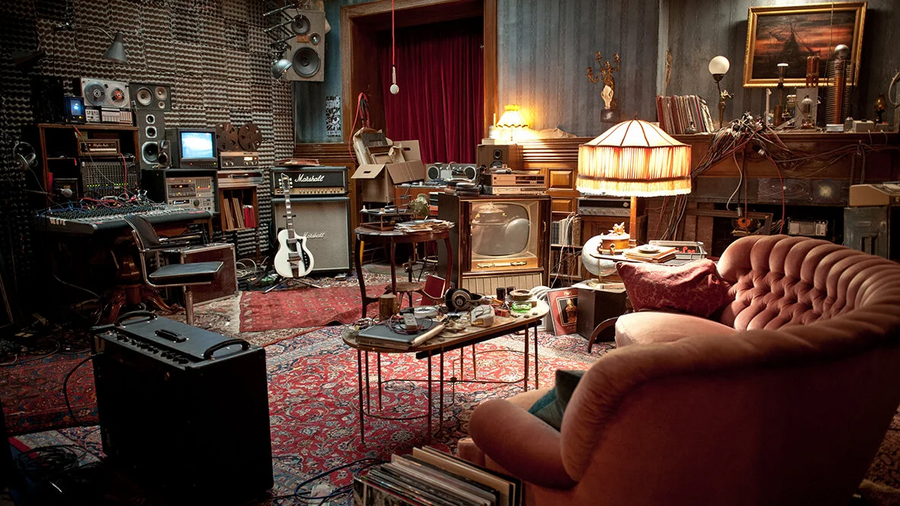
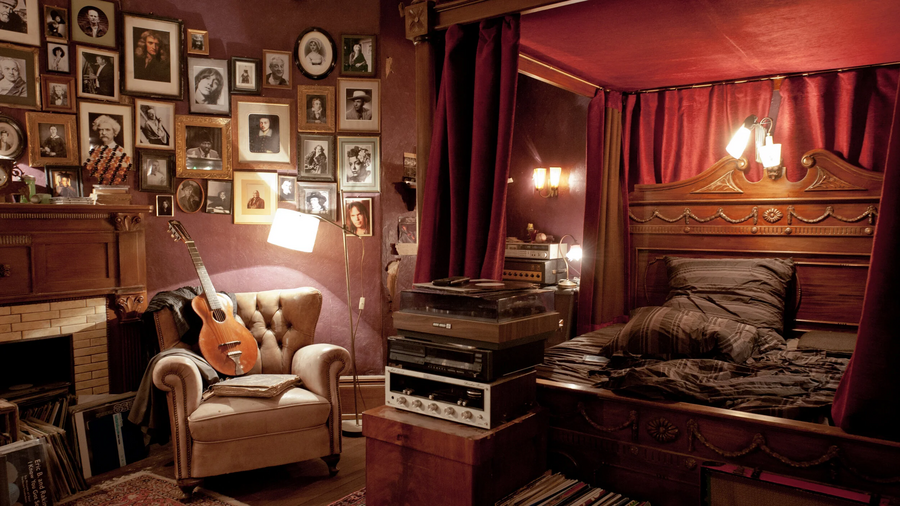
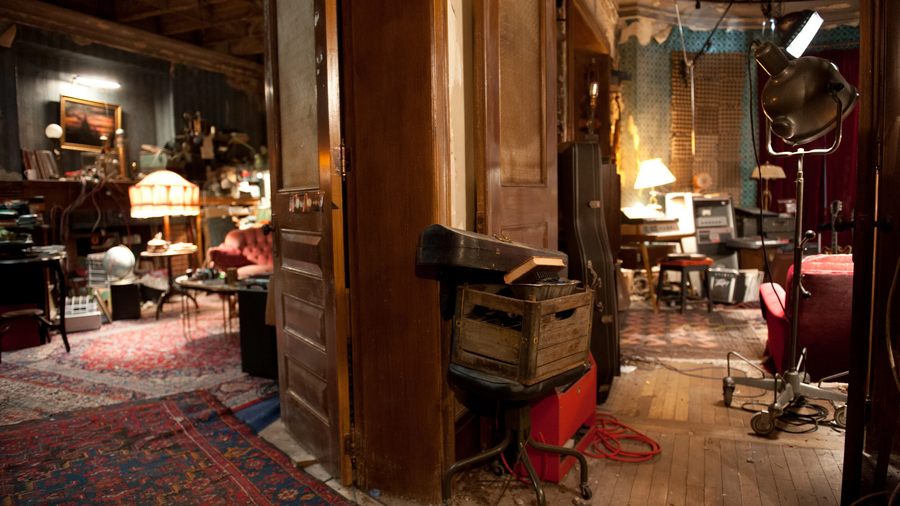
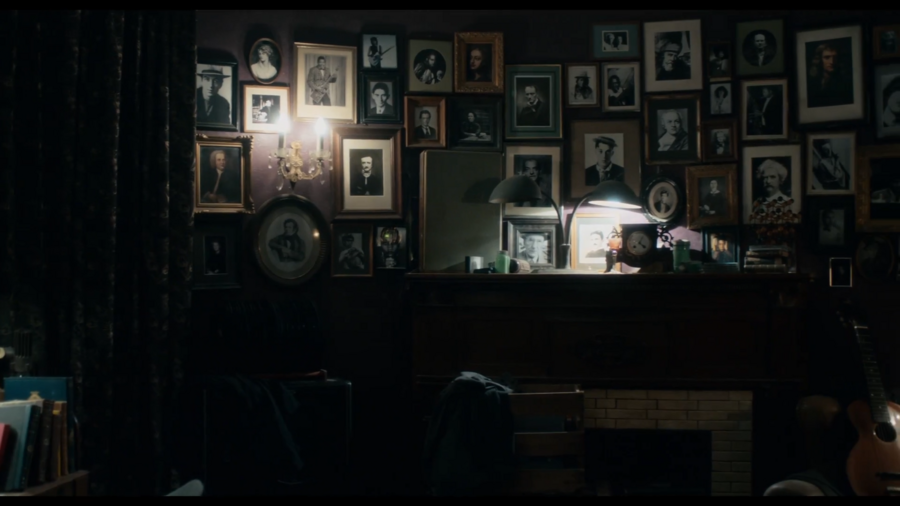
Jim Jarmusch. «Only Lovers Left Alive.» 2013. Adam’s house interior.
Adam’s house feels like a blend of a living space, a music studio, and a personal archive. Objects are clustered closely together and dominate the frame. Among them, musical instruments, recording equipment, antique devices, and media carriers are most prevalent.This density creates a palpable sense of accumulated time. These items don’t replace each other as new technologies emerge; rather, they continue to exist alongside one another.