Navigator: ◦ Concept ◦ Architecture ◦ Miniatures, Manuscripts, Icons ◦ Monuments ◦ Ani City ◦ Alphabet ◦ Patterns, Ornamentation, Embroidery ◦ Carpets ◦ Ceramics, Artifacts ◦ Jewelry ◦ Conclusion ◦ Summary
Concept
Armenian art before the 15th century represents a unique layer of cultural heritage, reflecting the rich history and traditions of the Armenian people. During this period, works were created that not only illustrate key stages in the development of Armenian art but also serve as vital sources for understanding Armenia’s cultural and historical context.
For visual study, works of art created by Armenian masters prior to the 15th century have been selected. Special attention is given to pieces that reflect key developmental stages in Armenian art, such as: • Ancient temples and monasteries • Iconography and miniatures • Sculpture and architecture • Decorative and applied arts
The research is divided into several sections, each dedicated to a specific era or movement in Armenian art before the 15th century: • Ancient Armenian Art (pre-5th century CE) • Medieval Armenian Art (5th–15th centuries)
For the analysis and interpretation of Armenian art pieces, we utilized both academic studies and critical essays from art historians. Special attention is given to works that examine Armenian art within the context of world culture and its influence on other artistic traditions.
Key Research Question: How does Armenian art before the 15th century reflect the historical and cultural characteristics of the Armenian people and its contribution to world culture?
Research Hypothesis: Armenian art before the 15th century, thanks to its unique style and themes, significantly influenced the development of world culture and remains an important source of inspiration for contemporary artists and art historians.
Ancient Armenian Art (Before the 5th Century CE) During this period, Armenian masters created works that reflected the religious and cultural traditions of the people. A prime example is the Etchmiadzin Cathedral, which is one of the best-preserved examples of ancient Armenian architecture.
Medieval Armenian Art (5th–15th Centuries) Medieval Armenian art is characterized by the development of icon painting and miniature painting. During this period, unique works were created, such as Gospel miniatures, which reflect the religious and cultural values of the Armenian people. Various methods were used to analyze the artworks, including iconographic analysis, stylistic analysis, and contextual analysis. These methods allow for a deeper understanding of the content and significance of the works, as well as their place in Armenian and world culture.
Architecture
Etchmiadzin: One of the oldest and most important churches in Armenia, built in the 4th century CE, dedicated to St. Gregory the Illuminator.
Etchmiadzin: One of the oldest and most important temples in Armenia, built in the 4th century AD by St. Gregory the Illuminator.
«Holy Echmiadzin Cathedral (Arm. Mayr Atʻoṙ Surb Ēǰmiacin, from the parish of Ēǰ Miacinn) — „Descent of the Only Begotten"—is a monastic complex, as well as the spiritual and administrative center of the Armenian Apostolic Church. It has served as the seat of the Supreme Patriarch and Catholicos of all Armenians from 303 to 484 AD, and again since 1441. It is located in the city of Vagharshapat, Armavir Province, Armenia, and is included in the UNESCO World Heritage List.»
Gegard: A monastery carved into the rock, featuring unique architectural elements. Built in the 4th century CE by Saint Gregory the Illuminator.
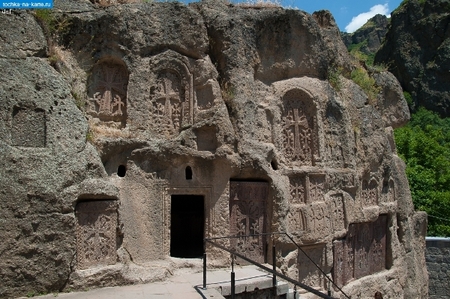
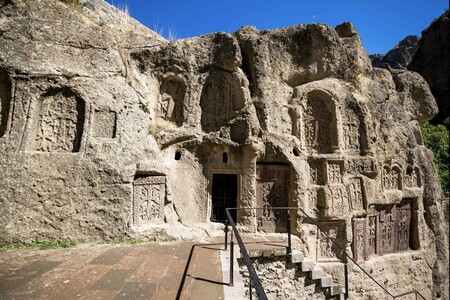
Gegard: A monastery carved into the rock, featuring unique architectural elements. Built in the 4th century CE by Saint Gregory the Enlightener.
«Geghard (Armenian: Գեղարդ, Gełard, literally meaning „spear“) is also known by the old name Airivank („cave monastery“) or, less frequently, Gehard—a monastic complex and unique architectural structure located in the Kotayk Province of Armenia. It is situated in the gorge of the Ghoht mountain river (a right tributary of the Azat River), approximately 40 km southeast of Yerevan. It is listed by UNESCO as a World Cultural Heritage site.
Its more complete name is Geghardavank (Armenian: Գեղարդավանք, Gełardavankʿ), literally meaning „spear monastery.“ The name of the monastic complex derives from the Spear of Longinus (the Armenian spear), which is claimed to have pierced the body of Jesus Christ on the Cross and which, according to tradition, was brought to Armenia by Apostle Thaddeus among many other relics. Today, the spear is displayed in the Echmiadzin Museum.»
Miniatures, manuscripts, icons
Gospel Miniatures: Illuminated Pages from Ancient Armenian Manuscripts.
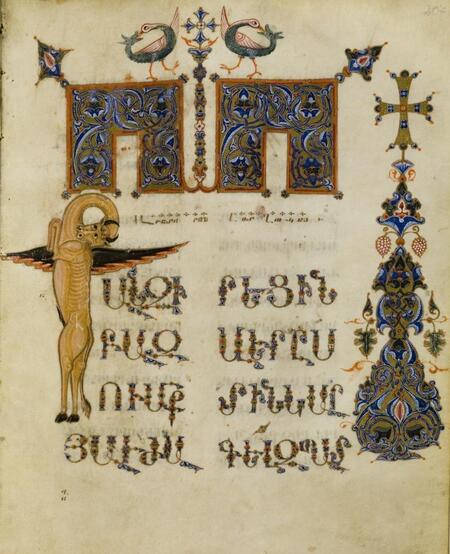
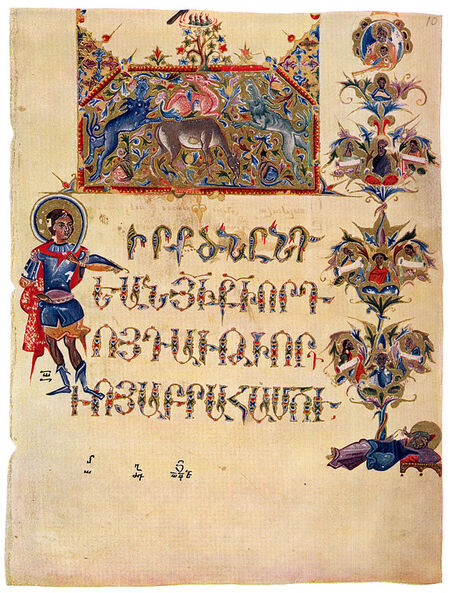
Gospel Miniatures: Illuminated Pages from Ancient Armenian Manuscripts.
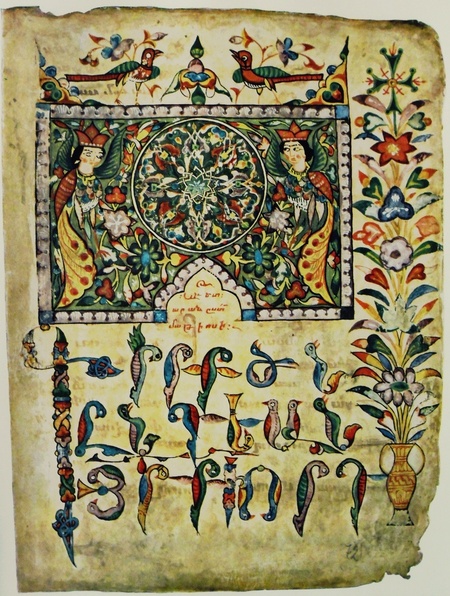
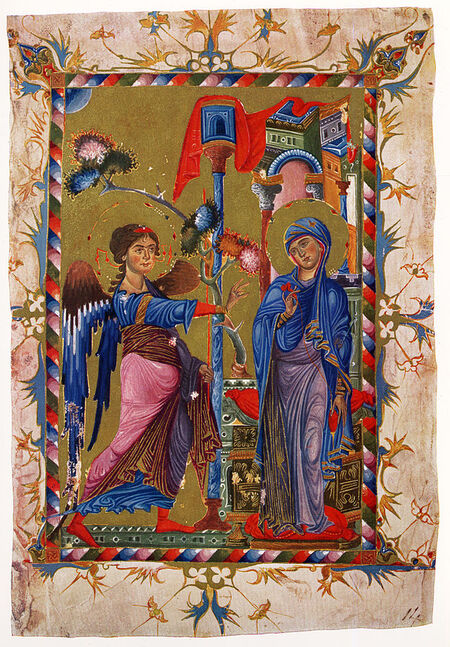
Miniatures from the Gospel: Illuminated Pages from Ancient Armenian Manuscripts.
«The Gospel of Vahpagar (Arm. Vehapar’s Gospel) is an illuminated Armenian manuscript of a Gospel dating from the late 10th to early 11th centuries. In Armenian, ‘Vahpagar’ is an epithet for the Catholicos of all Armenians; the manuscript was named in honor of Vazgen I, who gifted it to the Matenadaran Institute of Ancient Manuscripts.»
Hotakert Surb Nshan Manuscript: 1300, Etchmiadzin, Treasury
A significant collection of illuminated manuscripts is preserved in Armenia. The bookbinding, usually of the Bible, crafted from precious metal is called a cover.
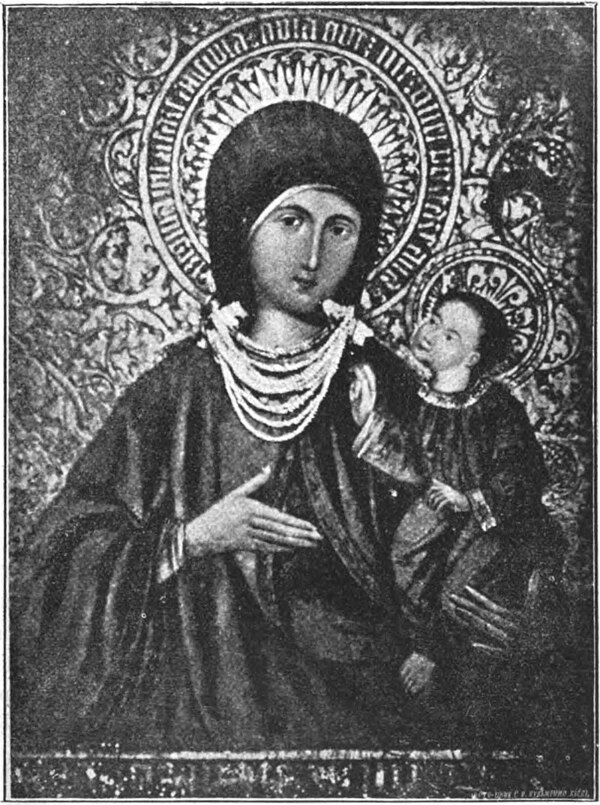
Icon of the Mother of God: An example of icon painting reflecting the religious and cultural traditions of Armenia.
«The Armenian Icon of the Mother of God—a miraculous icon of the Theotokos from the Armenian Church of St. Nicholas in Kamianets-Podilskyi. According to one legend, it was painted in the 10th century. It was believed to be lost since the 1920s, but since 2001, a number of researchers have identified it with the Icon of the Theotokos Odigitria from the 16th century, which is housed in the Bogdan and Varvara Khanenko National Museum of Art. It was venerated by representatives of all Christian denominations in Kamianets-Podilskyi. It is one of the most revered relics of the spiritual heritage of Armenians in Ukraine.»
Religion played a key role in the formation of Armenian art, particularly in the context of creating a national spiritual culture. Christianity became not just a religion, but a part of the life and spirit of the people, penetrating to the very roots and creating a unique spiritual and cultural identity for the Armenian people throughout the centuries.
Monuments
Khachkars: Stone steles with carved crosses, symbolizing Armenian culture. V–X centuries.
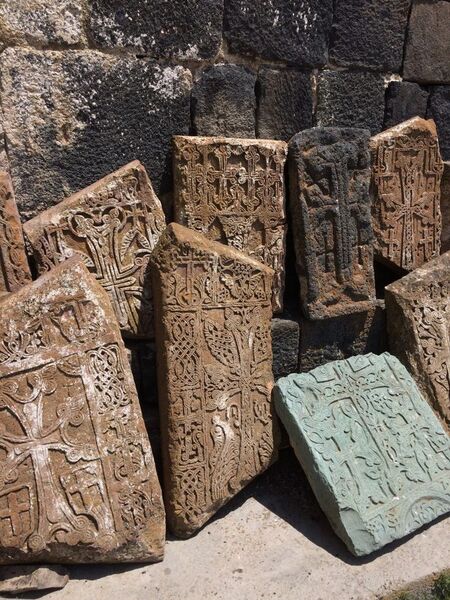
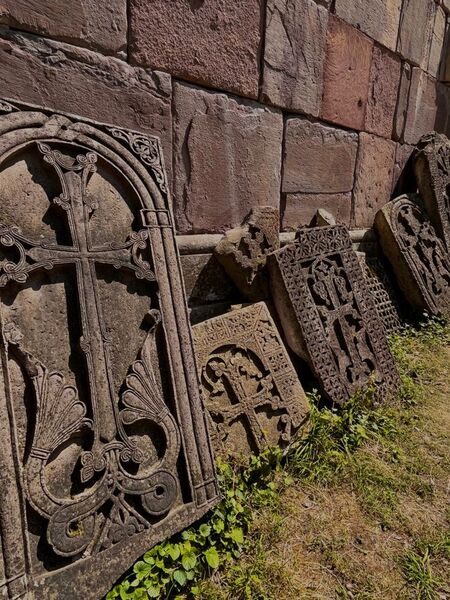
Khachkars: Stone steles with carved crosses, which are a symbol of Armenian culture. V–X centuries.
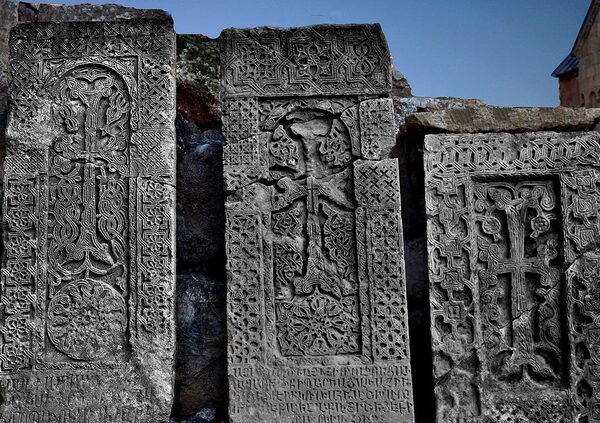
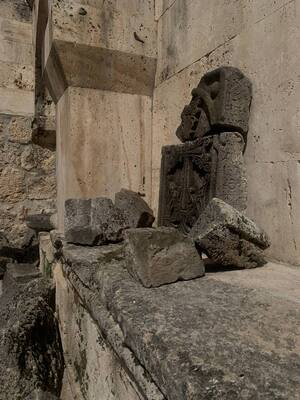
Khachkars: Stone stelae featuring carved crosses, serving as a symbol of Armenian culture. 7th–10th centuries.
«Khachkar (Armenian: խաչքար, literally 'cross-stone') is a type of Armenian architectural monument and sacred site, featuring a stone stele adorned with an carved cross. The word khachkar is derived from the Armenian roots ‘khach’—‘cross’—and ‘kar’—‘stone.’
In November 2010, the art of creating khachkars was inscribed on the UNESCO Representative List of the Intangible Cultural Heritage of Humanity in Armenia under the designation, „Symbolism and Craftsmanship of Khachkars, Armenian Stone Crosses.“»
City of Ani
Ani Architecture: Ruins of an ancient city that preserves unique architectural elements. Built in the 5th century. Founded by the Armenian chroniclers Yeghishe and Lazar Parpetsi.